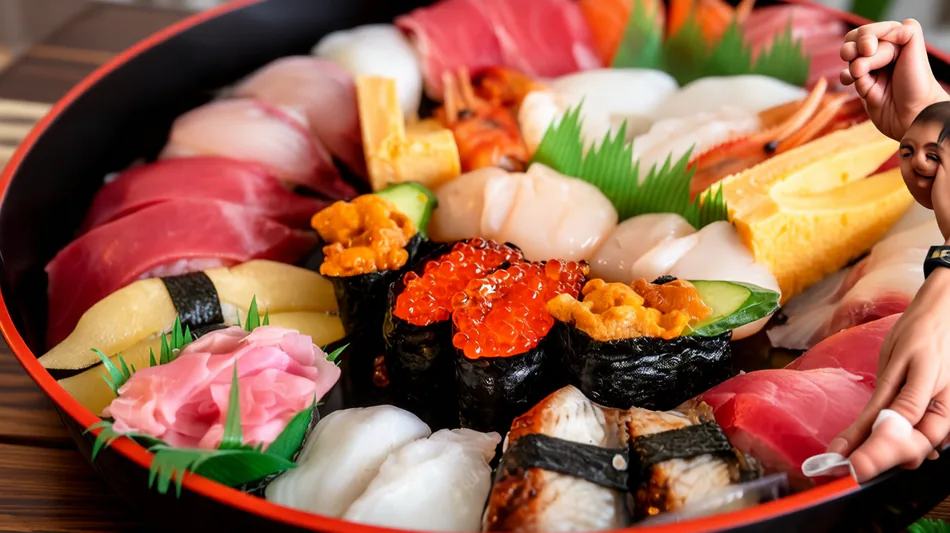
Sushi Leads List of Japanese Foods People Want Global Diners to Enjoy

 London
 6 °C

 Manchester
 4 °C
 Glasgow
 9 °C
 Dublin
2 °C
 Belfast
3 °C
 Washington
7 °C
 Denver
7 °C
 Atlanta
5 °C
 Dallas
9 °C
 Houston Texas
11 °C
 New Orleans
 11 °C
 El Paso
14 °C
 Phoenix
19 °C
 Los Angeles
18 °C
San Diego
19 °C
San Francisco
12 °C
Chicago
6 °C
Minneapolis
4 °C
Seattle
8 °C
Portland
8 °C
Salt Lake City
 8 °C
Las Vegas
16 °C
Miami
21 °C
Jacksonville
13 °C
San Antonio
 12 °C
Bermuda
19 °C
Nassau
5 °C
Iqaluit
-5 °C
Yellowknife
 -1 °C
Anchorage
-3 °C
Fairbanks
-6 °C
Barrow
 -9 °C
Calgary
5 °C
Edmonton
3 °C
Winnipeg
7 °C
Goose Bay
5 °C
Halifax
2 °C
Boston
4 °C
Ottawa
4 °C
Toronto
4 °C
Detroit
6 °C
Cleveland
6 °C
New York
6 °C
Baltimore
5 °C
Philadelphia
5 °C
Nuuk (Godthåb)
-2 °C
Hong Kong
 26 °C
Singapore
31 °C
Melbourne
18 °C
Canberra
17 °C
Adelaide
 20 °C
Darwin
33 °C
Perth
25 °C
Fort Worth
9 °C
Honolulu
 27 °C
Sydney
 15 °C
Johannesburg
14 °C
Dubai
23 °C
Mumbai
28 °C
Zürich
9 °C
Tokyo
20 °C
Seoul
17 °C
Delhi
15 °C
Beijing
7 °C
Riyadh
12 °C
Prague
3 °C
Pennsylvania
5 °C
Valletta
18 °C
Manama
22 °C
Warsaw
0 °C
Stockholm
5 °C
A new survey conducted by Suzumo Machinery indicates that sushi remains the most iconic Japanese dish in the minds of domestic consumers. While tempura and miso soup also rank highly, respondents overwhelmingly prioritize authentic taste and quality when recommending Japanese cuisine to international diners, even if it means higher costs.
Sushi is the definitive symbol of Japanese cuisine for domestic consumers, according to a recent survey that highlights a strong preference for authentic flavors over affordability when recommending local dishes to international audiences.
The poll, conducted in mid-September by Suzumo Machinery, a manufacturer of sushi and rice-serving robots, surveyed 600 people aged 20 and older. When asked to name the first food that comes to mind regarding Japanese cuisine, 80.0% of respondents identified sushi. This association held true across all age demographics, with an even higher concentration among older generations; 88.3% of those in their sixties and over cited sushi as their primary association.
Following sushi, tempura ranked second at 57.2%, and miso soup took third place with 44.3%. However, the list of recommended dishes for overseas diners shifted slightly when respondents were asked what they would specifically suggest to people abroad. Sushi remained the top recommendation at 68.2%, followed by tempura at 42.0%.
The top five recommendations also included shabu-shabu and sukiyaki (26.0%), ramen (24.0%), and onigiri (23.7%). Notably, while miso soup was the third most instantly recognized Japanese food, it fell to eighth place in the recommendation category, selected by only 21.3% of respondents.
Beyond specific dishes, the survey explored what aspects of Japanese cuisine respondents wish foreign diners would experience. The largest group, comprising 48.8% of participants, expressed a desire for international customers to be able to "eat food that has the same taste and quality as that in Japan." This sentiment intensified with age; while approximately 30% of respondents in their twenties shared this view, the figure rose to 65% among those in their sixties and over.
This emphasis on authenticity presents a commercial challenge. Sushi is increasingly popular globally, but maintaining high standards while keeping prices reasonable is difficult. When asked what should be prioritized for overseas expansion, 70% of total respondents indicated that "taste and quality" were more important than cost. Within this group, 35.3% stated that higher prices were acceptable if it ensured quality, and 34.5% considered quality "somewhat more important." In contrast, only 15.8% of respondents believed that reasonable pricing should be the primary focus.
Y. Machado--JDB