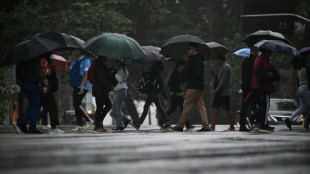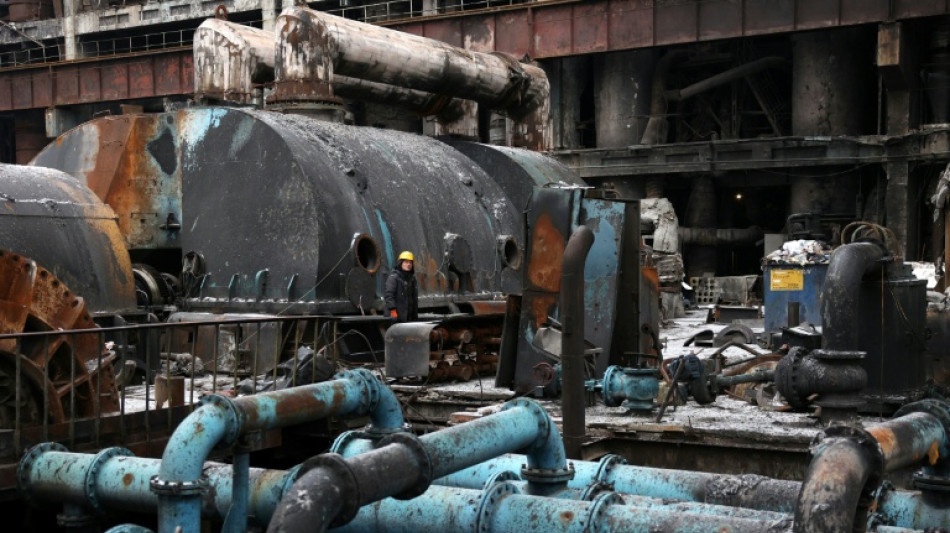
As Moscow steps up attacks, Kyiv residents brace for harsh winter / Photo: © AFP

 London
 11 °C
11 °C

 Manchester
 8 °C
8 °C
 Glasgow
 11 °C
11 °C
 Dublin
12 °C
Dublin
12 °C
 Belfast
11 °C
Belfast
11 °C
 Washington
14 °C
Washington
14 °C
 Denver
16 °C
Denver
16 °C
 Atlanta
19 °C
Atlanta
19 °C
 Dallas
30 °C
Dallas
30 °C
 Houston Texas
28 °C
Houston Texas
28 °C
 New Orleans
 27 °C
27 °C
 El Paso
20 °C
El Paso
20 °C
 Phoenix
31 °C
Phoenix
31 °C
 Los Angeles
22 °C
San Diego
20 °C
San Francisco
17 °C
Chicago
Los Angeles
22 °C
San Diego
20 °C
San Francisco
17 °C
Chicago
 17 °C
Minneapolis
15 °C
Seattle
13 °C
Portland
15 °C
Salt Lake City
16 °C
Las Vegas
27 °C
Miami
17 °C
Minneapolis
15 °C
Seattle
13 °C
Portland
15 °C
Salt Lake City
16 °C
Las Vegas
27 °C
Miami
 25 °C
Jacksonville
25 °C
San Antonio
27 °C
Bermuda
27 °C
Nassau
13 °C
Iqaluit
5 °C
Yellowknife
10 °C
Anchorage
6 °C
Fairbanks
5 °C
Barrow
-2 °C
Calgary
10 °C
Edmonton
18 °C
Winnipeg
15 °C
Goose Bay
8 °C
Halifax
12 °C
Boston
10 °C
Ottawa
7 °C
Toronto
13 °C
Detroit
14 °C
Cleveland
16 °C
New York
13 °C
Baltimore
14 °C
Philadelphia
13 °C
Nuuk (Godthåb)
2 °C
Hong Kong
31 °C
Singapore
32 °C
Melbourne
25 °C
Canberra
25 °C
Jacksonville
25 °C
San Antonio
27 °C
Bermuda
27 °C
Nassau
13 °C
Iqaluit
5 °C
Yellowknife
10 °C
Anchorage
6 °C
Fairbanks
5 °C
Barrow
-2 °C
Calgary
10 °C
Edmonton
18 °C
Winnipeg
15 °C
Goose Bay
8 °C
Halifax
12 °C
Boston
10 °C
Ottawa
7 °C
Toronto
13 °C
Detroit
14 °C
Cleveland
16 °C
New York
13 °C
Baltimore
14 °C
Philadelphia
13 °C
Nuuk (Godthåb)
2 °C
Hong Kong
31 °C
Singapore
32 °C
Melbourne
25 °C
Canberra
 23 °C
Adelaide
27 °C
Darwin
32 °C
Perth
21 °C
Fort Worth
28 °C
Honolulu
27 °C
Sydney
23 °C
Adelaide
27 °C
Darwin
32 °C
Perth
21 °C
Fort Worth
28 °C
Honolulu
27 °C
Sydney
 23 °C
Johannesburg
16 °C
Dubai
23 °C
Johannesburg
16 °C
Dubai
 34 °C
Mumbai
31 °C
Zürich
9 °C
Tokyo
30 °C
Seoul
26 °C
Delhi
32 °C
Beijing
20 °C
Riyadh
32 °C
Prague
11 °C
Pennsylvania
11 °C
Valletta
22 °C
Manama
33 °C
Warsaw
8 °C
Stockholm
7 °C
34 °C
Mumbai
31 °C
Zürich
9 °C
Tokyo
30 °C
Seoul
26 °C
Delhi
32 °C
Beijing
20 °C
Riyadh
32 °C
Prague
11 °C
Pennsylvania
11 °C
Valletta
22 °C
Manama
33 °C
Warsaw
8 °C
Stockholm
7 °C
The first days of autumn chill have only barely set in over Kyiv, but winter is already dominating conversations among residents, who are making plans in case Russian strikes once again knock out the energy system.
The shadow of last winter hangs over Kyiv, which was plunged into darkness and bitter cold for weeks when Russian forces struck the country's power and heating infrastructure while temperatures dropped as low as -20C.
As Russia stepped up assaults on Kyiv, the question of what to do this winter is particularly pressing for families with children, said Oleksandra Matveieva, founder of a Facebook group for mothers.
"Now it seems Russians have started bombing Kyiv heavily," she said.
"Immediately, people, mostly mothers, started writing: 'we're ready to leave anywhere, as long as it's not too far and expensive'."
Travel Mama Club, originally founded for travelling mothers before evolving into an advice forum during the war, has recently seen a surge in publications concerning accommodation in relatively safer western Ukraine, or abroad.
"People are looking for a Plan B, even booking refundable apartments," she said. "They still don't know yet whether they will actually leave."
Russia has over the past month stepped up its attacks on the capital and air raid alerts urging locals to seek shelter due to incoming drones and missiles are now a nightly and, increasingly, daily occurrence.
If it used to target Kyiv mainly during the hours of darkness, Moscow now attacks more in broad daylight. The alerts paralyse life across the city -- especially in schools and hospitals, which follow strict safety protocols.
- 'Critically cold' -
The strikes are part of escalating infrastructure attacks by both Russia and Ukraine, which UN investigators warn are leaving civilians increasingly vulnerable as winter approaches.
US President Donald Trump said last week that Ukraine and Russia had agreed not to target each other's energy facilities, but the proposal failed to materialise.
Ukrainian President Volodymyr Zelensky told the UN General Assembly in New York on Wednesday that "Ukrainians understand that this winter could be very harsh for us, but in response we will have no choice but to make it painful for Russia too."
Ukrainian authorities have rushed to reinforce the battered energy system. The energy ministry said the country has already repaired 4.8 gigawatts of generating capacity and plans to restore or build over 10 gigawatts this year.
The International Energy Agency said in September last year that Ukraine had about 38 gigawatts of despatchable power generation capacity before Russia's full-scale invasion in February 2022.
Last winter, demand peaked at 18GW, while the capacity had dropped to 11GW after years of attacks, the agency said.
Kyiv mayor Vitaly Klitschko, who has been criticised by the government for failing to present a clear strategy, has said the city completed 80 percent of its preparations ahead of winter.
The CEO of Ukraine's main gas provider Naftogaz, Sergiy Fedorenko, acknowledged Russia's strikes were "stronger, broader, more dangerous".
"But we prepared for this the whole time between heating seasons and we will withstand these blows over this difficult winter," he told AFP.
Besides heating and energy, there are fears Russia may seek to destroy water supplies, Ukraine's Energy Minister Denys Shmygal said in August.
Residents are making their own preparations, dusting off the generators, portable batteries and hot water bottles they relied on last year, while making adjustments.
Some hold on to the hope the weather will be milder this year.
"If it's cold again, as critically cold as it was last year, I will leave," said Matveieva, who has a daughter.
"I'll take her and get her out of here."
D. Carvalho--JDB