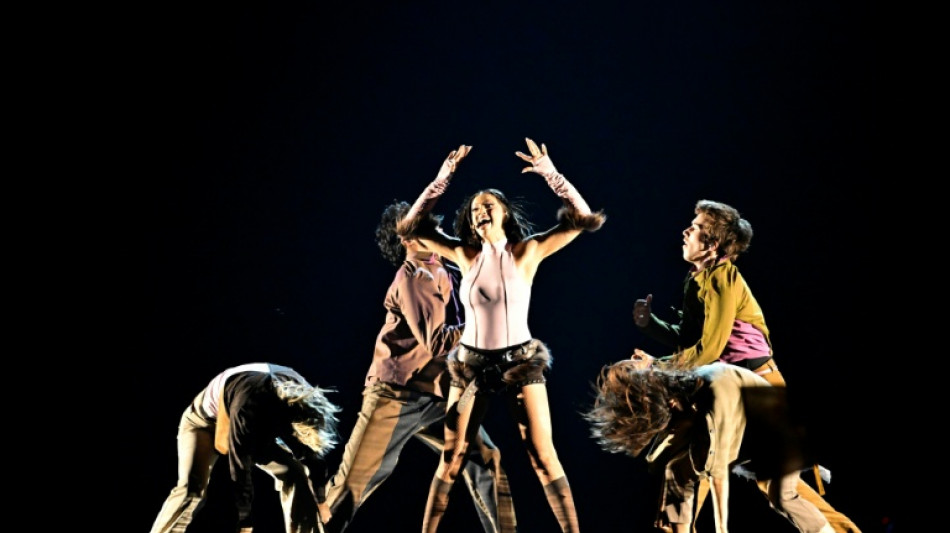
Eurovision second semi starts with a 'Bangaranga' / Photo: © AFP

 London
 12 °C
12 °C
 Manchester
 12 °C
12 °C
 Glasgow
12 °C
Glasgow
12 °C
 Dublin
15 °C
Dublin
15 °C
 Belfast
14 °C
Belfast
14 °C
 Washington
25 °C
Washington
25 °C
 Denver
 20 °C
20 °C
 Atlanta
27 °C
Atlanta
27 °C
 Dallas
29 °C
Dallas
29 °C
 Houston Texas
30 °C
Houston Texas
30 °C
 New Orleans
 29 °C
29 °C
 El Paso
30 °C
El Paso
30 °C
 Phoenix
36 °C
Phoenix
36 °C
 Los Angeles
 23 °C
San Diego
23 °C
San Diego
 22 °C
San Francisco
15 °C
Chicago
17 °C
Minneapolis
15 °C
Seattle
22 °C
San Francisco
15 °C
Chicago
17 °C
Minneapolis
15 °C
Seattle
 20 °C
Portland
24 °C
Salt Lake City
20 °C
Las Vegas
34 °C
Miami
20 °C
Portland
24 °C
Salt Lake City
20 °C
Las Vegas
34 °C
Miami
 25 °C
Jacksonville
25 °C
San Antonio
31 °C
Bermuda
27 °C
Nassau
20 °C
Iqaluit
3 °C
Yellowknife
16 °C
Anchorage
12 °C
Fairbanks
25 °C
Jacksonville
25 °C
San Antonio
31 °C
Bermuda
27 °C
Nassau
20 °C
Iqaluit
3 °C
Yellowknife
16 °C
Anchorage
12 °C
Fairbanks
 11 °C
Barrow
0 °C
Calgary
21 °C
Edmonton
26 °C
Winnipeg
12 °C
Goose Bay
12 °C
Halifax
16 °C
Boston
16 °C
Ottawa
15 °C
Toronto
17 °C
Detroit
17 °C
Cleveland
18 °C
New York
21 °C
Baltimore
25 °C
Philadelphia
23 °C
Nuuk (Godthåb)
3 °C
Hong Kong
30 °C
Singapore
30 °C
Melbourne
26 °C
Canberra
21 °C
Adelaide
15 °C
Darwin
29 °C
Perth
19 °C
Fort Worth
28 °C
Honolulu
30 °C
Sydney
23 °C
Johannesburg
13 °C
Dubai
32 °C
Mumbai
28 °C
Zürich
15 °C
Tokyo
21 °C
Seoul
25 °C
Delhi
25 °C
Beijing
25 °C
Riyadh
29 °C
Prague
12 °C
Pennsylvania
20 °C
Valletta
24 °C
Manama
32 °C
Warsaw
11 °C
Stockholm
11 °C
11 °C
Barrow
0 °C
Calgary
21 °C
Edmonton
26 °C
Winnipeg
12 °C
Goose Bay
12 °C
Halifax
16 °C
Boston
16 °C
Ottawa
15 °C
Toronto
17 °C
Detroit
17 °C
Cleveland
18 °C
New York
21 °C
Baltimore
25 °C
Philadelphia
23 °C
Nuuk (Godthåb)
3 °C
Hong Kong
30 °C
Singapore
30 °C
Melbourne
26 °C
Canberra
21 °C
Adelaide
15 °C
Darwin
29 °C
Perth
19 °C
Fort Worth
28 °C
Honolulu
30 °C
Sydney
23 °C
Johannesburg
13 °C
Dubai
32 °C
Mumbai
28 °C
Zürich
15 °C
Tokyo
21 °C
Seoul
25 °C
Delhi
25 °C
Beijing
25 °C
Riyadh
29 °C
Prague
12 °C
Pennsylvania
20 °C
Valletta
24 °C
Manama
32 °C
Warsaw
11 °C
Stockholm
11 °C
Contestants sang their hearts out on Thursday in the Eurovision Song Contest's second semi-final, with touching ballads and heavy metal in contention for the last 10 places in the grand final.
Fifteen countries battled it out at the Wiener Stadthalle for the remaining spots in Saturday's showpiece, with Denmark, Australia, Romania and Ukraine hotly-tipped to make it through.
Eurovision is the world's biggest live televised music event, typically reaching more than 150 million viewers, and Vienna 2026 is the 70th edition of the glitzy show where spectacle and drama go hand in hand.
Bulgarian pop singer Dara got Thursday's concert under way with some high-energy and highly-choreographed dancing on "Bangaranga", opening with the lines: "Come alive / Surrender to the blinding lights / No one's gonna sleep tonight / Welcome to the riot."
Azerbaijan's Jiva came next with a solo performance before billowing white screens.
Romania then swung the show into heavy rock on "Choke Me", which caused a minor furore in the Eurovision build-up over the lyrics.
However, singer Alexandra Capitanescu, a master's student at the Faculty of Physics in Bucharest, defended the song, insisting: "Unlike the classic heart, which represents romance or cute love, the anatomical heart suggests vulnerability... and emotions that feel intense, physical and almost painful."
- Danish ode to nightclubs -
Denmark and Australia are likely to progress to the 70th Eurovision Song Contest grand final, with Bulgaria, Albania and the Czech Republic also in contention, say bookmakers.
But it could be Goodnight Vienna for Azerbaijan, Luxembourg, Armenia and Switzerland, according to the odds.
Denmark's Soren Torpegaard Lund, whose background is in musical theatre, is gaining traction with "For Vi Gar Hjem" ("Before We Go Home"), an ode to the world of nightclubs.
Australia has appeared at Eurovision by invitation since 2015, finishing runner-up in 2016.
But the country could go one better this time around thanks to established star Delta Goodrem.
The 41-year-old had a string of international hits in the early 2000s and is singing "Eclipse", evoking a romantic alignment of the planets.
- 'Enjoy those three minutes' -
Austria won the right to host this year's Eurovision thanks to operatic singer JJ's victory in Basel 2025 with "Wasted Love".
The Austrian sopranist urged Thursday's performers to enjoy their brief spell in the spotlight.
"They should enjoy those three minutes. It's a very stressful time but they've rehearsed so much, they can do it in their sleep," the 25-year-old told reporters.
"This is also a learning. You grow as an artist being a part of such a huge competition. And it's also something that can jump-start a huge, successful and long-lasting career.
"It just prepares you for the final performance in the grand final. There are always great acts at Eurovision, and this semi-final too is a really, really strong semi-final."
- Fans from 75 countries -
The 11,200 tickets for each concert at Austria's biggest indoor arena were snapped up by fans from more than 75 countries.
Ten countries made it through from Tuesday's first semi-final.
They included overall favourites Finland, plus Greece, Israel, Sweden and Moldova.
Five countries pulled out of this year's Eurovision over Israel's participation -- the biggest political boycott in the show's history dating back to 1956.
A few dozen people attended a rally in central Vienna called in support of Israel's inclusion.
"I organised a little flashmob here to send a message of inclusion, which has always been the spirit of Eurovision, because the spirit of exclusion is starting to ruin all the liberal spirit," 39-year-old game designer Ivo Herzl told AFP.
This year, the semi-finals are being decided by public vote and also by professional juries.
Eurovision major financial backers Britain, France, Germany and Italy have guaranteed spots in Saturday's 25-country final, alongside hosts Austria.
S. dos Reis--JDB