France, Eq. Guinea in standoff over luxury Paris mansion / Photo: © AFP

 London
 19 °C
19 °C

 Manchester
 16 °C
16 °C
 Glasgow
14 °C
Glasgow
14 °C
 Dublin
15 °C
Dublin
15 °C
 Belfast
14 °C
Belfast
14 °C
 Washington
25 °C
Washington
25 °C
 Denver
11 °C
Denver
11 °C
 Atlanta
26 °C
Atlanta
26 °C
 Dallas
 29 °C
29 °C
 Houston Texas
31 °C
Houston Texas
31 °C
 New Orleans
 28 °C
28 °C
 El Paso
23 °C
El Paso
23 °C
 Phoenix
20 °C
Phoenix
20 °C
 Los Angeles
16 °C
San Diego
18 °C
San Francisco
13 °C
Chicago
23 °C
Minneapolis
12 °C
Seattle
10 °C
Portland
9 °C
Salt Lake City
8 °C
Las Vegas
13 °C
Miami
31 °C
Jacksonville
29 °C
San Antonio
29 °C
Bermuda
28 °C
Nassau
20 °C
Iqaluit
Los Angeles
16 °C
San Diego
18 °C
San Francisco
13 °C
Chicago
23 °C
Minneapolis
12 °C
Seattle
10 °C
Portland
9 °C
Salt Lake City
8 °C
Las Vegas
13 °C
Miami
31 °C
Jacksonville
29 °C
San Antonio
29 °C
Bermuda
28 °C
Nassau
20 °C
Iqaluit
 0 °C
Yellowknife
4 °C
Anchorage
3 °C
Fairbanks
-2 °C
Barrow
-4 °C
Calgary
6 °C
Edmonton
28 °C
Winnipeg
6 °C
Goose Bay
0 °C
Yellowknife
4 °C
Anchorage
3 °C
Fairbanks
-2 °C
Barrow
-4 °C
Calgary
6 °C
Edmonton
28 °C
Winnipeg
6 °C
Goose Bay
 8 °C
Halifax
14 °C
Boston
13 °C
Ottawa
5 °C
Toronto
23 °C
Detroit
26 °C
Cleveland
27 °C
New York
21 °C
Baltimore
25 °C
Philadelphia
22 °C
Nuuk (Godthåb)
1 °C
Hong Kong
8 °C
Halifax
14 °C
Boston
13 °C
Ottawa
5 °C
Toronto
23 °C
Detroit
26 °C
Cleveland
27 °C
New York
21 °C
Baltimore
25 °C
Philadelphia
22 °C
Nuuk (Godthåb)
1 °C
Hong Kong
 27 °C
Singapore
29 °C
Melbourne
29 °C
Canberra
9 °C
Adelaide
11 °C
Darwin
27 °C
Singapore
29 °C
Melbourne
29 °C
Canberra
9 °C
Adelaide
11 °C
Darwin
 29 °C
Perth
20 °C
Fort Worth
29 °C
Honolulu
29 °C
Perth
20 °C
Fort Worth
29 °C
Honolulu
 25 °C
Sydney
13 °C
Johannesburg
27 °C
Dubai
34 °C
Mumbai
33 °C
Zürich
16 °C
Tokyo
20 °C
Seoul
14 °C
Delhi
27 °C
Beijing
6 °C
Riyadh
33 °C
Prague
14 °C
Pennsylvania
23 °C
Valletta
25 °C
Manama
33 °C
Warsaw
11 °C
Stockholm
8 °C
25 °C
Sydney
13 °C
Johannesburg
27 °C
Dubai
34 °C
Mumbai
33 °C
Zürich
16 °C
Tokyo
20 °C
Seoul
14 °C
Delhi
27 °C
Beijing
6 °C
Riyadh
33 °C
Prague
14 °C
Pennsylvania
23 °C
Valletta
25 °C
Manama
33 °C
Warsaw
11 °C
Stockholm
8 °C
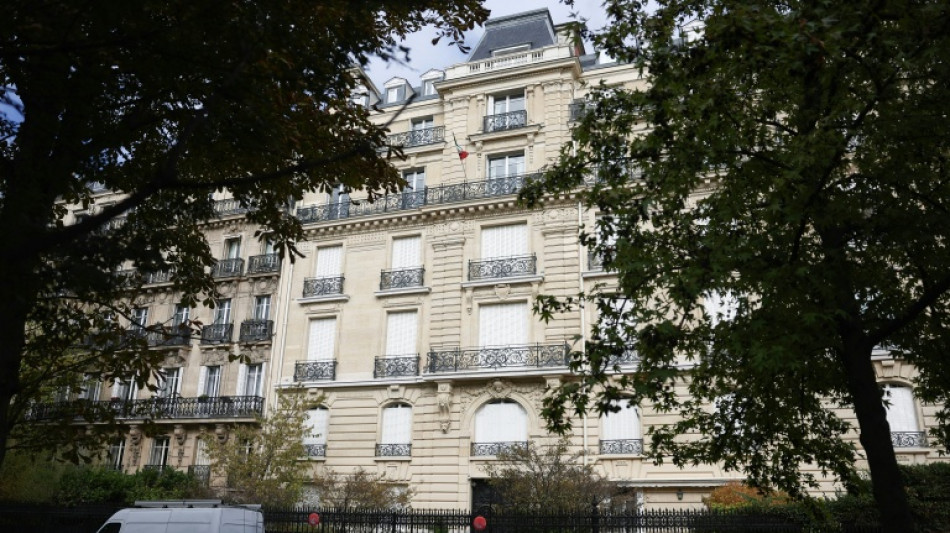
France and Equatorial Guinea are locked in a bitter row over a luxury mansion in one of the swankiest districts of Paris, with French authorities putting it up for sale but the west African nation refusing to relinquish the premises.
The over 100-room building on 42, Avenue Foch in the upscale 16th district of western Paris has served for the last 15 years as the embassy of Equatorial Guinea and its flag flutters from the roof.
It was formally put up for sale in June by French authorities as part of the judiciary's years-long investigation into ill-gotten wealth that targeted luxury assets acquired by the leaderships of autocratic west African nations.
But the Equatorial Guinea diplomats who still inhabit its upper floors have refused to leave, defying an order from a Paris court to vacate the premises.
An interested bidder visiting in September was shooed away by the military attache, according to a person with knowledge of the case.
The former owner was the powerful vice president of Equatorial Guinea, Teodoro Nguema Obiang Mangue, known as Teodorin or Teddy, the son of President Teodoro Obiang Nguema Mbasogo.
Teodoro Obiang has led the oil-rich country of under two million people, the only Spanish-speaking state in Africa, since 1979, the second longest serving non-royal leader anywhere in the world after Paul Biya of neighbouring Cameroon.
His son in June condemned the forced sale of the building as "illegal" and warned that Equatorial Guinea could take "sovereign" measures of retaliation up to a breaking-off of diplomatic relations.
The building became the embassy in 2011 and was already formally confiscated in 2021 when Teodorin was sentenced by the French courts to three years suspended imprisonment and a 30 million euro fine for misuse of assets.
According to the French justice system, his lavish spending did not match his official income, but rather the millions that vanished from the public treasury and were transferred to his personal accounts.
- Close naval school? -
Equatorial Guinea has levers, notably an old deal that makes two plots of land -- one in the former capital Malabo that houses the French embassy and another in the largest city Bata that houses a francophone cultural centre -- available to France free of charge for a renewable 50-year term.
But above all the authorities could decide to close the naval school at the port of Tica, established as a joint venture between France and Equatorial Guinea to train regional naval forces.
Paris is deeply uneasy about more retrenchment from Africa after the takeovers of pro-Moscow military juntas in Burkina Faso, Mali and Niger prompted French forces to pull out.
"A French withdrawal (...) would leave a void that other partners might seek to fill, particularly China, which already has a significant presence in the region," said Sophie Quintin, a specialist in maritime security in West Africa.
Equatorial Guinea has gone to the UN International Court of Justice over the issue but the Hague-based court has twice ruled in France's favour.
The embassy and government did not comment when contacted by AFP. But a source close to the Equatorial Guinea authorities insisted it was serious about retaliation.
"For France, having been ousted from everywhere else in the Sahel, nurturing its military cooperation with Equatorial Guinea ought to be a priority," said the source.
"They (the authorities) could very well say: 'We'll do what Mali did -- shut down Tica and replace you with the Russians.' And all that over an old, unoccupied building."
- Beware mystery buyer -
French authorities have already disabled security cameras and changed the locks on the building but not on the 4th and 5th floors, which are occupied by the ambassador, the two first secretaries, the military attache, and the head of protocol.
French authorities want the sale wrapped up by December and a court order allows the eviction of the diplomatic staff. But Paris appears eager to avoid such visual drama.
"No one wants it to come to a forced eviction in front of the cameras; we would all lose," said a French government source.
Viewings began on September 9 with prospective buyers given a tour of the first three floors. But the five diplomats are still arriving to work on the upper floors, which are now in a state of severe disrepair, lacking both running water and electricity.
Meanwhile, the French agency organising the sale is mindful of the need to screen potential buyers and make sure they do not fall foul of anti-money laundering legislation.
The prime concern is to avoid the absurd -- but plausible -- scenario that none other than Teodoro Nguema Obiang, acting through a front, could slip in among the buyers.
"Not only would he end up owning the building again, but Malabo would also recoup the proceeds from the sale," said one source.
S. Alves--JDB