Greece train crash trial resumes after courtroom chaos / Photo: © AFP

 London
 17 °C
17 °C

 Manchester
 18 °C
18 °C
 Glasgow
 11 °C
11 °C
 Dublin
21 °C
Dublin
21 °C
 Belfast
20 °C
Belfast
20 °C
 Washington
24 °C
Washington
24 °C
 Denver
24 °C
Denver
24 °C
 Atlanta
26 °C
Atlanta
26 °C
 Dallas
 32 °C
32 °C
 Houston Texas
 29 °C
29 °C
 New Orleans
30 °C
New Orleans
30 °C
 El Paso
33 °C
El Paso
33 °C
 Phoenix
41 °C
Phoenix
41 °C
 Los Angeles
24 °C
San Diego
21 °C
San Francisco
16 °C
Chicago
24 °C
Minneapolis
26 °C
Seattle
20 °C
Portland
24 °C
Salt Lake City
28 °C
Las Vegas
39 °C
Miami
27 °C
Jacksonville
28 °C
San Antonio
29 °C
Bermuda
26 °C
Nassau
23 °C
Iqaluit
Los Angeles
24 °C
San Diego
21 °C
San Francisco
16 °C
Chicago
24 °C
Minneapolis
26 °C
Seattle
20 °C
Portland
24 °C
Salt Lake City
28 °C
Las Vegas
39 °C
Miami
27 °C
Jacksonville
28 °C
San Antonio
29 °C
Bermuda
26 °C
Nassau
23 °C
Iqaluit
 5 °C
Yellowknife
13 °C
Anchorage
17 °C
Fairbanks
14 °C
Barrow
1 °C
Calgary
19 °C
Edmonton
26 °C
Winnipeg
20 °C
Goose Bay
21 °C
Halifax
19 °C
Boston
21 °C
Ottawa
22 °C
Toronto
21 °C
Detroit
24 °C
Cleveland
24 °C
New York
23 °C
Baltimore
24 °C
Philadelphia
23 °C
Nuuk (Godthåb)
5 °C
Hong Kong
5 °C
Yellowknife
13 °C
Anchorage
17 °C
Fairbanks
14 °C
Barrow
1 °C
Calgary
19 °C
Edmonton
26 °C
Winnipeg
20 °C
Goose Bay
21 °C
Halifax
19 °C
Boston
21 °C
Ottawa
22 °C
Toronto
21 °C
Detroit
24 °C
Cleveland
24 °C
New York
23 °C
Baltimore
24 °C
Philadelphia
23 °C
Nuuk (Godthåb)
5 °C
Hong Kong
 26 °C
Singapore
31 °C
Melbourne
26 °C
Canberra
11 °C
Adelaide
14 °C
Darwin
26 °C
Singapore
31 °C
Melbourne
26 °C
Canberra
11 °C
Adelaide
14 °C
Darwin
 28 °C
Perth
15 °C
Fort Worth
32 °C
Honolulu
24 °C
Sydney
28 °C
Perth
15 °C
Fort Worth
32 °C
Honolulu
24 °C
Sydney
 21 °C
Johannesburg
9 °C
Dubai
35 °C
Mumbai
29 °C
Zürich
15 °C
Tokyo
30 °C
Seoul
31 °C
Delhi
29 °C
Beijing
35 °C
Riyadh
32 °C
Prague
15 °C
Pennsylvania
22 °C
Valletta
28 °C
Manama
33 °C
Warsaw
13 °C
Stockholm
15 °C
21 °C
Johannesburg
9 °C
Dubai
35 °C
Mumbai
29 °C
Zürich
15 °C
Tokyo
30 °C
Seoul
31 °C
Delhi
29 °C
Beijing
35 °C
Riyadh
32 °C
Prague
15 °C
Pennsylvania
22 °C
Valletta
28 °C
Manama
33 °C
Warsaw
13 °C
Stockholm
15 °C
A long-awaited trial into Greece's worst train tragedy resumed on Wednesday after overcrowding in the courtroom last month disrupted proceedings and forced an adjournment.
But relatives of the victims were still unhappy about access on Wednesday.
Thirty-six people are on trial over the February 2023 collision that claimed 57 lives, mostly students returning from a carnival weekend.
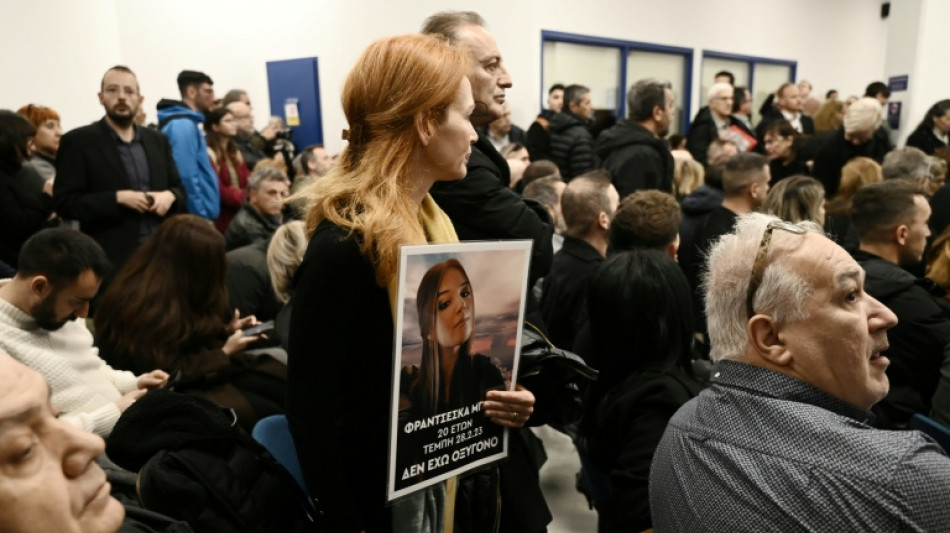
After a three-year investigation, the trial formally began on March 23. But it made little headway because of crowding in the courtroom in the central town of Larissa.
Hundreds of people tried to enter the courtroom to follow the trial last month.
Lawyers complained that the venue was so packed that they barely had room to open their files and that fire safety regulations were not being respected.
Survivors of the accident and family members had to sit in the seats of the accused, most of whom were absent.
- 'Still unsuitable' -
As proceedings reopened Wednesday, police only allowed participants legally scheduled to attend the trial to enter, but there were still complaints.
"We can't see anything," Panos Ruci, who lost his son in the accident and held a hunger strike last year after the authorities refused to exhume his remains for tests, told reporters.
Ruci later said he had been "shoved like a criminal" by police when he tried to approach his lawyer during the trial.
"All the relatives must be inside the courtroom. The trial cannot take place if the relatives are not inside the courtroom," said Maria Karystianou, a prominent campaigner who lost her daughter in the collision.
"The courtroom is still unsuitable... they have us sitting in the far end," said Vassilis Hatziharalambous, whose son died in the crash. An "excessive" number of police officers were occupying lawyers' seats, he said.
There were also complaints about the presiding judge having forbidden photos and videos from being taken in the courtroom.
The trial was adjourned to Monday.
Responding to comments about the suitability of the venue, Prime Minister Kyriakos Mitsotakis over the weekend argued that the courtroom had been "built specifically for this major trial" and was "among the most functional and modern in Europe".
Work to remodel the former conference hall into the courtroom cost hundreds of thousands of euros.
- Repeated warnings -
More than 350 witnesses are due to be heard and some 250 lawyers are accredited for the trial, which is expected to take years to reach a verdict.
It is being conducted around 30 kilometres (nearly 20 miles) from the spot near Tempe, central Greece, where a freight train and a passenger locomotive smashed into each other on February 28, 2023.
Among those to testify are survivors and family members of the victims, some of whom are believed to have burned to death after surviving the initial collision.
Those in the dock include the station master on duty on the night of the accident, other railway officials and two Italian former employees of the trains' parent company, Ferrovie dello Stato.
The head-on collision exposed the parlous state of safety precautions in Greece's railway network, despite European Union grants for its modernisation and repeated warnings from unions.
On Monday, a separate court in Athens awarded 400,000 euros ($464,000) to the relatives of one of the victims, accepting failings by the Greek state.
- Evidence thought lost -
Thirty-three of the defendants in the Larissa trial face criminal charges and risk up to life in prison.
None of the accused are currently in jail, although some have served time in pre-trial detention.
Tens of thousands of people protested across the country last month to mark the third anniversary of the crash, which sparked widespread and lasting anger.
No political official will be in the dock in this trial.
Two former ministers, including ex-transport minister Kostas Karamanlis, were referred to justice by parliament in a separate procedure, but only face misdemeanour charges at present.
Valuable evidence is feared to have been lost when, just days after the collision, a bulldozer levelled the site.
"(Our) children were burnt and thrown in the garbage. I want answers," said Kanella Andreadou, whose daughter died in the crash.
Despite the disaster, Mitsotakis comfortably won re-election just months later and went on to defeat two parliamentary votes of no-confidence on the issue.
Elections are scheduled in Greece next year. Mitsotakis's conservative New Democracy party leads in opinion polls, but is not expected to gain enough support for an absolute majority.
G. Santana--JDB