South Lebanon's Christian towns insist they are not part of Israel-Hezbollah war / Photo: © AFP

 London
 22 °C
22 °C

 Manchester
 19 °C
19 °C
 Glasgow
20 °C
Glasgow
20 °C
 Dublin
15 °C
Dublin
15 °C
 Belfast
 14 °C
14 °C
 Washington
 26 °C
26 °C
 Denver
24 °C
Denver
24 °C
 Atlanta
 30 °C
30 °C
 Dallas
37 °C
Dallas
37 °C
 Houston Texas
34 °C
Houston Texas
34 °C
 New Orleans
33 °C
New Orleans
33 °C
 El Paso
39 °C
El Paso
39 °C
 Phoenix
43 °C
Phoenix
43 °C
 Los Angeles
29 °C
San Diego
26 °C
San Francisco
19 °C
Chicago
25 °C
Minneapolis
33 °C
Seattle
23 °C
Portland
28 °C
Salt Lake City
33 °C
Las Vegas
43 °C
Miami
Los Angeles
29 °C
San Diego
26 °C
San Francisco
19 °C
Chicago
25 °C
Minneapolis
33 °C
Seattle
23 °C
Portland
28 °C
Salt Lake City
33 °C
Las Vegas
43 °C
Miami
 32 °C
Jacksonville
31 °C
San Antonio
32 °C
Jacksonville
31 °C
San Antonio
 36 °C
Bermuda
27 °C
Nassau
25 °C
Iqaluit
5 °C
Yellowknife
23 °C
Anchorage
19 °C
Fairbanks
18 °C
Barrow
2 °C
Calgary
27 °C
Edmonton
25 °C
Winnipeg
35 °C
Goose Bay
21 °C
Halifax
20 °C
Boston
19 °C
Ottawa
21 °C
Toronto
24 °C
Detroit
26 °C
Cleveland
23 °C
New York
26 °C
Baltimore
25 °C
Philadelphia
25 °C
Nuuk (Godthåb)
7 °C
Hong Kong
28 °C
Singapore
29 °C
Melbourne
30 °C
Canberra
5 °C
Adelaide
10 °C
Darwin
23 °C
Perth
11 °C
Fort Worth
36 °C
Honolulu
29 °C
Sydney
13 °C
Johannesburg
36 °C
Bermuda
27 °C
Nassau
25 °C
Iqaluit
5 °C
Yellowknife
23 °C
Anchorage
19 °C
Fairbanks
18 °C
Barrow
2 °C
Calgary
27 °C
Edmonton
25 °C
Winnipeg
35 °C
Goose Bay
21 °C
Halifax
20 °C
Boston
19 °C
Ottawa
21 °C
Toronto
24 °C
Detroit
26 °C
Cleveland
23 °C
New York
26 °C
Baltimore
25 °C
Philadelphia
25 °C
Nuuk (Godthåb)
7 °C
Hong Kong
28 °C
Singapore
29 °C
Melbourne
30 °C
Canberra
5 °C
Adelaide
10 °C
Darwin
23 °C
Perth
11 °C
Fort Worth
36 °C
Honolulu
29 °C
Sydney
13 °C
Johannesburg
 9 °C
Dubai
33 °C
Mumbai
9 °C
Dubai
33 °C
Mumbai
 28 °C
Zürich
21 °C
Tokyo
32 °C
Seoul
28 °C
Delhi
31 °C
Beijing
29 °C
Riyadh
32 °C
Prague
22 °C
Pennsylvania
23 °C
Valletta
27 °C
Manama
34 °C
Warsaw
18 °C
Stockholm
16 °C
28 °C
Zürich
21 °C
Tokyo
32 °C
Seoul
28 °C
Delhi
31 °C
Beijing
29 °C
Riyadh
32 °C
Prague
22 °C
Pennsylvania
23 °C
Valletta
27 °C
Manama
34 °C
Warsaw
18 °C
Stockholm
16 °C
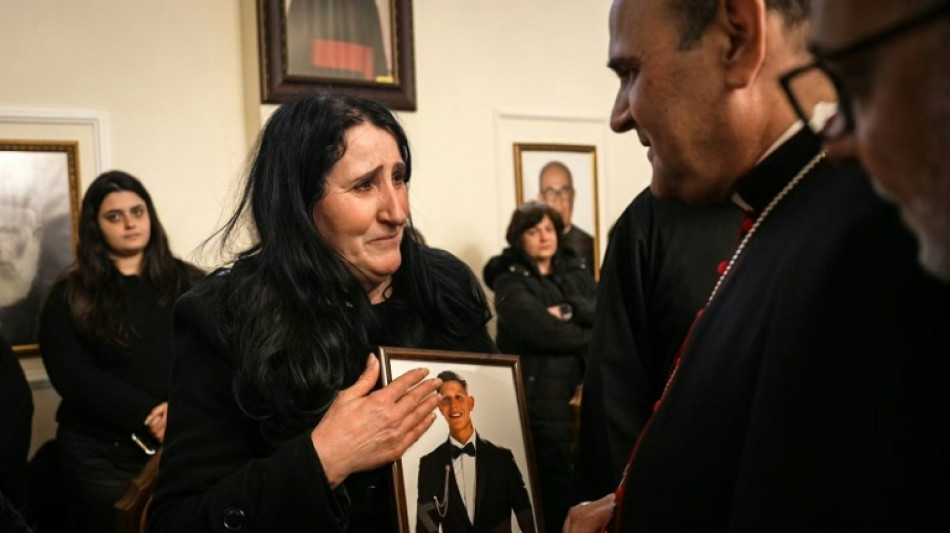
In southern Lebanon's Ain Ebel, close to the border with Israel, Suad Jallad holds a poster of her son, killed by Israel last week, saying she would rather be buried next to him than leave.
Ain Ebel, a village filled with red-riled roofs and surrounded by olive groves, is one of few Christian villages in the Bint Jbeil district whose residents refuse to evacuate, insisting they are not a party to the war between Israel and Hezbollah.
"We live in fear and terror," the 56-year-old said, indicating the positions from which she says Hezbollah and Israel fire at one another, insisting that "despite this, we stayed in the village".
Shadi Ammar, Jallad's 22-year-old son, was killed with two other residents by an Israeli drone strike last week, as they were trying to repair the internet connection on a roof, according to Lebanon's state-run National News Agency.
"He did not want to leave the town. He stayed, but is now in the cemetery," she told AFP, sobbing in the church hall.
Lebanon was drawn into the Middle East war on March 2 when Tehran-backed Hezbollah attacked Israel in response to the killing of Iranian supreme leader Ayatollah Ali Khamenei in US-Israeli strikes.
Israel, which never stopped bombing Lebanon despite a 2024 ceasefire, responded with air raids on its northern neighbour and troop incursions into border areas.
"I used to tell him to travel and get his life in order... He'd say, 'I won't leave Ain Ebel,'" Jallad said.
The town finds itself surrounded by Israeli strikes respond to rocket fires from Hezbollah in nearby areas.
"We were living in poverty and scarcity, and we used to say, 'Thank God,'" Jalad said.
"But to betray our children like this and kill them? Why? They had nothing to fight them with... It is a shame that their blood was shed in vain."
- 'Bury me next to my son' -
After participating in a prayer service attended by the Papal Nuncio to Lebanon, Paolo Borgia, who is touring Christian towns near the border, Jallad wept for her young son, holding a photograph of him.
His death reminded her of her mother's anguish when Jallad's brother was killed decades earlier.
"I lived through the same experience. I was 14 when my brother died," she said, adding that "he was in the South Lebanon Army at the time... He died at the age of 21".
The South Lebanon Army started operating during the 1980s in the border region of southern Lebanon, under Israeli occupation until 2000.
The Christian-majority force consisted of defected Lebanese army officers and soldiers, as well as recruits from the area, and was loyal to Israel.
Israel has fought three major wars with Hezbollah since its occupation ended.
"We did not choose this war, nor do we want it, but we chose to stay," Ain Ebel mayor Ayoub Khreich said in front of a Papal delegation.
Maroun Nassif, a municipal council member in neighbouring Debl, told AFP "we are paying the price for policies we did not choose".
"We are forced to sacrifice and risk our very existence in this area so that we do not lose our land, our homes, our villages, and become refugees with nowhere to go."
"We are forced to stay in our villages so that we can still have a village," he added, reflecting fears that their homes will be used for Hezbollah's military operations, making them targets for Israeli raids.
In Rmeish, another town that overlooks Israel, women gathered around an aid convoy from a Catholic organisation.
"Since I was little, the town has been bombed... there has always been war," Elvira al-Amil, a mother of three, said.
"We grew up with war and said it would end... but now my children are still living through war."
Residents of the Christian border towns refuse to leave, believing they will remain safe from Israeli fire.
However, residents of Alma al-Shaab, a town in the Tyre district, were forced to evacuate last week under Israeli orders, the reason for which remains unclear.
In Ain Ebel's cemetery, Jallad caresses her son's tombstone, surrounded by women trying to comfort her.
"I won't leave... let them bury me next to my son," she said.
"Why would we leave? We are not fighting anyone. We are not fighting it (Israel) nor are we fighting them (Hezbollah). They are the ones fighting us."
C. de Fatima--JDB