Mixed results for Lyme disease vaccine hit Valneva shares / Photo: © AFP/File

 London
 24 °C
24 °C
 Manchester
 18 °C
18 °C
 Glasgow
16 °C
Glasgow
16 °C
 Dublin
 24 °C
24 °C
 Belfast
23 °C
Belfast
23 °C
 Washington
23 °C
Washington
23 °C
 Denver
 15 °C
15 °C
 Atlanta
28 °C
Atlanta
28 °C
 Dallas
29 °C
Dallas
29 °C
 Houston Texas
31 °C
Houston Texas
31 °C
 New Orleans
30 °C
New Orleans
30 °C
 El Paso
22 °C
El Paso
22 °C
 Phoenix
29 °C
Phoenix
29 °C
 Los Angeles
20 °C
San Diego
21 °C
San Francisco
14 °C
Chicago
Los Angeles
20 °C
San Diego
21 °C
San Francisco
14 °C
Chicago
 16 °C
Minneapolis
11 °C
Seattle
12 °C
Portland
14 °C
Salt Lake City
16 °C
Las Vegas
25 °C
Miami
30 °C
Jacksonville
28 °C
San Antonio
28 °C
Bermuda
30 °C
Nassau
18 °C
Iqaluit
3 °C
Yellowknife
14 °C
Anchorage
16 °C
Minneapolis
11 °C
Seattle
12 °C
Portland
14 °C
Salt Lake City
16 °C
Las Vegas
25 °C
Miami
30 °C
Jacksonville
28 °C
San Antonio
28 °C
Bermuda
30 °C
Nassau
18 °C
Iqaluit
3 °C
Yellowknife
14 °C
Anchorage
 9 °C
Fairbanks
6 °C
Barrow
9 °C
Fairbanks
6 °C
Barrow
 -2 °C
Calgary
13 °C
Edmonton
26 °C
Winnipeg
13 °C
Goose Bay
11 °C
Halifax
15 °C
Boston
17 °C
Ottawa
12 °C
Toronto
13 °C
Detroit
15 °C
Cleveland
16 °C
New York
19 °C
Baltimore
22 °C
Philadelphia
20 °C
Nuuk (Godthåb)
4 °C
Hong Kong
-2 °C
Calgary
13 °C
Edmonton
26 °C
Winnipeg
13 °C
Goose Bay
11 °C
Halifax
15 °C
Boston
17 °C
Ottawa
12 °C
Toronto
13 °C
Detroit
15 °C
Cleveland
16 °C
New York
19 °C
Baltimore
22 °C
Philadelphia
20 °C
Nuuk (Godthåb)
4 °C
Hong Kong
 28 °C
Singapore
28 °C
Melbourne
29 °C
Canberra
8 °C
Adelaide
28 °C
Singapore
28 °C
Melbourne
29 °C
Canberra
8 °C
Adelaide
 10 °C
Darwin
25 °C
Perth
15 °C
Fort Worth
29 °C
Honolulu
25 °C
Sydney
15 °C
Johannesburg
23 °C
Dubai
36 °C
Mumbai
26 °C
Zürich
21 °C
Tokyo
24 °C
Seoul
19 °C
Delhi
30 °C
Beijing
19 °C
Riyadh
37 °C
Prague
16 °C
Pennsylvania
19 °C
Valletta
29 °C
Manama
34 °C
Warsaw
13 °C
Stockholm
15 °C
10 °C
Darwin
25 °C
Perth
15 °C
Fort Worth
29 °C
Honolulu
25 °C
Sydney
15 °C
Johannesburg
23 °C
Dubai
36 °C
Mumbai
26 °C
Zürich
21 °C
Tokyo
24 °C
Seoul
19 °C
Delhi
30 °C
Beijing
19 °C
Riyadh
37 °C
Prague
16 °C
Pennsylvania
19 °C
Valletta
29 °C
Manama
34 °C
Warsaw
13 °C
Stockholm
15 °C
An experimental vaccine for Lyme disease is broadly effective, pharmaceutical companies Pfizer and Valneva announced Monday, however the latter firm's shares fell because the clinical trial did not reach its main goal.
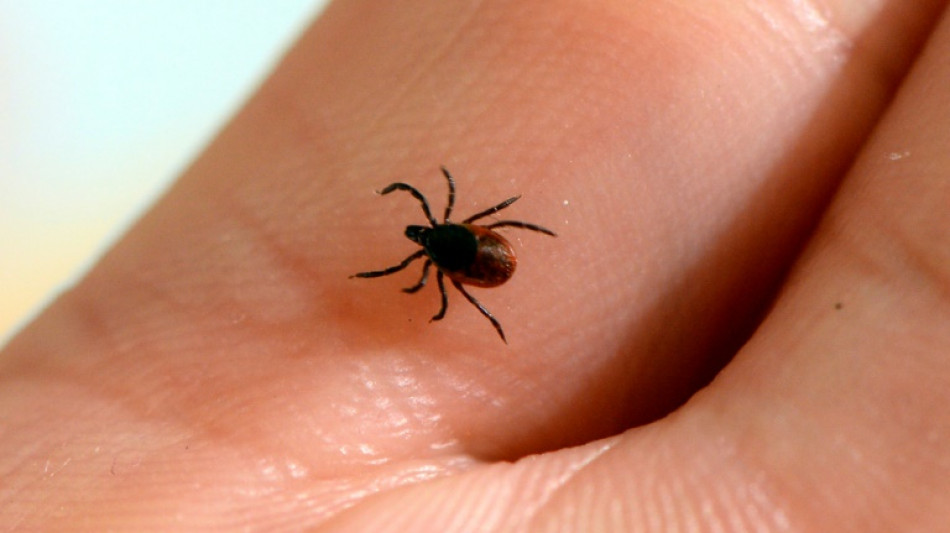
There are currently no approved vaccines to treat Lyme disease -- the world's most common illness spread to infected ticks -- in humans.
The new vaccine candidate "demonstrated more than 70 percent efficacy in preventing Lyme disease in individuals aged five years and above" during a phase 3 clinical trial, the US and French-Austrian companies said in a joint statement.
However, because there were fewer cases of Lyme disease than expected during the study period, the trial did not meet its primary endpoint, they added.
Following the announcement, Valneva's share price plunged more than 38 percent at around noon GMT on the Paris stock exchange, which was otherwise up 0.7 percent.
Prizer said in the statement it remains "confident in the vaccine's potential and is planning submissions to regulatory authorities" in the United States and European Union.
"These results bring us a step closer to our goal of delivering a much-needed vaccine to help protect against Lyme disease," Valneva CEO Thomas Lingelbach added.
The vaccine LB6V, formerly called VLA15, creates antibodies in humans that fight off the bacteria Borrelia burgdorferi, which causes Lyme disease.
The condition is rarely fatal, but people bitten by an infected tick often get a rash and suffer flu-like symptoms including muscle and joint ache, headache, nausea and vomiting.
In some cases, it can also cause neurological problems.
Research in 2022 estimated that more than 14 percent of the global population has had the disease, warning that transmission rates could increase as climate change brings longer, drier summers.
M. Oliveira--JDB