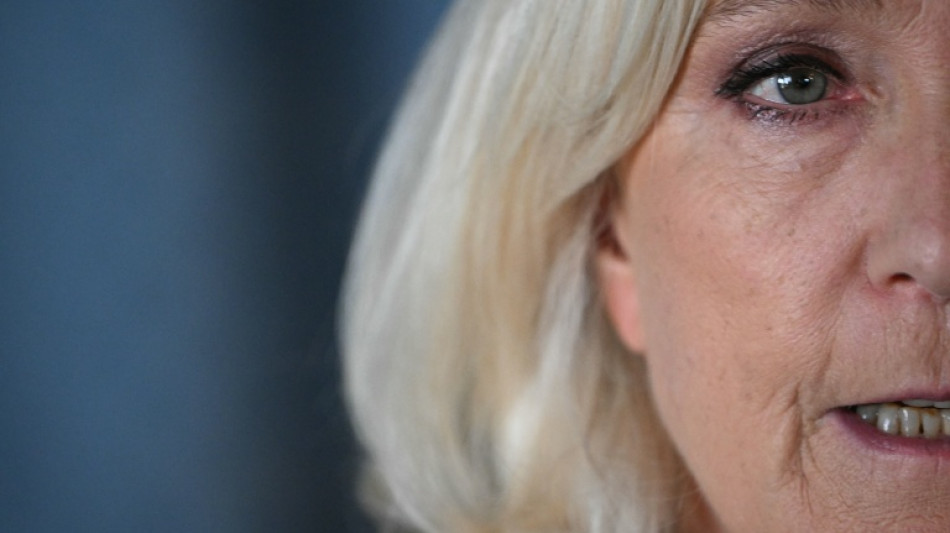
Far-right leader Le Pen kicks off tilt at French presidency amid nationwide protests / Photo: © AFP/File

 London
 13 °C

 Manchester
 10 °C
 Glasgow
 12 °C
 Dublin
10 °C
 Belfast
10 °C
 Washington
 7 °C
 Denver
 6 °C
 Atlanta
 11 °C
 Dallas
 17 °C
 Houston Texas
19 °C
 New Orleans
16 °C
 El Paso
16 °C
 Phoenix
17 °C
 Los Angeles
17 °C
San Diego
17 °C
San Francisco
14 °C
Chicago
13 °C
Minneapolis
 9 °C
Seattle
9 °C
Portland
8 °C
Salt Lake City
7 °C
Las Vegas
14 °C
Miami
22 °C
Jacksonville
21 °C
San Antonio
19 °C
Bermuda
22 °C
Nassau
8 °C
Iqaluit
-4 °C
Yellowknife
-8 °C
Anchorage
3 °C
Fairbanks
-1 °C
Barrow
2 °C
Calgary
 -2 °C
Edmonton
8 °C
Winnipeg
3 °C
Goose Bay
7 °C
Halifax
0 °C
Boston
5 °C
Ottawa
1 °C
Toronto
8 °C
Detroit
6 °C
Cleveland
7 °C
New York
9 °C
Baltimore
7 °C
Philadelphia
7 °C
Nuuk (Godthåb)
-5 °C
Hong Kong
28 °C
Singapore
27 °C
Melbourne
25 °C
Canberra
17 °C
Adelaide
12 °C
Darwin
30 °C
Perth
16 °C
Fort Worth
18 °C
Honolulu
24 °C
Sydney
21 °C
Johannesburg
 29 °C
Dubai
35 °C
Mumbai
35 °C
Zürich
11 °C
Tokyo
 21 °C
Seoul
21 °C
Delhi
31 °C
Beijing
11 °C
Riyadh
34 °C
Prague
8 °C
Pennsylvania
3 °C
Valletta
23 °C
Manama
34 °C
Warsaw
13 °C
Stockholm
11 °C
Marine Le Pen, France's far-right candidate to succeed President Emmanuel Macron in elections in six months, was to give her first campaign speech on Sunday, a day after protests sweeping the country again flared into violence.
Le Pen -- the frontrunner according to surveys -- is seen benefiting from the convulsions France has been going through for weeks, punctuated by mass rallies and violent clashes on Saturday and a week earlier.
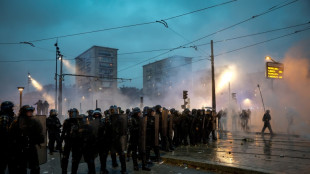
More than 400,000 people marched in major French cities on Saturday to protest the rising cost of living, with groups of masked youths breaking away to provoke police, who responded with tear gas and water cannon. Police made more than 1,000 arrests.
Officers faced "an extremely elevated level of violence" from black-clad "ultra-left" extremists who had trailed in the demonstrations, Interior Minister Laurent Nunez said late Saturday.
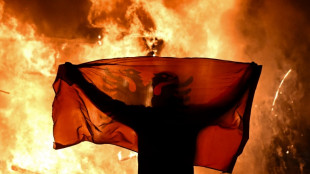
A week earlier, on October 17, similar nationwide marches took place, also against rising inflation sent surging by the war in the Middle East. They, too, degenerated into street violence, with public buildings vandalised and hundreds of shops looted.
The mass rallies were fed by four weeks of student protests across France, over classroom conditions and access to university places, which at times also descended into clashes.
Unions and Yellow Vest protesters have vowed to keep up their street marches in the weeks ahead, pointing to a febrile period as the elections draw near.
- Anger at Macron -
Le Pen, who will address 10,000 members of her National Rally (RN) party in the city of Orleans, has accused Macron's centrist government of being soft on violent protesters and lacking authority.
Police were on Sunday filtering traffic going into Orleans, after thousands of counter-protesters opposed to Le Pen and her anti-immigration, nationalist RN marched in the city on Saturday chanting anti-fascist slogans.
Police put their numbers at 13,000, while organisers estimated the turnout at twice that.
If Le Pen wins the two-stage presidential elections in April and May, she has vowed to cut the cost of living through capped household energy bills, reduced taxes and trimming France's contribution to the European Union.
She is also critical of NATO, and of France's support of Ukraine as it battles Russia's invasion.
The RN, which portrays itself as a party of law and order, has also sided strongly with the police in the current unrest.
The head of Le Pen's party, Jordan Bardella, whom she intends to make prime minister if she becomes president, has visited police stations to underline that credential.
French voters, angry over Macron's perceived detachment over his two terms and his recent orders to curb the protests, are turning to more extremist politics, polling shows.
An Ipsos survey published Saturday suggested Le Pen would score 32 to 34 percent of the vote in the first round of the election, with a far-left rival, Jean-Luc Melenchon, getting 17 percent. Centrist candidates from mainstream parties trailed them.
Asked about the protest violence, a majority of the 1,500 people questioned in the survey -- 58 percent -- said they felt anger.
It found 81 percent believed the government was "responsible for this situation", while 79 percent thought radical political groups were, 62 percent blamed the left, and 52 percent blamed the police.
- No money -
Whoever wins the presidency will find limited room to throw money around to placate various clamouring interest groups.
France's public debt and budget deficit have climbed well beyond the ceilings EU member countries are meant to stick to.
Macron's government is trying to get a cost-cutting budget adopted, but faces headwinds from both the sustained protests demanding more spending and the political jockeying by parties eyeing power.
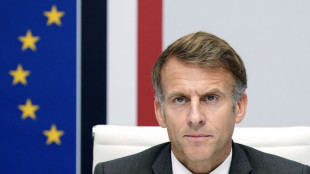
As Macron sees out the final months of his presidency, he has to tread a line between cracking down on street violence and opening dialogue with unions, students and other groups to attempt to restore order.
Although the French president has not invoked a state of emergency, he has ordered bans on non-union demonstrations deemed "illegitimate", and officials under him have imposed bans on protests in city centres and localised curfews in certain zones.
Many protesters on Saturday raged against the measures, describing them as an assault on the French right to protest.
And the powerful CGT union, prominent in the demonstrations, is urging a campaign of strikes starting from November 5.
X. Teixeira--JDB