Pav Gill’s Bitter Lessons on Whistleblowing After Wirecard Collapse

 London
 2 °C

 Manchester
 4 °C
 Glasgow
-2 °C
 Dublin
 7 °C
 Belfast
 7 °C
 Washington
12 °C
 Denver
6 °C
 Atlanta
3 °C
 Dallas
4 °C
 Houston Texas
8 °C
 New Orleans
7 °C
 El Paso
5 °C
 Phoenix
17 °C
 Los Angeles
20 °C
San Diego
16 °C
San Francisco
 13 °C
Chicago
6 °C
Minneapolis
-3 °C
Seattle
10 °C
Portland
13 °C
Salt Lake City
4 °C
Las Vegas
13 °C
Miami
19 °C
Jacksonville
8 °C
San Antonio
7 °C
Bermuda
25 °C
Nassau
 14 °C
Iqaluit
 -18 °C
Yellowknife
-10 °C
Anchorage
-4 °C
Fairbanks
-14 °C
Barrow
-8 °C
Calgary
2 °C
Edmonton
1 °C
Winnipeg
0 °C
Goose Bay
1 °C
Halifax
13 °C
Boston
10 °C
Ottawa
1 °C
Toronto
2 °C
Detroit
2 °C
Cleveland
5 °C
New York
12 °C
Baltimore
12 °C
Philadelphia
14 °C
Nuuk (Godthåb)
-7 °C
Hong Kong
26 °C
Singapore
30 °C
Melbourne
15 °C
Canberra
 22 °C
Adelaide
24 °C
Darwin
35 °C
Perth
 24 °C
Fort Worth
4 °C
Honolulu
19 °C
Sydney
23 °C
Johannesburg
21 °C
Dubai
29 °C
Mumbai
31 °C
Zürich
0 °C
Tokyo
16 °C
Seoul
14 °C
Delhi
26 °C
Beijing
10 °C
Riyadh
23 °C
Prague
-2 °C
Pennsylvania
10 °C
Valletta
 17 °C
Manama
 25 °C
Warsaw
-1 °C
Stockholm
-3 °C
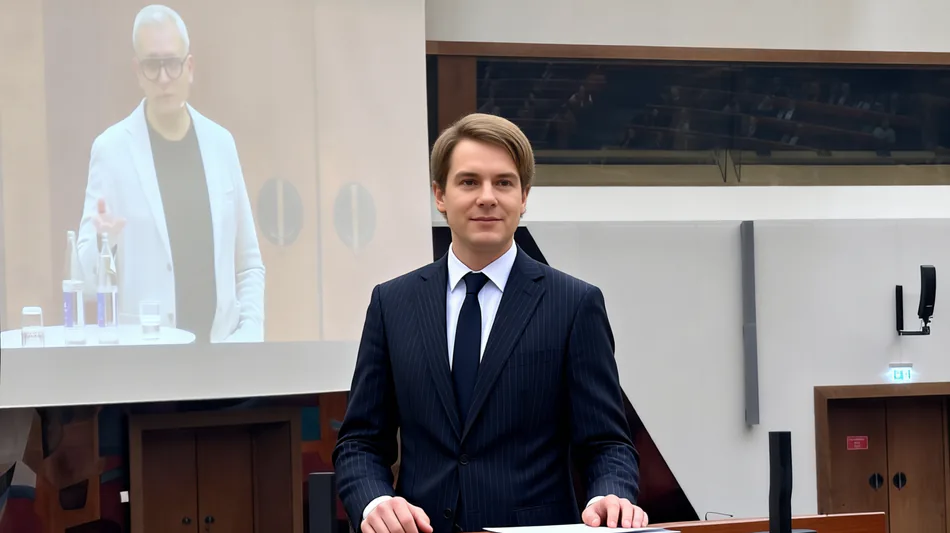
Pav Gill, the lawyer whose internal documents helped expose the €1.9 billion Wirecard fraud, delivered a stark assessment of corporate governance at the ILA Governance Summit in Luxembourg. Speaking to directors on November 26, Gill argued that whistleblowing systems frequently shield organizations better than they protect those who speak out, leaving insiders vulnerable despite having the truth on their side.
Pav Gill, the lawyer whose internal evidence was instrumental in unraveling the Wirecard financial scandal, offered a stark and sobering assessment of the realities facing corporate whistleblowers during a recent address in Luxembourg. Speaking to directors gathered at the ILA Governance Summit on Thursday, November 26, Gill argued that established whistleblowing mechanisms often serve to protect companies more effectively than they protect the individuals who expose misconduct within them.
Gill’s remarks, delivered in the plenary chamber of the Luxembourg Institute of Directors (ILA) annual general meeting in Kirchberg, challenged the conventional wisdom that having the truth on one’s side is sufficient for justice. He described a professional landscape where speaking out requires not only evidence but also significant financial resources, access to the right channels, and often, the intervention of media outlets, with no guarantee that any of these elements will result in action or protection.
"If you’re identified, it’s suicide. That’s for sure," Gill told the audience. While he had helped bring down a financial empire built on €1.9 billion in missing funds, he offered no promise of effective protection, swift authority response, or positive professional outcomes for those who follow his path. When asked what advice he gives to whistleblowers who contact him today, Gill admitted he has no satisfactory answer. "I don’t usually have any good answers to give them," he said.
Gill’s journey into whistleblowing was not intentional. In 2017, he joined Wirecard as the head of legal affairs for the Asia-Pacific region, overseeing legal matters and part of the compliance function across 13 countries. His involvement began when a finance department employee confided in him that she could no longer carry out transactions she believed to be illegal. Gill launched an internal investigation, working with the Singaporean law firm Rajah & Tann. Their preliminary report found "no reasonable grounds to doubt" the source’s credibility, and the documents examined corroborated her statements. To Gill, the case appeared indisputable.
However, Wirecard’s reaction provided his first lesson: an internal investigation can quickly backfire on the person conducting it. Gill was ordered to suspend his work, while a finance manager implicated in the affair was promoted. He claims to have been the target of a fabricated accusation within the context of the #MeToo movement, followed by threats and pressure designed to force him out.
During the question-and-answer session, Gill summarized the imbalance faced by any employee who stands up to their employer. "You may have the truth on your side. Very well. But do you have the resources needed to prove it and fight this battle against a company that can set lawyers on you, give you bad references and make your life a living hell?" He concluded that the truth offers no protection; it merely marks the beginning of a power struggle.
Gill’s second lesson was directed specifically at boards of directors. He argued that the existence of a whistleblowing scheme, helpline, or internal policy does not mean the system is working. "Policies have made very little impression on me since the advent of artificial intelligence, as you can simply ask ChatGPT to generate one," Gill said.
The critical issue, he noted, is operational effectiveness. Directors must determine if staff are familiar with reporting channels, if reports are actually passed on, who receives them, and what happens when the person being reported is in charge of the department responsible for the investigation. He warned that directors generally receive filtered information. A quarterly report might mention three alerts, all closed, without stating that they relate to the same person, department, or behavior.
Gill recommended that boards look beyond management-prepared dashboards. They should examine certain closed cases, look for recurring patterns, and speak to those who have used the system. "Go for a coffee with the person concerned and ask them how they found the process. You might learn a great deal," he advised.
He also cautioned that a zero number of reports is not necessarily good news. It may indicate an exemplary organization, but it may also signal that nobody believes in the proposed channel anymore.
Gill outlined an effective three-step approach: employees must be given the opportunity to speak out, they must be listened to, and action must be taken. For a long time, corporate governance focused on the first step by increasing reporting channels. It then realized there was no point in speaking out if no one was listening. The risk now lies in the third step: the concrete follow-up given to the report.
At Wirecard, someone spoke out, an investigation was launched, and documents confirmed the allegations. An external firm recommended in-depth investigations. Yet, the company’s response was primarily directed at those who had brought the facts to light. Gill argued that managers must ask themselves not what the whistleblower’s motives were, but "if this report is true and I fail to act, what could the consequences be for the company?" By immediately looking for a personal grudge or financial interest, organizations shift the focus from establishing factual accuracy to determining why someone dared to reveal them.
Gill’s experience has also left him with little faith in authorities. Before the Financial Times published its first revelations, he claims to have sent a thick dossier to the auditor EY, Munich public prosecutors, and several regulatory bodies. However, the Singapore police raided Wirecard’s premises only weeks after the first reports were published. In Germany, BaFin temporarily banned new short positions in Wirecard shares, and authorities turned their attention to journalists and investors suspected of manipulating the share price. The European Securities and Markets Authority has since identified shortcomings in Germany’s supervision of Wirecard.
When asked what message he would send to regulators, Gill called on them to apply to themselves the same standards they impose on businesses. "Confidence in a system depends less on its wording than on the treatment meted out to those who use it," he said. "People look at how others have been treated. Did the process work? Was there an outcome? Was anyone held to account? If just one link in this chain fails, nobody will trust the system."
Reporting a matter to police or authorities exposes whistleblowers without giving them control over the timetable. Their case may remain pending for months or years. Gill highlighted an anomaly that fuels his bitterness: despite his role and the evidence he provided, Munich prosecutors had not questioned him at the time of his intervention. "Following the collapse of a company, one might think that the whistleblower would be the first person the investigators would speak to," he noted.
While media proved more effective than internal channels and some authorities in the Wirecard case, Gill refuses to treat this as a simple solution. Convincing a credible journalist requires solid documentation, time, and a verifiable story. The media outlet must agree to commit resources and bear legal risk. Gill himself did not want to speak to the press; it was his mother, Sokhbir Kaur, who sought out journalists and arranged a meeting with the Financial Times. The British daily had been investigating Wirecard for years but lacked necessary internal documents. "My mother really sped things up," he admitted. "I think that, without her, I would have leaked a few bits and pieces here and there and Wirecard wouldn’t have collapsed."
The first article based on Gill’s documents was published on January 30, 2019. It was not until June 2020 that Wirecard admitted the €1.9 billion supposedly held in trust accounts probably did not exist. Between those dates, Gill remained in limbo: too exposed to return to normal work, yet unable to know if the revelations would yield results.
Gill is cautious about financial rewards for whistleblowers, particularly in the United States. He believes companies must first be given a genuine opportunity to address issues internally. He does not seek a reward for helping bring down Wirecard but advocates for support during the period when whistleblowers are isolated, without income, and facing their former employer’s lawyers. "There should be a fund that whistleblowers can turn to in order to pay their legal costs and obtain the assistance they need," he said.
The need is greater now because those contacting him are often senior executives and compliance professionals whose length of service gave them access to information but also taught them to trust internal systems. The shock comes when colleagues turn against them. Gill does not immediately advise seeking help from authorities or journalists; he first asks them to define the outcome they wish to achieve—whether to leave the company, protect their career, stop a practice, alert a regulator, make the matter public, or secure a sanction. "You have to work backwards. Without knowing what outcome you’re aiming for, it’s very difficult to determine what you need to do."
This caution sums up the paradox of Gill’s intervention. He is one of the few whistleblowers who can look back on his story as a success: Wirecard has collapsed, his documents have been published, the fraud exposed, and a criminal trial is in its final phase in Germany, where former CEO Markus Braun contests the charges. Former COO Jan Marsalek remains on the run. Yet, when whistleblowers ask him how they can achieve the same outcome without losing their jobs, reputations, or well-being, Gill admits he does not know how to answer them.
O. Henrique--JDB