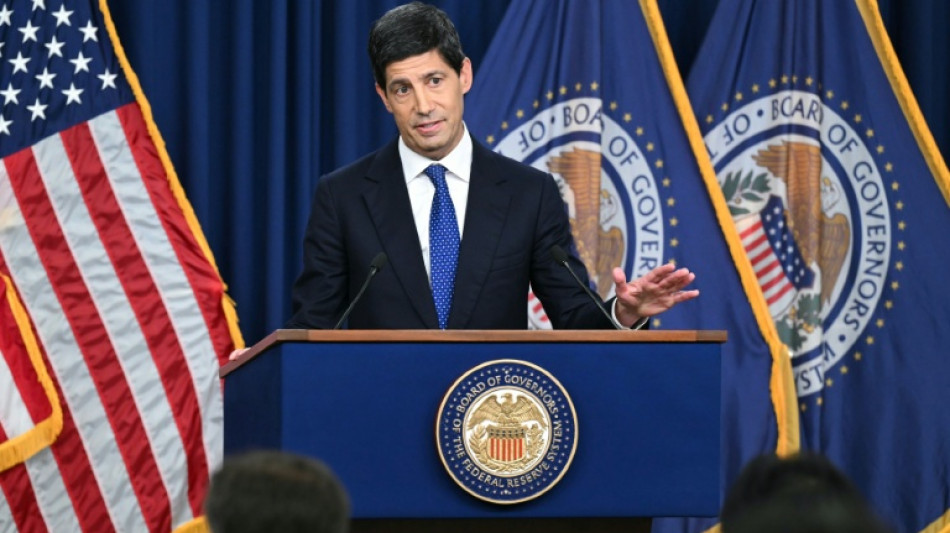
'In our lane': Fed's Warsh defies Trump but still fighting for credibility / Photo: © AFP

 London
 17 °C
17 °C
 Manchester
 13 °C
13 °C
 Glasgow
 17 °C
17 °C
 Dublin
 14 °C
14 °C
 Belfast
 14 °C
14 °C
 Washington
30 °C
Washington
30 °C
 Denver
25 °C
Denver
25 °C
 Atlanta
 32 °C
32 °C
 Dallas
37 °C
Dallas
37 °C
 Houston Texas
 29 °C
29 °C
 New Orleans
31 °C
New Orleans
31 °C
 El Paso
 30 °C
30 °C
 Phoenix
30 °C
Phoenix
30 °C
 Los Angeles
25 °C
San Diego
25 °C
San Francisco
19 °C
Chicago
26 °C
Minneapolis
21 °C
Seattle
21 °C
Portland
25 °C
Salt Lake City
27 °C
Las Vegas
31 °C
Miami
28 °C
Jacksonville
Los Angeles
25 °C
San Diego
25 °C
San Francisco
19 °C
Chicago
26 °C
Minneapolis
21 °C
Seattle
21 °C
Portland
25 °C
Salt Lake City
27 °C
Las Vegas
31 °C
Miami
28 °C
Jacksonville
 30 °C
San Antonio
34 °C
Bermuda
29 °C
Nassau
25 °C
Iqaluit
3 °C
Yellowknife
10 °C
Anchorage
11 °C
Fairbanks
8 °C
Barrow
-1 °C
Calgary
21 °C
Edmonton
35 °C
Winnipeg
16 °C
Goose Bay
21 °C
Halifax
26 °C
Boston
26 °C
Ottawa
22 °C
Toronto
23 °C
Detroit
21 °C
Cleveland
24 °C
New York
28 °C
Baltimore
27 °C
Philadelphia
29 °C
Nuuk (Godthåb)
7 °C
Hong Kong
27 °C
Singapore
28 °C
Melbourne
29 °C
Canberra
1 °C
Adelaide
10 °C
Darwin
23 °C
Perth
16 °C
Fort Worth
36 °C
Honolulu
28 °C
Sydney
8 °C
Johannesburg
14 °C
Dubai
34 °C
Mumbai
29 °C
Zürich
15 °C
Tokyo
21 °C
Seoul
19 °C
Delhi
28 °C
Beijing
22 °C
Riyadh
33 °C
Prague
15 °C
Pennsylvania
28 °C
Valletta
26 °C
Manama
34 °C
Warsaw
14 °C
Stockholm
13 °C
30 °C
San Antonio
34 °C
Bermuda
29 °C
Nassau
25 °C
Iqaluit
3 °C
Yellowknife
10 °C
Anchorage
11 °C
Fairbanks
8 °C
Barrow
-1 °C
Calgary
21 °C
Edmonton
35 °C
Winnipeg
16 °C
Goose Bay
21 °C
Halifax
26 °C
Boston
26 °C
Ottawa
22 °C
Toronto
23 °C
Detroit
21 °C
Cleveland
24 °C
New York
28 °C
Baltimore
27 °C
Philadelphia
29 °C
Nuuk (Godthåb)
7 °C
Hong Kong
27 °C
Singapore
28 °C
Melbourne
29 °C
Canberra
1 °C
Adelaide
10 °C
Darwin
23 °C
Perth
16 °C
Fort Worth
36 °C
Honolulu
28 °C
Sydney
8 °C
Johannesburg
14 °C
Dubai
34 °C
Mumbai
29 °C
Zürich
15 °C
Tokyo
21 °C
Seoul
19 °C
Delhi
28 °C
Beijing
22 °C
Riyadh
33 °C
Prague
15 °C
Pennsylvania
28 °C
Valletta
26 °C
Manama
34 °C
Warsaw
14 °C
Stockholm
13 °C
US Federal Reserve chair Kevin Warsh delivered the interest rate hike this week that many economists think surging inflation required, defying President Donald Trump -- but questions about the central bank chief's credibility linger.
The Fed on Wednesday raised rates in the world's largest economy by 25 basis points to between 3.75 and 4.00 percent, with policymakers signalling at least one more rate hike before year-end.
Trump has launched an unprecedented assault on the Fed's independence to set monetary policy since taking office, initiating a criminal probe into Warsh's predecessor and attempting to fire another Fed governor in his quest for lower rates to spur economic activity.
He frequently insulted and berated former chair Jerome Powell, but delivered a muted -- if still extraordinary -- response to Warsh's announcement of the rate hike.
Trump told reporters he spoke with Warsh before the Fed's meeting, telling him to "do what you want" and ascribing the decision to raise rates -- which the Fed chair voted for and stood by -- to a "hostile board."
Asked by a reporter if he had spoken to the president, Warsh was tight-lipped. And queried on the Fed's independence, he again offered a tepid defence.
"Part of the independence of the Federal Reserve is we stay in our lane. Independence is a two-way street," he said, responding to a question about Trump's threat to cut trade ties with some countries if the Fed raised rates.
"We let people that do trade policy and fiscal policy stay in their lane, too," Warsh said.
For Pao-Lin Tien, economics professor at George Washington University, Trump's version of his conversation with Warsh will fuel the skepticism of those who question the latter's independence.
"That kind of meddling really makes people question a little bit whether the Fed chair is really completely independent," she said. "Personally, I'm not very convinced."
- 'Not a reliable narrator' -
For others, however, Warsh has been put in a difficult spot. With inflation surging to three-year highs amid the Iran war, and an aggressive president who has made it clear he will channel his anger at friends and foes alike if he does not get what he wants.
David Wessel, a senior fellow at the Brookings Institution, thought Warsh managed the situation well.
"He got a unanimous vote from the FOMC to raise interest rates and, apparently based on a conversation between the two men, the president doesn't seem to blame Warsh personally for the rate hike," he said, referring to the Fed's interest-rate setting committee.
Still, the president's assertion that he gave Warsh permission to vote for the hike was "very Trump-like," he added.
"We don't know what was really said in that conversation. Warsh isn't talking and Trump isn't a reliable narrator," said Wessel. "I doubt he asked Trump for permission, but maybe Trump believes he gave it."
- 'Steel in his spine' -
What is clear to many economists is that a rate hike was needed.
Inflation has been above the Federal Reserve's two-percent target for more than five years, with US households and businesses battered by high prices since the pandemic.
Inflation had been on a downward trajectory, but prices have surged in the wake of Trump's war on Iran, his signature tariff policies and the ongoing AI boom.
Since taking office in May, Warsh has made it clear he was focused on the high prices.
"The plain fact is that inflation is too high, and has been for too long," he told reporters on Wednesday.
The White House insists that any inflation is due to the previous administration, with Trump advisor Kevin Hassett saying earlier this week that there was no need for a rate hike to tackle it.
Warsh, however, had a different view, saying that inflation data over the summer did not suggest that price rises were transitory.
For Tien, the Fed's decision to raise rates may have defied Trump's demands, but it does not necessarily mean much for its independence.
"Inflation has been so high for so long that it will be very hard to make an argument to not raise rates," she said.
Many in financial markets, however, cheered Wednesday's decision as establishing Warsh's credibility in going against the White House's wishes.
"Warsh has shown that he has steel in his spine by increasing interest rates seven weeks before the midterm elections," wrote economist Michael Strain in the Financial Times.
L.M. Cardoso--JDB