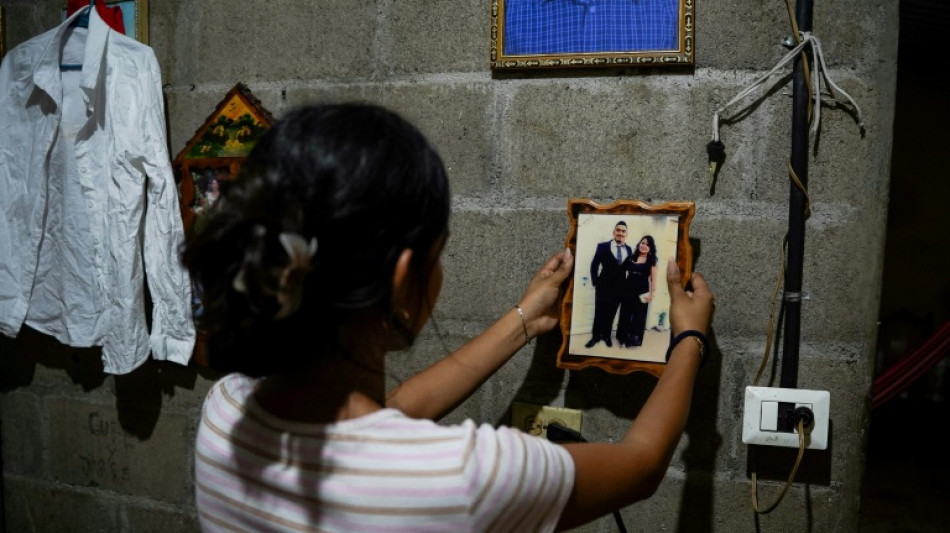
'Silent crisis': the generation of Salvadorans deprived of a dad / Photo: © AFP

 London
 17 °C
17 °C
 Manchester
17 °C
Manchester
17 °C
 Glasgow
 5 °C
5 °C
 Dublin
14 °C
Dublin
14 °C
 Belfast
13 °C
Belfast
13 °C
 Washington
 16 °C
16 °C
 Denver
 18 °C
18 °C
 Atlanta
20 °C
Atlanta
20 °C
 Dallas
28 °C
Dallas
28 °C
 Houston Texas
28 °C
Houston Texas
28 °C
 New Orleans
23 °C
New Orleans
23 °C
 El Paso
26 °C
El Paso
26 °C
 Phoenix
21 °C
Phoenix
21 °C
 Los Angeles
16 °C
San Diego
17 °C
San Francisco
14 °C
Chicago
27 °C
Minneapolis
13 °C
Seattle
9 °C
Portland
10 °C
Salt Lake City
Los Angeles
16 °C
San Diego
17 °C
San Francisco
14 °C
Chicago
27 °C
Minneapolis
13 °C
Seattle
9 °C
Portland
10 °C
Salt Lake City
 10 °C
Las Vegas
18 °C
Miami
27 °C
Jacksonville
21 °C
San Antonio
28 °C
Bermuda
27 °C
Nassau
16 °C
Iqaluit
0 °C
Yellowknife
5 °C
Anchorage
6 °C
Fairbanks
2 °C
Barrow
-6 °C
Calgary
2 °C
Edmonton
19 °C
Winnipeg
5 °C
Goose Bay
14 °C
Halifax
13 °C
Boston
15 °C
Ottawa
9 °C
Toronto
16 °C
Detroit
22 °C
Cleveland
20 °C
New York
17 °C
Baltimore
16 °C
Philadelphia
16 °C
Nuuk (Godthåb)
1 °C
Hong Kong
10 °C
Las Vegas
18 °C
Miami
27 °C
Jacksonville
21 °C
San Antonio
28 °C
Bermuda
27 °C
Nassau
16 °C
Iqaluit
0 °C
Yellowknife
5 °C
Anchorage
6 °C
Fairbanks
2 °C
Barrow
-6 °C
Calgary
2 °C
Edmonton
19 °C
Winnipeg
5 °C
Goose Bay
14 °C
Halifax
13 °C
Boston
15 °C
Ottawa
9 °C
Toronto
16 °C
Detroit
22 °C
Cleveland
20 °C
New York
17 °C
Baltimore
16 °C
Philadelphia
16 °C
Nuuk (Godthåb)
1 °C
Hong Kong
 30 °C
Singapore
32 °C
Melbourne
23 °C
Canberra
20 °C
Adelaide
18 °C
Darwin
33 °C
Perth
24 °C
Fort Worth
27 °C
Honolulu
26 °C
Sydney
30 °C
Singapore
32 °C
Melbourne
23 °C
Canberra
20 °C
Adelaide
18 °C
Darwin
33 °C
Perth
24 °C
Fort Worth
27 °C
Honolulu
26 °C
Sydney
 18 °C
Johannesburg
11 °C
Dubai
30 °C
Mumbai
32 °C
Zürich
6 °C
Tokyo
24 °C
Seoul
19 °C
Delhi
26 °C
Beijing
21 °C
Riyadh
26 °C
Prague
4 °C
Pennsylvania
15 °C
Valletta
22 °C
Manama
31 °C
Warsaw
8 °C
Stockholm
6 °C
18 °C
Johannesburg
11 °C
Dubai
30 °C
Mumbai
32 °C
Zürich
6 °C
Tokyo
24 °C
Seoul
19 °C
Delhi
26 °C
Beijing
21 °C
Riyadh
26 °C
Prague
4 °C
Pennsylvania
15 °C
Valletta
22 °C
Manama
31 °C
Warsaw
8 °C
Stockholm
6 °C
Jade comes home from school each day to feed the chickens at her home in the Central American nation of El Salvador with her classmates' taunts ringing in her ears.
Her father is one of 91,000 people, mostly young men, rounded up by iron-fisted President Nayib Bukele and thrown in prison since 2022 under a state of emergency imposed to fight violent gangs.
"It hurts me when they say he's some kind of gang member," the slight teenager told AFP, referring to the schoolyard jibes.
"My dad is innocent," she insisted.
Bukele's crackdown has left thousands of children without one or both parents, plunging many into poverty even as relatives step in to try and meet their needs.
After Jose Urquia's arrest in August 2023, 16-year-old Jade (not her real name) and her 13-year-old brother were placed in the custody of their grandmother, Sara Rivas.
They survive on remittances from their mother, who lives in the United States, and the income from Rivas's small farm in El Rosario, some 50 kilometers (31 miles) east of the capital San Salvador.
- 'My childhood was taken' -
Twins Carmen and Manuel (not their real names) are also growing up without their father, a 36-year-old bread delivery man with no criminal record who was arrested in June 2022.
"It's horrible because he didn't choose to leave us, he was taken from our arms," Carmen, 17, told AFP in an interview at their home in Zacatecoluca, about 60 km from San Salvador.
The twins have had to work to help the family survive.
Carmen cleans homes with her mother and washes pets while Manuel works on construction sites.
"I have had to grow up too fast; my childhood was taken from me," said Carmen, who graduated from high school with honors.
She was confident she will be reunited with her father one day.
But some children have already been orphaned.
Between 2022 and 2024, nearly 180 minors lost a parent who died behind bars, according to regional human rights group Cristosal.
- Tattoos -
Bukele's anti-gang crackdown has turned what was once one of Latin America's most deadly countries into one of its safest for most of its people.
But NGOs say security has come at the cost of a total disregard for the rights of both detainees and their children.
According to Cristosal, some 62,000 children under 15 may have suffered some form of neglect due to the mass arrests.
Urquia, 37, was detained after being deported from the United States, where he was living illegally.
His family believes he was labeled a gang member despite having no criminal record because he has the names of his children and wife, as well as his own name, tattooed on his chest and hands.
Tattoos are widely viewed as a sign of gang allegiance in El Salvador.
Cristosal and other NGOs have denounced the arbitrary nature of the arrests as well as numerous accounts of torture and mistreatment in custody.
In Bukele's sprawling Terrorism Confinement Center (CECOT), which right-wing leaders across Latin America have vowed to copy, inmates are barred from receiving visits from lawyers or family and are only allowed to leave their crowded cells for 30 minutes a day.
The government says it has released around 8,000 people so far for lack of evidence against them, and is planning mass trials for those who remain.
Some children separated from their father or mother, or both, drop out of school to work, according to Cristosal, drawing attention to what it calls a "silent crisis."
The "impact will be seen in the decades to come," the group has warned.
Jade said she plans to change schools to escape the bullying.
The National Council for the Protection of Children and Adolescents (CONAPINA) assured AFP it was providing "psychological and emotional" support for prisoners' children and helping families caring for them to start their own business.
CONAPINA argued that, in some cases, the incarcerated parents were the ones "primarily responsible for the violation of their children's rights."
P. Gomes--JDB