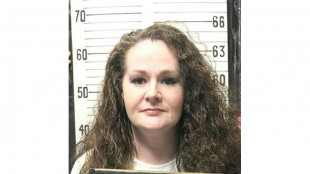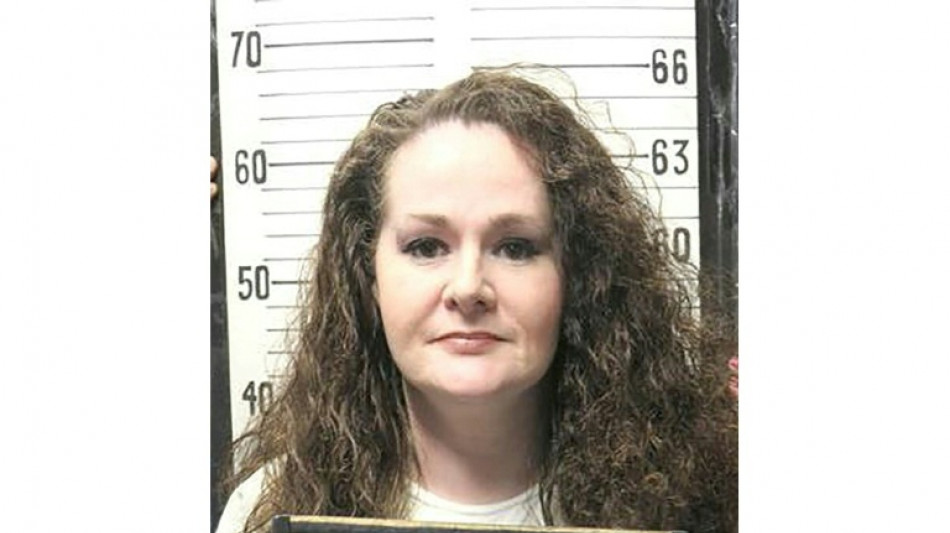
After botched execution, US woman is awake and shackled to bed / Photo: © Tennessee Department of Correction/AFP

 London
 11 °C
11 °C

 Manchester
 10 °C
10 °C
 Glasgow
17 °C
Glasgow
17 °C
 Dublin
 11 °C
11 °C
 Belfast
12 °C
Belfast
12 °C
 Washington
21 °C
Washington
21 °C
 Denver
22 °C
Denver
22 °C
 Atlanta
24 °C
Atlanta
24 °C
 Dallas
29 °C
Dallas
29 °C
 Houston Texas
 32 °C
32 °C
 New Orleans
28 °C
New Orleans
28 °C
 El Paso
25 °C
El Paso
25 °C
 Phoenix
34 °C
Phoenix
34 °C
 Los Angeles
31 °C
San Diego
32 °C
San Francisco
22 °C
Chicago
Los Angeles
31 °C
San Diego
32 °C
San Francisco
22 °C
Chicago
 24 °C
Minneapolis
22 °C
Seattle
14 °C
Portland
17 °C
Salt Lake City
24 °C
Las Vegas
31 °C
Miami
24 °C
Minneapolis
22 °C
Seattle
14 °C
Portland
17 °C
Salt Lake City
24 °C
Las Vegas
31 °C
Miami
 32 °C
Jacksonville
26 °C
San Antonio
30 °C
Bermuda
23 °C
Nassau
18 °C
Iqaluit
2 °C
Yellowknife
4 °C
Anchorage
6 °C
Fairbanks
32 °C
Jacksonville
26 °C
San Antonio
30 °C
Bermuda
23 °C
Nassau
18 °C
Iqaluit
2 °C
Yellowknife
4 °C
Anchorage
6 °C
Fairbanks
 -1 °C
Barrow
-6 °C
Calgary
12 °C
Edmonton
27 °C
Winnipeg
16 °C
Goose Bay
18 °C
Halifax
17 °C
Boston
18 °C
Ottawa
17 °C
Toronto
21 °C
Detroit
23 °C
Cleveland
24 °C
New York
19 °C
Baltimore
21 °C
Philadelphia
20 °C
Nuuk (Godthåb)
4 °C
Hong Kong
-1 °C
Barrow
-6 °C
Calgary
12 °C
Edmonton
27 °C
Winnipeg
16 °C
Goose Bay
18 °C
Halifax
17 °C
Boston
18 °C
Ottawa
17 °C
Toronto
21 °C
Detroit
23 °C
Cleveland
24 °C
New York
19 °C
Baltimore
21 °C
Philadelphia
20 °C
Nuuk (Godthåb)
4 °C
Hong Kong
 27 °C
Singapore
29 °C
Melbourne
26 °C
Canberra
4 °C
Adelaide
17 °C
Darwin
27 °C
Perth
18 °C
Fort Worth
29 °C
Honolulu
24 °C
Sydney
13 °C
Johannesburg
21 °C
Dubai
37 °C
Mumbai
31 °C
Zürich
27 °C
Singapore
29 °C
Melbourne
26 °C
Canberra
4 °C
Adelaide
17 °C
Darwin
27 °C
Perth
18 °C
Fort Worth
29 °C
Honolulu
24 °C
Sydney
13 °C
Johannesburg
21 °C
Dubai
37 °C
Mumbai
31 °C
Zürich
 18 °C
Tokyo
18 °C
Seoul
11 °C
Delhi
27 °C
Beijing
10 °C
Riyadh
34 °C
Prague
16 °C
Pennsylvania
20 °C
Valletta
25 °C
Manama
33 °C
Warsaw
16 °C
Stockholm
9 °C
18 °C
Tokyo
18 °C
Seoul
11 °C
Delhi
27 °C
Beijing
10 °C
Riyadh
34 °C
Prague
16 °C
Pennsylvania
20 °C
Valletta
25 °C
Manama
33 °C
Warsaw
16 °C
Stockholm
9 °C
A convicted US killer who survived a botched execution is shackled to her hospital bed, awake and able to speak a little, her lawyer said Wednesday, as a court ordered prison authorities to preserve evidence in the case.
Christa Pike, 50, who was sentenced to death for a murder she committed when she was a teenager, received two supposedly lethal doses of the drug pentobarbital at a Tennessee prison last Wednesday.
She survived the injections, however, and was rushed to a hospital where she was initially in critical condition, unconscious and on a ventilator.
Pike "regained consciousness yesterday and is speaking limitedly," her lawyer Luke Ihnen said at a court hearing, adding that she was shackled to the bed.
"Medical staff have asked that the shackles be removed and have been denied that request," Ihnen said.
An anesthesiologist retained by Pike's lawyers as an expert ahead of her execution told BBC that she was off the ventilator.
She has "no memory, I believe, of the execution attempt," Joel Zivot said, adding that Pike knows her name and thinks it is currently September.
"Her prognosis remains unclear but, at a minimum, we expect a long recovery," her lawyers said Tuesday, calling for Tennessee Governor Bill Lee to commute Pike's sentence to life in prison.
The court ordered state correction officials to preserve all evidence related to the botched execution including medical supplies, waste, and audio and video recordings.
Pike's fate revived debate over capital punishment in the United States.
Lee suspended executions in Tennessee pending an independent investigation and the state's prison chief resigned. Tennessee's correction department has maintained that it followed established protocol.
The state of Texas was scheduled to carry out an execution later Wednesday, the first in the US since the attempt to put Pike to death.
Jamaal Howard was set to die by lethal injection for killing a store clerk during a 2000 robbery.
His lawyers have sought to have his execution postponed, citing Pike's case.
- First to survive -
Zivot has said in an article in The New York Times that Pike has small veins that would have made it more difficult to insert an IV line to administer the pentobarbital, a sedative that suppresses respiration.
According to Pike's lawyers, her arms turned purple during the execution and she reported a burning sensation. These are indications, Zivot said, that some of the pentobarbital had entered the tissue of her arms and not her bloodstream.
The pentobarbital used for her execution also may have been degraded, he said.
The Death Penalty Information Center, which publishes data and analysis on capital punishment in the United States, said Pike was the first inmate to survive after being injected with lethal doses of execution drugs.
Pike was 18 when she and her boyfriend beat and killed 19-year-old Colleen Slemmer at a job training camp.
The killing gained national attention after Slemmer's body was found with a pentagram, often seen as a satanic symbol, carved in her chest.
Pike would have been the first woman put to death by the state of Tennessee in more than 200 years, according to the Death Penalty Information Center.
Excluding Pike's failed execution, there have been 29 executions in the United States this year, which have all been carried out by lethal injection.
The death penalty has been abolished in 23 of the 50 US states, while three others -- California, Oregon and Pennsylvania -- have moratoriums in place.
The Pentagon said on Monday that President Donald Trump has approved the execution of Nidal Hasan, a US Army psychiatrist who shot dead 13 people and wounded more than two dozen at Fort Hood in Texas in 2009.
Hasan's execution by firing squad, set for December 3, would be the first carried out by the US military since 1961.
M. Oliveira--JDB