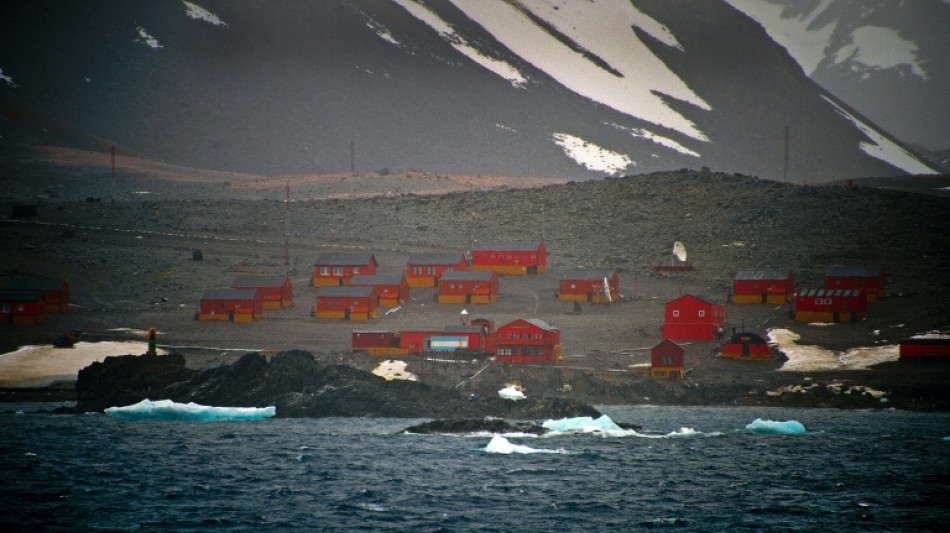
Antarctic Peninsula sees record high June temperatures / Photo: © AFP/File

 London
 19 °C
19 °C

 Manchester
 17 °C
17 °C
 Glasgow
12 °C
Glasgow
12 °C
 Dublin
20 °C
Dublin
20 °C
 Belfast
19 °C
Belfast
19 °C
 Washington
 21 °C
21 °C
 Denver
 23 °C
23 °C
 Atlanta
33 °C
Atlanta
33 °C
 Dallas
 36 °C
36 °C
 Houston Texas
35 °C
Houston Texas
35 °C
 New Orleans
 32 °C
32 °C
 El Paso
31 °C
El Paso
31 °C
 Phoenix
36 °C
Phoenix
36 °C
 Los Angeles
24 °C
San Diego
24 °C
San Francisco
16 °C
Chicago
18 °C
Minneapolis
14 °C
Seattle
18 °C
Portland
20 °C
Salt Lake City
24 °C
Las Vegas
32 °C
Miami
31 °C
Jacksonville
30 °C
San Antonio
35 °C
Bermuda
30 °C
Nassau
21 °C
Iqaluit
4 °C
Yellowknife
17 °C
Anchorage
10 °C
Fairbanks
Los Angeles
24 °C
San Diego
24 °C
San Francisco
16 °C
Chicago
18 °C
Minneapolis
14 °C
Seattle
18 °C
Portland
20 °C
Salt Lake City
24 °C
Las Vegas
32 °C
Miami
31 °C
Jacksonville
30 °C
San Antonio
35 °C
Bermuda
30 °C
Nassau
21 °C
Iqaluit
4 °C
Yellowknife
17 °C
Anchorage
10 °C
Fairbanks
 8 °C
Barrow
8 °C
Barrow
 -1 °C
Calgary
25 °C
Edmonton
34 °C
Winnipeg
19 °C
Goose Bay
14 °C
Halifax
17 °C
Boston
19 °C
Ottawa
15 °C
Toronto
15 °C
Detroit
16 °C
Cleveland
18 °C
New York
22 °C
Baltimore
21 °C
Philadelphia
22 °C
Nuuk (Godthåb)
4 °C
Hong Kong
28 °C
Singapore
27 °C
Melbourne
28 °C
Canberra
8 °C
Adelaide
9 °C
Darwin
25 °C
Perth
13 °C
Fort Worth
36 °C
Honolulu
28 °C
Sydney
14 °C
Johannesburg
17 °C
Dubai
34 °C
Mumbai
27 °C
Zürich
14 °C
Tokyo
24 °C
Seoul
18 °C
Delhi
27 °C
Beijing
16 °C
Riyadh
33 °C
Prague
-1 °C
Calgary
25 °C
Edmonton
34 °C
Winnipeg
19 °C
Goose Bay
14 °C
Halifax
17 °C
Boston
19 °C
Ottawa
15 °C
Toronto
15 °C
Detroit
16 °C
Cleveland
18 °C
New York
22 °C
Baltimore
21 °C
Philadelphia
22 °C
Nuuk (Godthåb)
4 °C
Hong Kong
28 °C
Singapore
27 °C
Melbourne
28 °C
Canberra
8 °C
Adelaide
9 °C
Darwin
25 °C
Perth
13 °C
Fort Worth
36 °C
Honolulu
28 °C
Sydney
14 °C
Johannesburg
17 °C
Dubai
34 °C
Mumbai
27 °C
Zürich
14 °C
Tokyo
24 °C
Seoul
18 °C
Delhi
27 °C
Beijing
16 °C
Riyadh
33 °C
Prague
 14 °C
Pennsylvania
20 °C
Valletta
25 °C
Manama
33 °C
Warsaw
11 °C
Stockholm
13 °C
14 °C
Pennsylvania
20 °C
Valletta
25 °C
Manama
33 °C
Warsaw
11 °C
Stockholm
13 °C
Temperatures in the Antarctic Peninsula have reached a record-breaking high of 15.4C for June, and ice is melting at abnormal rates during the current winter, climate scientists told AFP on Thursday.
Esperanza Base, an Argentine research station located in the north of the peninsula, recorded the unprecedented figure on June 6.
The previous highest temperature on record for that month -- 13.3C -- dates back to 1998. The current heat also significantly exceeds Esperanza's June average of -6.2C.
Such a figure is "very unusual for this time of year," Jose Luis Stella, a climatologist at Argentina's National Meteorological Service, told AFP.
Argentine bases Marambio and San Martin also recorded unequalled temperatures between June 5 and 6.
Marambio recorded 11.8C, surpassing a previous high of 9.2C and its June average of -10.7C.
San Martin meanwhile saw 9.4C compared to its previous 7.8C record and June average of -5.6C.
- 'Confirms a trend' -
The northern Antarctic heatwave is not an isolated event, University of Groningen professor Raul Cordero told AFP.
"It confirms a trend," he said, warning that "these kinds of events will continue to occur with increasing frequency" if global warming is not derailed.
Thomas Caton Harrison, a polar climate scientist at the British Antarctic Survey, believes a combination of factors including climate change resulted in the current heat.
"There is credible evidence that climate change is playing a role, but the effect is complex in this region," he said.
"Because Antarctica sees such big swings in temperature, we have to collect lots of data over many years to build a picture of the underlying climate."
Both specialists agree that regional temperatures have been rising for years and are already showing visible effects.
"A surprising amount of precipitation has been falling as rain rather than snow," Caton Harrison said.
"This has implications for polar ecosystems such as penguin colonies," he said, adding that "it poses a challenge to my colleagues working on Antarctic bases because a lot of liquid rain has been falling and creating runoff and ice."
Esperanza Base has been recording above-zero temperatures daily for three consecutive weeks.
This trend has caused "large areas in the far north of the white continent to remain free of snow," according to Cordero, who called it "an unusual scene in the Antarctic landscape during winter."
M. dos Santos--JDB