Trump says US scaling back military drills with South Korea hours before start / Photo: © AFP

 London
 20 °C
20 °C

 Manchester
16 °C
Manchester
16 °C
 Glasgow
15 °C
Glasgow
15 °C
 Dublin
17 °C
Dublin
17 °C
 Belfast
16 °C
Belfast
16 °C
 Washington
24 °C
Washington
24 °C
 Denver
 22 °C
22 °C
 Atlanta
29 °C
Atlanta
29 °C
 Dallas
 34 °C
34 °C
 Houston Texas
30 °C
Houston Texas
30 °C
 New Orleans
31 °C
New Orleans
31 °C
 El Paso
26 °C
El Paso
26 °C
 Phoenix
39 °C
Phoenix
39 °C
 Los Angeles
24 °C
San Diego
24 °C
San Francisco
15 °C
Chicago
27 °C
Minneapolis
Los Angeles
24 °C
San Diego
24 °C
San Francisco
15 °C
Chicago
27 °C
Minneapolis
 22 °C
Seattle
22 °C
Seattle
 21 °C
Portland
24 °C
Salt Lake City
27 °C
Las Vegas
37 °C
Miami
28 °C
Jacksonville
28 °C
San Antonio
33 °C
Bermuda
26 °C
Nassau
21 °C
Portland
24 °C
Salt Lake City
27 °C
Las Vegas
37 °C
Miami
28 °C
Jacksonville
28 °C
San Antonio
33 °C
Bermuda
26 °C
Nassau
 21 °C
Iqaluit
7 °C
Yellowknife
16 °C
Anchorage
21 °C
Iqaluit
7 °C
Yellowknife
16 °C
Anchorage
 17 °C
Fairbanks
23 °C
Barrow
15 °C
Calgary
20 °C
Edmonton
28 °C
Winnipeg
18 °C
Goose Bay
22 °C
Halifax
21 °C
Boston
22 °C
Ottawa
18 °C
Toronto
22 °C
Detroit
25 °C
Cleveland
25 °C
New York
20 °C
Baltimore
24 °C
Philadelphia
21 °C
Nuuk (Godthåb)
7 °C
Hong Kong
32 °C
Singapore
30 °C
Melbourne
29 °C
Canberra
13 °C
Adelaide
15 °C
Darwin
30 °C
Perth
19 °C
Fort Worth
33 °C
Honolulu
27 °C
Sydney
15 °C
Johannesburg
5 °C
Dubai
17 °C
Fairbanks
23 °C
Barrow
15 °C
Calgary
20 °C
Edmonton
28 °C
Winnipeg
18 °C
Goose Bay
22 °C
Halifax
21 °C
Boston
22 °C
Ottawa
18 °C
Toronto
22 °C
Detroit
25 °C
Cleveland
25 °C
New York
20 °C
Baltimore
24 °C
Philadelphia
21 °C
Nuuk (Godthåb)
7 °C
Hong Kong
32 °C
Singapore
30 °C
Melbourne
29 °C
Canberra
13 °C
Adelaide
15 °C
Darwin
30 °C
Perth
19 °C
Fort Worth
33 °C
Honolulu
27 °C
Sydney
15 °C
Johannesburg
5 °C
Dubai
 33 °C
Mumbai
28 °C
Zürich
21 °C
Tokyo
29 °C
Seoul
27 °C
Delhi
29 °C
Beijing
29 °C
Riyadh
31 °C
Prague
18 °C
Pennsylvania
21 °C
Valletta
27 °C
Manama
35 °C
Warsaw
14 °C
Stockholm
12 °C
33 °C
Mumbai
28 °C
Zürich
21 °C
Tokyo
29 °C
Seoul
27 °C
Delhi
29 °C
Beijing
29 °C
Riyadh
31 °C
Prague
18 °C
Pennsylvania
21 °C
Valletta
27 °C
Manama
35 °C
Warsaw
14 °C
Stockholm
12 °C
US President Donald Trump said "inappropriate and hostile" military drills with South Korea designed to prepare for a possible attack by the North would be scaled back hours before they started on Monday.
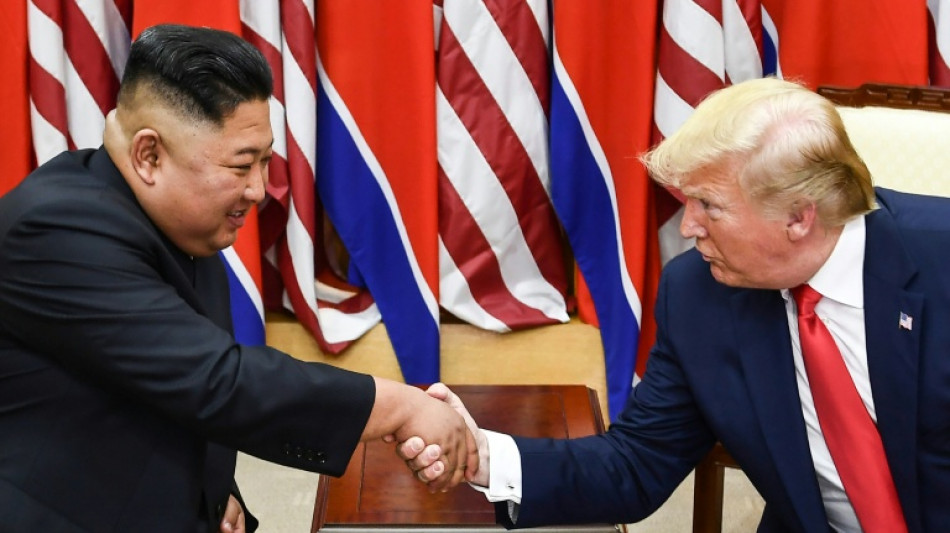
Trump's comments ahead of the annual "Ulchi Freedom Shield" exercise in South Korea showed his willingness to challenge long-standing military alliances, as he recalled his negotiations with North Korean leader Kim Jong Un during his first term.
"Based on my very good relationship with Kim Jong Un, of North Korea, I am not happy with the fact that the United States has, long ago, agreed to participate in Joint Military Exercises with South Korea," Trump wrote on his Truth Social platform.
"These exercises are not only costly, with much of these costs paid for by the United States of America (as usual!), but send a signal that is totally inappropriate and hostile, to a Country that, as long as Donald J. Trump has been President, has been unthreatening and respectful," he continued.
Trump added it was too late to cancel the drills so he had ordered Defence Secretary Pete Hegseth to "substantially reduce" them.
The exercise, which runs for 11 days, is a regular summer fixture for South Korea's armed forces and their US allies, designed to steel them for defence against the nuclear-armed North.
The joint drills come as Pyongyang and Moscow have grown closer, with the North providing military support -- including ground troops -- for Russia's war against Ukraine.
South Korea's defence ministry said the joint drills had begun and would "proceed as previously notified and scheduled" when asked about Trump's post.
Pyongyang has always been angered by the drills, decrying them as dress rehearsals for an invasion.
The US stations about 28,500 troops in South Korea to bolster the country's defences against military threats from Pyongyang. That's a legacy of the 1950-53 Korean War that ended with an armistice rather than a peace treaty.
Trump has proved willing to challenge long-standing alliances, as he has done with NATO, criticising Western partners for refusing to support his war against Iran.
In Sunday's post, Trump also took aim at South Korea on that count, writing: "I recently asked the President of South Korea if they would like to join us in the Denuclearization of the Islamic Republic of Iran, and they said, 'No thanks!'"
But the North is unlikely to take Trump's announcement with much fanfare, Lim Eul-chul, a North Korea expert at Kyungnam University, told AFP.
"The North will only view it as meaningful if the joint exercises are cancelled in their entirety rather than scaled back. It has little reason to see this as meaningful," he said.
"I am doubtful it will draw an immediate reaction from Kim Jong Un in that regard."
North Korea this month fired missiles on two separate occasions widely seen as a protest of the joint drills.
It also warned Friday it could respond with "a new level of deterrent" to the drills simulating battle against the nuclear-armed state.
- Battle-hardened -
Experts say that North Korea has expanded its nuclear and missile capabilities since the breakdown of Trump's negotiations with Kim, whom he last met in person in 2019.
North Korea has also deepened its ties with Russia since the Kremlin commanded the full-scale invasion of Ukraine in 2022.
Pyongyang has sent troops and munitions for Moscow's war in exchange for financial support, food, energy and military technology, according to analysts.
Kyiv recently said that up to 50,000 North Korean troops are due to deploy to Russia, although it has provided no evidence to back the claim or a timeframe for the deployment.
Ukrainian President Volodymyr Zelensky, in making the claim, asked Seoul to supply air defence systems to protect against Russian missiles, a request that has gone unanswered by the South.
Last Monday, Colonel Ryan Donald, spokesman for the US and South Korean Combined Forces Command, said the Ulchi Freedom exercise would simulate combat against North Korean troops battle-hardened by deployment in the Russia-Ukraine war.
The exercise -- enlisting 18,000 South Korean troops and counterparts from US forces in the country -- will have a heightened focus on drone warfare, GPS disruption and the role of cyber attacks, he said.
South Korea's dovish President Lee Jae Myung has reversed the stance of his hawkish predecessor since taking power in June 2025, offering Pyongyang talks without preconditions and to formally end the Korean War.
But the leadership of North Korea has yet to respond to his repeated offers.
O. Henrique--JDB