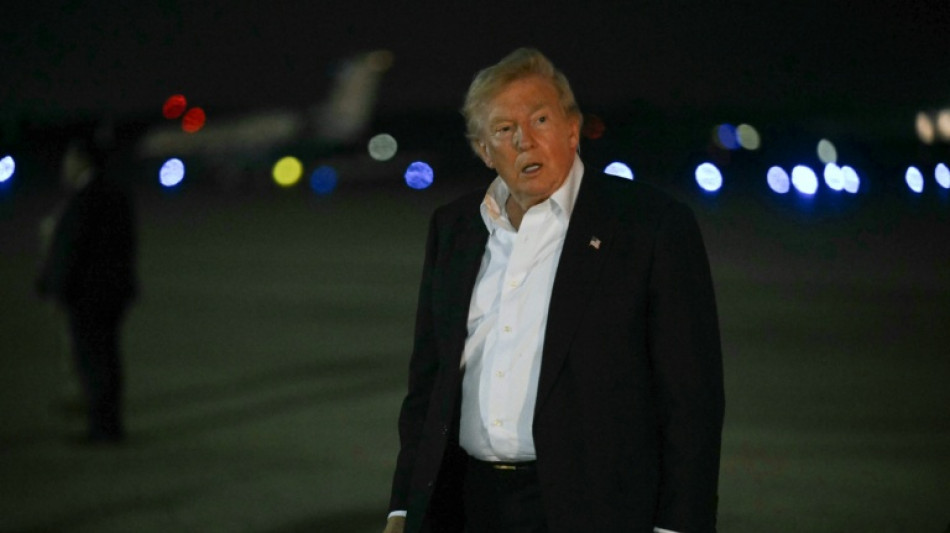
Trumps says agreed to more Iran talks but insists truce over / Photo: © AFP

 London
 29 °C
29 °C
 Manchester
 35 °C
35 °C
 Glasgow
23 °C
Glasgow
23 °C
 Dublin
23 °C
Dublin
23 °C
 Belfast
22 °C
Belfast
22 °C
 Washington
30 °C
Washington
30 °C
 Denver
 28 °C
28 °C
 Atlanta
 32 °C
32 °C
 Dallas
34 °C
Dallas
34 °C
 Houston Texas
31 °C
Houston Texas
31 °C
 New Orleans
 32 °C
32 °C
 El Paso
32 °C
El Paso
32 °C
 Phoenix
37 °C
Phoenix
37 °C
 Los Angeles
25 °C
San Diego
20 °C
San Francisco
14 °C
Chicago
25 °C
Minneapolis
29 °C
Seattle
19 °C
Portland
20 °C
Salt Lake City
32 °C
Las Vegas
35 °C
Miami
34 °C
Jacksonville
35 °C
San Antonio
31 °C
Bermuda
29 °C
Nassau
30 °C
Iqaluit
15 °C
Yellowknife
20 °C
Anchorage
14 °C
Fairbanks
15 °C
Barrow
Los Angeles
25 °C
San Diego
20 °C
San Francisco
14 °C
Chicago
25 °C
Minneapolis
29 °C
Seattle
19 °C
Portland
20 °C
Salt Lake City
32 °C
Las Vegas
35 °C
Miami
34 °C
Jacksonville
35 °C
San Antonio
31 °C
Bermuda
29 °C
Nassau
30 °C
Iqaluit
15 °C
Yellowknife
20 °C
Anchorage
14 °C
Fairbanks
15 °C
Barrow
 7 °C
Calgary
25 °C
Edmonton
25 °C
Winnipeg
25 °C
Goose Bay
25 °C
Halifax
30 °C
Boston
30 °C
Ottawa
26 °C
Toronto
26 °C
Detroit
27 °C
Cleveland
28 °C
New York
30 °C
Baltimore
31 °C
Philadelphia
30 °C
Nuuk (Godthåb)
8 °C
Hong Kong
7 °C
Calgary
25 °C
Edmonton
25 °C
Winnipeg
25 °C
Goose Bay
25 °C
Halifax
30 °C
Boston
30 °C
Ottawa
26 °C
Toronto
26 °C
Detroit
27 °C
Cleveland
28 °C
New York
30 °C
Baltimore
31 °C
Philadelphia
30 °C
Nuuk (Godthåb)
8 °C
Hong Kong
 29 °C
Singapore
29 °C
Singapore
 29 °C
Melbourne
32 °C
Canberra
0 °C
Adelaide
13 °C
Darwin
22 °C
Perth
10 °C
Fort Worth
34 °C
Honolulu
25 °C
Sydney
9 °C
Johannesburg
11 °C
Dubai
32 °C
Mumbai
29 °C
Zürich
30 °C
Tokyo
25 °C
Seoul
24 °C
Delhi
30 °C
Beijing
25 °C
Riyadh
37 °C
Prague
26 °C
Pennsylvania
28 °C
Valletta
27 °C
Manama
33 °C
Warsaw
18 °C
Stockholm
21 °C
29 °C
Melbourne
32 °C
Canberra
0 °C
Adelaide
13 °C
Darwin
22 °C
Perth
10 °C
Fort Worth
34 °C
Honolulu
25 °C
Sydney
9 °C
Johannesburg
11 °C
Dubai
32 °C
Mumbai
29 °C
Zürich
30 °C
Tokyo
25 °C
Seoul
24 °C
Delhi
30 °C
Beijing
25 °C
Riyadh
37 °C
Prague
26 °C
Pennsylvania
28 °C
Valletta
27 °C
Manama
33 °C
Warsaw
18 °C
Stockholm
21 °C
US President Donald Trump said on Friday he had agreed to further negotiations with Iran, even as he repeated his assertion that the ceasefire between the decades-old foes was over.
While there have been no direct talks between Iran and the United States since last month, Iranian media reported that a delegation from mediator Qatar was in Tehran on Friday after the warring sides exchanged strikes again this week.
It is just over three weeks since Washington and Tehran signed an agreement aimed at turning a months-long ceasefire into a durable peace, but the trading of fire for a second day in a row on Thursday threatened a return to full-scale regional war.
"The Islamic Republic of Iran has asked us to continue 'talks.' We have agreed to do so, but the United States has stated to them, in no uncertain terms, that the Cease Fire is OVER!" Trump posted on his Truth Social platform on Friday.
Earlier this week, at a NATO summit, Trump also declared the ceasefire over, but said of Tehran: "It's just a waste of time dealing with them."
He also called Iranian officials "scum" and "sick people".
US and Iranian delegations have held one round of direct talks subsequent to signing their memorandum of understanding in Switzerland, as well as indirect negotiations in Qatar, but there has been no sign of diplomatic progress since.
Despite Iran saying it had launched attacks on US assets in Qatar and the Gulf state accusing Tehran of attacking one of its tankers in the Strait of Hormuz, Doha appeared on Friday to back continued diplomacy.
Iran's Tasnim agency meanwhile said the Qatari delegation was in Tehran to "try to reinforce Qatar's role as a mediator following events on Tuesday", when Doha condemned Tehran for what it called an "unacceptable assault" on one of its LNG tankers. Iran denied the accusation.
And in a call with his Qatari counterpart on Friday, Egypt's Foreign Minister Badr Abdelatty called for a "return to the negotiating table".
- Hormuz flashpoint -
The war was started by the United States and Israel, who launched a massive wave of surprise attacks on Iran on February 28, despite ongoing diplomacy, which killed much of Tehran's senior leadership including supreme leader Ali Khamenei.
Iran retaliated by effectively closing the Strait of Hormuz, a conduit for a fifth of the world's oil and liquefied natural gas, and launching strikes on Israel and US interests across the Gulf.
The war also spilled over into Lebanon, after Hezbollah launched rockets at Israel, prompting it to invade.
The wider war was subsequently halted by a ceasefire agreement on April 8, but there have been sporadic outbursts of violence ever since.
Most have been sparked by disagreements over the Strait of Hormuz, which Tehran insists it must have control over and has expressed a desire to charge fees for transiting it.
It did not have such powers before the war and while the strait comprises Omani and Iranian territorial waters, under international law the two cannot generally block passage or charge tolls.
On Tuesday, the US and Qatar accused Iran of targeting tankers in the strait, with Washington launching strikes against dozens of targets on both Wednesday and Thursday.
Iran then said it had retaliated with attacks on US bases across the Gulf, while Jordan said it shot down missiles in its airspace.
While there was no repeat of the previous day's strikes by early Friday evening in the Gulf, Iran reiterated its determination to hit back if attacked.
"Any attack on infrastructure will be retaliated against, and the criminal Zionist regime responsible for these atrocities will not be safe from the response of our fighters," Mohammad Bagher Zolghadr, the head of Iran's top security body, said in a statement carried by state TV.
Tehran on Thursday accused the US of hitting civilian targets including railway bridges, branding the strikes a "gross war crime".
L. Rodrigues--JDB