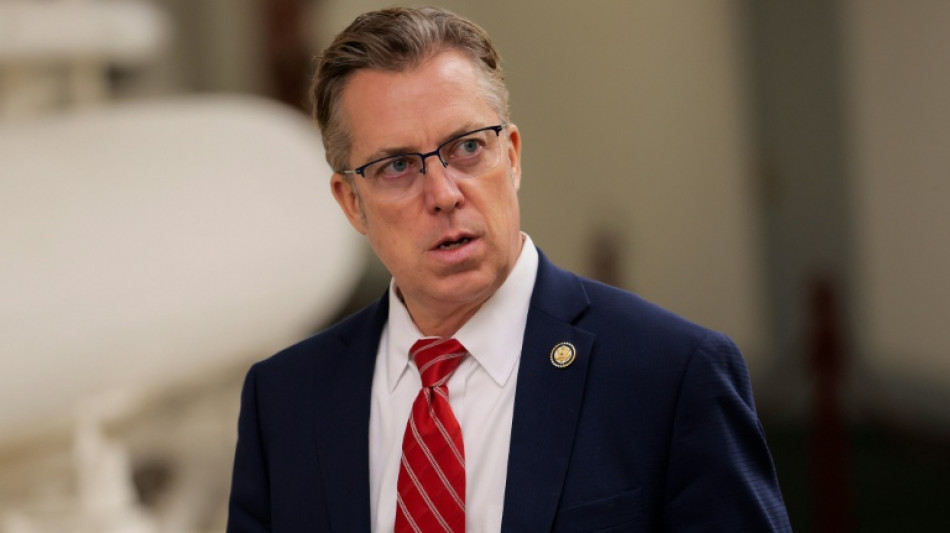
US Republican leaders in spotlight over anti-Muslim rhetoric / Photo: © GETTY IMAGES NORTH AMERICA/AFP/File

 London
 19 °C
19 °C

 Manchester
 17 °C
17 °C
 Glasgow
 20 °C
20 °C
 Dublin
 13 °C
13 °C
 Belfast
12 °C
Belfast
12 °C
 Washington
24 °C
Washington
24 °C
 Denver
23 °C
Denver
23 °C
 Atlanta
26 °C
Atlanta
26 °C
 Dallas
 32 °C
32 °C
 Houston Texas
29 °C
Houston Texas
29 °C
 New Orleans
29 °C
New Orleans
29 °C
 El Paso
34 °C
El Paso
34 °C
 Phoenix
40 °C
Phoenix
40 °C
 Los Angeles
23 °C
San Diego
20 °C
San Francisco
16 °C
Chicago
20 °C
Minneapolis
26 °C
Seattle
18 °C
Portland
23 °C
Salt Lake City
22 °C
Las Vegas
38 °C
Miami
Los Angeles
23 °C
San Diego
20 °C
San Francisco
16 °C
Chicago
20 °C
Minneapolis
26 °C
Seattle
18 °C
Portland
23 °C
Salt Lake City
22 °C
Las Vegas
38 °C
Miami
 28 °C
Jacksonville
26 °C
San Antonio
29 °C
Bermuda
27 °C
Nassau
22 °C
Iqaluit
5 °C
Yellowknife
17 °C
Anchorage
19 °C
Fairbanks
15 °C
Barrow
1 °C
Calgary
17 °C
Edmonton
21 °C
Winnipeg
27 °C
Goose Bay
19 °C
Halifax
19 °C
Boston
19 °C
Ottawa
20 °C
Toronto
20 °C
Detroit
21 °C
Cleveland
20 °C
New York
22 °C
Baltimore
24 °C
Philadelphia
22 °C
Nuuk (Godthåb)
7 °C
Hong Kong
28 °C
Jacksonville
26 °C
San Antonio
29 °C
Bermuda
27 °C
Nassau
22 °C
Iqaluit
5 °C
Yellowknife
17 °C
Anchorage
19 °C
Fairbanks
15 °C
Barrow
1 °C
Calgary
17 °C
Edmonton
21 °C
Winnipeg
27 °C
Goose Bay
19 °C
Halifax
19 °C
Boston
19 °C
Ottawa
20 °C
Toronto
20 °C
Detroit
21 °C
Cleveland
20 °C
New York
22 °C
Baltimore
24 °C
Philadelphia
22 °C
Nuuk (Godthåb)
7 °C
Hong Kong
 27 °C
Singapore
29 °C
Melbourne
27 °C
Canberra
10 °C
Adelaide
13 °C
Darwin
27 °C
Singapore
29 °C
Melbourne
27 °C
Canberra
10 °C
Adelaide
13 °C
Darwin
 28 °C
Perth
21 °C
Fort Worth
32 °C
Honolulu
29 °C
Sydney
17 °C
Johannesburg
8 °C
Dubai
36 °C
Mumbai
28 °C
Zürich
18 °C
Tokyo
37 °C
Seoul
28 °C
Perth
21 °C
Fort Worth
32 °C
Honolulu
29 °C
Sydney
17 °C
Johannesburg
8 °C
Dubai
36 °C
Mumbai
28 °C
Zürich
18 °C
Tokyo
37 °C
Seoul
 32 °C
Delhi
34 °C
Beijing
35 °C
Riyadh
33 °C
Prague
19 °C
Pennsylvania
23 °C
Valletta
27 °C
Manama
34 °C
Warsaw
18 °C
Stockholm
17 °C
32 °C
Delhi
34 °C
Beijing
35 °C
Riyadh
33 °C
Prague
19 °C
Pennsylvania
23 °C
Valletta
27 °C
Manama
34 °C
Warsaw
18 °C
Stockholm
17 °C
Republican leaders in the US Congress are facing mounting pressure to respond to anti-Muslim rhetoric after a series of inflammatory remarks and policy proposals reignited debate over Islamophobia in American politics.
The latest controversy was sparked by statements from House Republicans including Andy Ogles of Tennessee and Randy Fine of Florida that critics say cross the line from security concerns into hostility toward Muslims as a religious group.
The rhetoric has been emboldened by Donald Trump, say his opponents, pointing to the president's first-term restrictions on entry from several Muslim-majority countries -- a policy widely referred to as a "Muslim ban."
Civil rights groups and Democratic lawmakers argue the move -- along with Trump's past sharing of anti-Muslim propaganda on social media -- helped normalize harsher rhetoric about Islam in American politics.
Ogles triggered the latest uproar on Monday when he posted on social media that "Muslims don't belong in American society," adding that "pluralism is a lie."
The remarks drew swift condemnation from Democrats and civil rights groups.
The Council on American-Islamic Relations described Ogles as an "anti-Muslim extremist," while Democratic lawmaker Shri Thanedar pointed to constitutional protections for religious freedom and fired back: "Maybe it's YOUR values that don't belong in American society."
But Ogles's remarks were not an isolated incident.
Fine has written that Americans should be afraid of Islam and previously suggested that if forced to choose between "dogs and Muslims," the choice would not be difficult.
In the Senate, Tommy Tuberville -- who is running to be governor of Alabama -- has posted warnings about Muslims in the United States, including a post that appeared to describe them as being "inside the gates."
The rhetoric has sparked furious exchanges across social media and in Congress, with Arizona congresswoman Yassamin Ansari accusing Fine of "vile racism" and demanding to know whether House Speaker Mike Johnson would take action.
- 'A serious issue' -
So far, however, Republican leaders have largely avoided directly condemning the remarks.
When asked about Ogles's post, Johnson said only that the wording used by some members was "different language than I would use," adding that concerns about the imposition of Islamic law in the United States were "a serious issue."
Critics said the response reflects a broader reluctance to confront the issue, noting that a simple statement rejecting religious bigotry would have been politically easy -- yet none has been issued by House Republican leaders.
Meanwhile, the rhetoric appears to be spreading rather than receding.
An analysis by The Washington Post found that since the start of 2025 nearly 100 Republican members of Congress have posted about Islam or Muslims on social media -- and almost all of the posts were negative.
Two-thirds referenced themes such as radical Islam, Sharia law, extremism or terrorism.
The Post's analysis also found that several lawmakers had called for deporting Muslims or banning Islamic immigration.
Lawmakers from Texas were among the most prolific posters, with Chip Roy writing more than 100 posts referencing Islam this year, the analysis found.
The social media activity reflects a broader political strategy taking shape within parts of the Republican Party, critics say.
Some commentators argue that anti-Muslim rhetoric is being used to mobilize voters feeling pressured by economic concerns and worried about the ongoing US conflict in Iran.
Civil rights advocates say the rhetoric also mirrors themes pushed by far-right activists outside government, who have called for deporting Muslims or banning Islamic immigration entirely.
The escalation has spilled into legislative proposals.
Almost 40 Republican lawmakers, including Ogles and Fine, have floated or backed measures banning immigration from Muslim-majority countries.
Supporters say such proposals are aimed at national security. Opponents argue they blur the line between counterterrorism and religious discrimination.
A handful of Republicans have expressed discomfort with the tone of the debate.
Thom Tillis of North Carolina described Ogles's comments as "ridiculous," while Don Bacon of Nebraska pointed to the Constitution's prohibition on religious tests for public office.
G. Souza--JDB