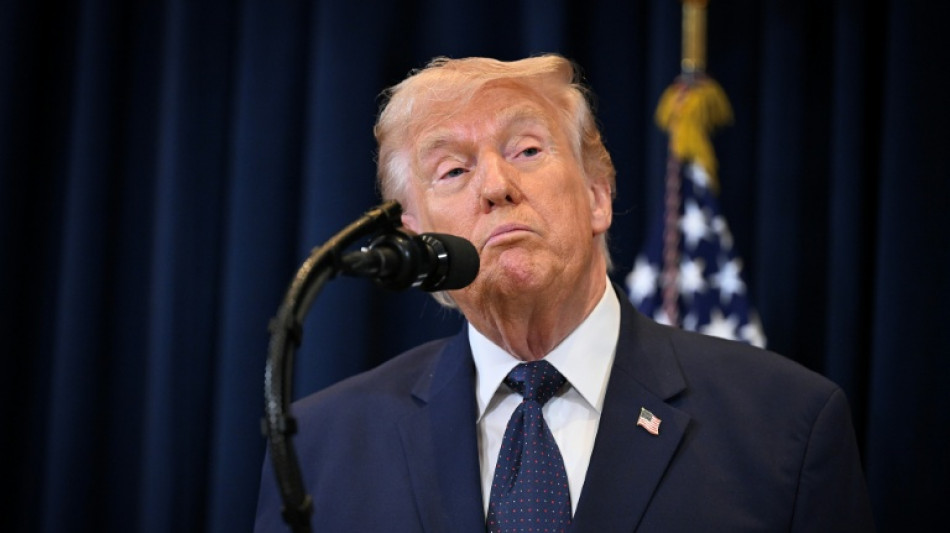
Trump says will waive some oil sanctions as Iran war roils markets / Photo: © GETTY IMAGES NORTH AMERICA/AFP

 London
 27 °C
27 °C

 Manchester
21 °C
Manchester
21 °C
 Glasgow
 35 °C
35 °C
 Dublin
 19 °C
19 °C
 Belfast
 18 °C
18 °C
 Washington
23 °C
Washington
23 °C
 Denver
20 °C
Denver
20 °C
 Atlanta
21 °C
Atlanta
21 °C
 Dallas
27 °C
Dallas
27 °C
 Houston Texas
27 °C
Houston Texas
27 °C
 New Orleans
27 °C
New Orleans
27 °C
 El Paso
 27 °C
27 °C
 Phoenix
34 °C
Phoenix
34 °C
 Los Angeles
21 °C
San Diego
20 °C
San Francisco
Los Angeles
21 °C
San Diego
20 °C
San Francisco
 14 °C
Chicago
19 °C
Minneapolis
23 °C
Seattle
12 °C
Portland
14 °C
Salt Lake City
20 °C
Las Vegas
29 °C
Miami
27 °C
Jacksonville
26 °C
San Antonio
26 °C
Bermuda
25 °C
Nassau
21 °C
Iqaluit
14 °C
Chicago
19 °C
Minneapolis
23 °C
Seattle
12 °C
Portland
14 °C
Salt Lake City
20 °C
Las Vegas
29 °C
Miami
27 °C
Jacksonville
26 °C
San Antonio
26 °C
Bermuda
25 °C
Nassau
21 °C
Iqaluit
 5 °C
Yellowknife
12 °C
Anchorage
14 °C
Fairbanks
10 °C
Barrow
-2 °C
Calgary
12 °C
Edmonton
18 °C
Winnipeg
21 °C
Goose Bay
19 °C
Halifax
17 °C
Boston
18 °C
Ottawa
19 °C
Toronto
19 °C
Detroit
21 °C
Cleveland
19 °C
New York
21 °C
Baltimore
22 °C
Philadelphia
23 °C
Nuuk (Godthåb)
10 °C
Hong Kong
27 °C
Singapore
29 °C
Melbourne
26 °C
Canberra
5 °C
Yellowknife
12 °C
Anchorage
14 °C
Fairbanks
10 °C
Barrow
-2 °C
Calgary
12 °C
Edmonton
18 °C
Winnipeg
21 °C
Goose Bay
19 °C
Halifax
17 °C
Boston
18 °C
Ottawa
19 °C
Toronto
19 °C
Detroit
21 °C
Cleveland
19 °C
New York
21 °C
Baltimore
22 °C
Philadelphia
23 °C
Nuuk (Godthåb)
10 °C
Hong Kong
27 °C
Singapore
29 °C
Melbourne
26 °C
Canberra
 2 °C
Adelaide
9 °C
Darwin
24 °C
Perth
16 °C
Fort Worth
26 °C
Honolulu
25 °C
Sydney
8 °C
Johannesburg
20 °C
Dubai
36 °C
Mumbai
28 °C
Zürich
36 °C
Tokyo
2 °C
Adelaide
9 °C
Darwin
24 °C
Perth
16 °C
Fort Worth
26 °C
Honolulu
25 °C
Sydney
8 °C
Johannesburg
20 °C
Dubai
36 °C
Mumbai
28 °C
Zürich
36 °C
Tokyo
 31 °C
Seoul
28 °C
Delhi
36 °C
Beijing
32 °C
Riyadh
43 °C
Prague
35 °C
Pennsylvania
22 °C
Valletta
28 °C
Manama
36 °C
Warsaw
30 °C
Stockholm
27 °C
31 °C
Seoul
28 °C
Delhi
36 °C
Beijing
32 °C
Riyadh
43 °C
Prague
35 °C
Pennsylvania
22 °C
Valletta
28 °C
Manama
36 °C
Warsaw
30 °C
Stockholm
27 °C
US President Donald Trump said Monday that he will waive some sanctions on oil to boost supply and bring down prices, due to market turmoil over war in the Middle East.
The US-Israel strikes on Iran and Tehran's retaliatory attacks across the Gulf region have upended the world's energy and transport sectors, virtually halting activity in thestrategically vital Strait of Hormuz.
"We're also waiving certain oil-related sanctions to reduce prices," Trump told reporters after talks with Russian President Vladimir Putin.
He also mentioned Chinese President Xi Jinping.
"We have sanctions on some countries. We're going to take those sanctions off till this straightens outTrump added
Trump did not specify any country or provide details on which sanctions would be lifted.
His comments came after speaking to the leader of Russia, one of the world's largest oil producers and exporters, while China is a key Russian trading partner and major oil importer.
Oil prices tanked and equities rallied on Tuesday following a wild day of swings that came after Trump said the US-Israel war on Iran would be ending earlier than thought.
He said Washington could possibly keep sanctions lifted on the unspecified countries if the war came to an end.
"Then who knows? Maybe we won't have to put them on. There'll be so much peace," he added, repeating his statement that the United States is ready to escort tankers through the Strait of Hormuz waterwaythrough which a fifth of global oil supplies usually pass.
Trump's Treasury Secretary Scott Bessent said last week that Washington was considering lifting sanctions on more Russian oil, a day after it temporarily authorized India to buy from Moscow.
The US government temporarily eased economic sanctions to allow Russian oil currently stranded at sea to be sold to India, restrictions that were imposed over Moscow's conduct in negotiations to end the war in Ukraine.
It said the transactions, including those from vessels blocked by various sanctions regimes, are authorized through the end of the day on April 3, 2026.
Trump's latest comments reflect possible fears in his administration about the impact of skyrocketing crude prices on American consumers before the crucial midterms in November.
- Russia lifeline -
Trump also said that the call with Putin was "positive" on the subject of ending the four-year-old war in Ukraine.
Easing sanctions on Russia could help boost global oil supplies but it also presents a dilemma for Washington in its effort to limit Russian revenues amid its protracted war on Ukraine.
Moscow's invasion and subsequent Western sanctions have eaten into its oil and gas revenues, which in January fell to a five-year low.
The Russian economy has been stuttering as the financial burden of the four-year assault on Ukraine and ensuing restrictions have pushed up inflation and weighed on growth.
Russian state coffers depend on sales of oil and gas but at the end of October 2025, Washington added Moscow's two largest oil producers, Lukoil and Rosneft, to its blacklist of sanctioned entities.
The crude price rises have caused panic among importers across the world, including Asia.
South Korea has ordered the activation of a $68 billion market stabilisation fund while Japan is reportedly considering drawing on national oil reserves, with queues at petrol stations seen as far as Vietnam, Myanmar and the Philippines.
But experts say Washington's war on Iran and ousting of Venezuelan leader Nicolas Maduro in January have inadvertently provided a lifeline for Moscow by turning top importers away from discounted crude from those two countries.
"Now that those supplies are compromised, the primary beneficiary is Russia, which is ready to increase oil exports to China," the Carnegie Russia Eurasia Center wrote this month in an analysis
Trump's interventions give Moscow an opportunity to reaffirm that "maritime routes for supplying resources to China could be cut off at any moment by the United States," it said.
"So the only reliable option is pipelines and roads from Russia."
G. Pires--JDB