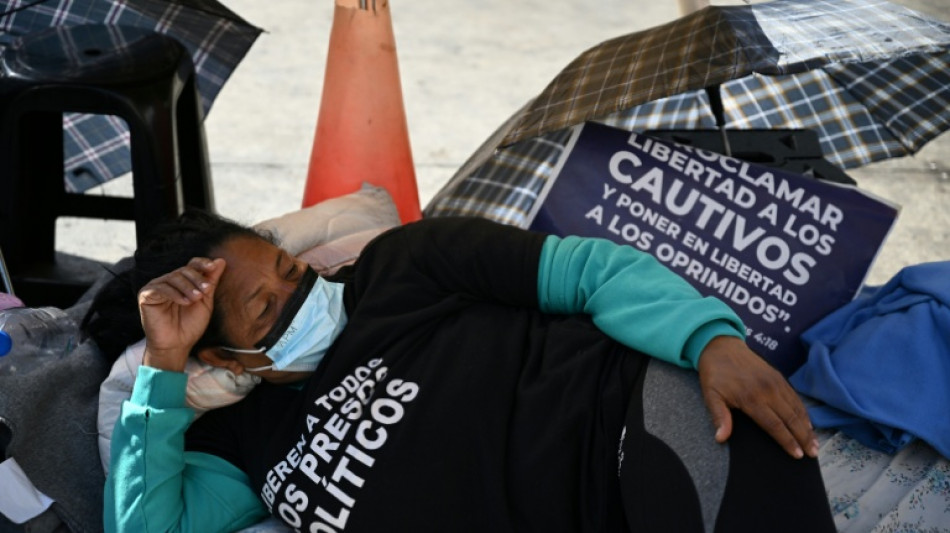
Relatives of Venezuela political prisoners begin hunger strike / Photo: © AFP

 London
 27 °C
27 °C
 Manchester
21 °C
Manchester
21 °C
 Glasgow
 24 °C
24 °C
 Dublin
 19 °C
19 °C
 Belfast
18 °C
Belfast
18 °C
 Washington
28 °C
Washington
28 °C
 Denver
26 °C
Denver
26 °C
 Atlanta
29 °C
Atlanta
29 °C
 Dallas
33 °C
Dallas
33 °C
 Houston Texas
32 °C
Houston Texas
32 °C
 New Orleans
32 °C
New Orleans
32 °C
 El Paso
 33 °C
33 °C
 Phoenix
37 °C
Phoenix
37 °C
 Los Angeles
25 °C
San Diego
22 °C
San Francisco
16 °C
Chicago
27 °C
Minneapolis
19 °C
Seattle
19 °C
Portland
19 °C
Salt Lake City
31 °C
Las Vegas
36 °C
Miami
33 °C
Jacksonville
32 °C
San Antonio
30 °C
Bermuda
29 °C
Nassau
28 °C
Iqaluit
5 °C
Yellowknife
20 °C
Anchorage
Los Angeles
25 °C
San Diego
22 °C
San Francisco
16 °C
Chicago
27 °C
Minneapolis
19 °C
Seattle
19 °C
Portland
19 °C
Salt Lake City
31 °C
Las Vegas
36 °C
Miami
33 °C
Jacksonville
32 °C
San Antonio
30 °C
Bermuda
29 °C
Nassau
28 °C
Iqaluit
5 °C
Yellowknife
20 °C
Anchorage
 14 °C
Fairbanks
11 °C
Barrow
14 °C
Fairbanks
11 °C
Barrow
 7 °C
Calgary
22 °C
Edmonton
28 °C
Winnipeg
25 °C
Goose Bay
26 °C
Halifax
25 °C
Boston
25 °C
Ottawa
27 °C
Toronto
28 °C
Detroit
31 °C
Cleveland
29 °C
New York
28 °C
Baltimore
29 °C
Philadelphia
28 °C
Nuuk (Godthåb)
8 °C
Hong Kong
26 °C
Singapore
7 °C
Calgary
22 °C
Edmonton
28 °C
Winnipeg
25 °C
Goose Bay
26 °C
Halifax
25 °C
Boston
25 °C
Ottawa
27 °C
Toronto
28 °C
Detroit
31 °C
Cleveland
29 °C
New York
28 °C
Baltimore
29 °C
Philadelphia
28 °C
Nuuk (Godthåb)
8 °C
Hong Kong
26 °C
Singapore
 29 °C
Melbourne
32 °C
Canberra
1 °C
Adelaide
6 °C
Darwin
23 °C
Perth
16 °C
Fort Worth
33 °C
Honolulu
25 °C
Sydney
9 °C
Johannesburg
13 °C
Dubai
35 °C
Mumbai
28 °C
Zürich
28 °C
Tokyo
28 °C
Seoul
28 °C
Delhi
33 °C
Beijing
28 °C
Riyadh
40 °C
Prague
35 °C
Pennsylvania
28 °C
Valletta
29 °C
Manama
35 °C
Warsaw
33 °C
Stockholm
24 °C
29 °C
Melbourne
32 °C
Canberra
1 °C
Adelaide
6 °C
Darwin
23 °C
Perth
16 °C
Fort Worth
33 °C
Honolulu
25 °C
Sydney
9 °C
Johannesburg
13 °C
Dubai
35 °C
Mumbai
28 °C
Zürich
28 °C
Tokyo
28 °C
Seoul
28 °C
Delhi
33 °C
Beijing
28 °C
Riyadh
40 °C
Prague
35 °C
Pennsylvania
28 °C
Valletta
29 °C
Manama
35 °C
Warsaw
33 °C
Stockholm
24 °C
Relatives of political prisoners in Venezuela launched a hunger strike Saturday outside a prison in Caracas, as talks drag on over the adoption of a promised amnesty law.
The historic amnesty is the centerpiece of reforms undertaken by acting President Delcy Rodriguez since US special forces captured the country's longtime leader Nicolas Maduro in a deadly January 3 raid on Caracas.
It aims to turn the page on nearly three decades of state repression, and is expected to cover all charges brought against dissidents who opposed the rule of Maduro and his predecessor Hugo Chavez over the past 27 years.
A mass liberation of prisoners promised on January 8 did not materialize, with authorities instead freeing detainees little by little -- leaving dozens of families camped outside prison facilities waiting for answers.
In Caracas, a group of about 10 women wearing medical face masks lay down in a line at the entrance to a national police facility known as Zone 7.
Many of them were sleeping, with one telling AFP, on condition of anonymity: "Sleeping eases the hunger."
"We hope to stay here until everyone is released," Evelin Quiaro, 46, an immigration official and the mother of a political prisoner, told AFP.
Quiaro, whose son has been in detention since November on terror-related charges, said she had eaten her last meal at about 1 am.
"We've already been waiting a very long time," she said, calling the hunger strike "a drastic measure that we believe is necessary to finish this once and for all."
- 'Democratic coexistence' -
Hours earlier, National Assembly President Jorge Rodriguez announced the release of 17 prisoners in a post on social media, without naming them.
He called for Venezuelans to "continue this path of peace for the construction of democratic coexistence."
One of those freed was union leader Jose Elias Torres, who had been held since November, an advocacy group said.
The amnesty legislation covers charges of "treason," "terrorism" and spreading "hate" that were used to lock up dissidents, according to the bill text.
But on Thursday, after backing the amnesty bill on a first reading, lawmakers postponed its adoption after failing to reach an agreement on how to apply it.
Pro-government and opposition lawmakers clashed over an article requiring would-be beneficiaries to appear in court to request amnesty.
They agreed to continue the debate on Thursday.
According to the non-governmental organization Foro Penal, 431 political prisoners have been offered conditional release so far, and 644 are still behind bars.
Emil Brandt, regional coordinator for the political party of opposition leader Maria Corina Machado, arrived in his hometown of Barinas on Saturday, after two years in detention.
"It's important to highlight that our work continues. We still have people behind bars, and we will not rest until justice is served and they regain their freedom," Brandt said.
"The people (of Venezuela) deserve to live better, and that will be the case when our leader Maria Corina Machado comes home."
Speaking to a security conference in Munich, Machado did not say when that return might come.
- US pressure -
Rodriguez, Maduro's vice president, took over as the South American country's leader with the consent of US President Donald Trump -- provided that she toes Washington's line.
The United States has taken control of Venezuela's oil sales, with Trump vowing a share for Washington in the profits.
The Trump administration has also pressured Rodriguez to release political prisoners.
As the post-Maduro transition takes hold, the fear once instilled by the state is beginning to dissipate.
Thousands of opposition supporters poured into the streets of Caracas ahead of the debate over the amnesty bill to demand the release of all remaining political prisoners.
M. Andrade--JDB