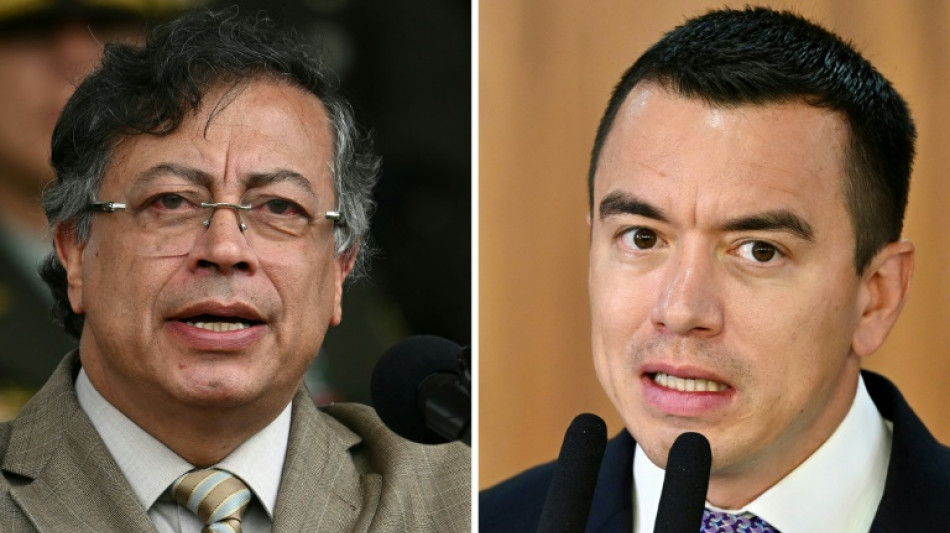
Colombia leader offers talks to end trade war with Ecuador / Photo: © AFP/File

 London
 25 °C
25 °C
 Manchester
 20 °C
20 °C
 Glasgow
 20 °C
20 °C
 Dublin
19 °C
Dublin
19 °C
 Belfast
17 °C
Belfast
17 °C
 Washington
22 °C
Washington
22 °C
 Denver
 18 °C
18 °C
 Atlanta
23 °C
Atlanta
23 °C
 Dallas
30 °C
Dallas
30 °C
 Houston Texas
27 °C
Houston Texas
27 °C
 New Orleans
26 °C
New Orleans
26 °C
 El Paso
26 °C
El Paso
26 °C
 Phoenix
34 °C
Phoenix
34 °C
 Los Angeles
 20 °C
San Diego
20 °C
San Francisco
14 °C
Chicago
20 °C
San Diego
20 °C
San Francisco
14 °C
Chicago
 20 °C
Minneapolis
18 °C
Seattle
20 °C
Minneapolis
18 °C
Seattle
 17 °C
Portland
17 °C
Salt Lake City
24 °C
Las Vegas
32 °C
Miami
27 °C
Jacksonville
26 °C
San Antonio
25 °C
Bermuda
27 °C
Nassau
23 °C
Iqaluit
5 °C
Yellowknife
15 °C
Anchorage
12 °C
Fairbanks
11 °C
Barrow
17 °C
Portland
17 °C
Salt Lake City
24 °C
Las Vegas
32 °C
Miami
27 °C
Jacksonville
26 °C
San Antonio
25 °C
Bermuda
27 °C
Nassau
23 °C
Iqaluit
5 °C
Yellowknife
15 °C
Anchorage
12 °C
Fairbanks
11 °C
Barrow
 8 °C
Calgary
13 °C
Edmonton
21 °C
Winnipeg
13 °C
Goose Bay
19 °C
Halifax
20 °C
Boston
8 °C
Calgary
13 °C
Edmonton
21 °C
Winnipeg
13 °C
Goose Bay
19 °C
Halifax
20 °C
Boston
 21 °C
Ottawa
21 °C
Toronto
23 °C
Detroit
24 °C
Cleveland
22 °C
New York
24 °C
Baltimore
21 °C
Philadelphia
23 °C
Nuuk (Godthåb)
10 °C
Hong Kong
24 °C
Singapore
31 °C
Melbourne
26 °C
Canberra
5 °C
Adelaide
8 °C
Darwin
23 °C
Perth
12 °C
Fort Worth
30 °C
Honolulu
25 °C
Sydney
10 °C
Johannesburg
18 °C
Dubai
36 °C
Mumbai
28 °C
Zürich
28 °C
Tokyo
31 °C
Seoul
29 °C
Delhi
35 °C
Beijing
34 °C
Riyadh
44 °C
Prague
28 °C
Pennsylvania
20 °C
Valletta
30 °C
Manama
36 °C
Warsaw
33 °C
Stockholm
21 °C
21 °C
Ottawa
21 °C
Toronto
23 °C
Detroit
24 °C
Cleveland
22 °C
New York
24 °C
Baltimore
21 °C
Philadelphia
23 °C
Nuuk (Godthåb)
10 °C
Hong Kong
24 °C
Singapore
31 °C
Melbourne
26 °C
Canberra
5 °C
Adelaide
8 °C
Darwin
23 °C
Perth
12 °C
Fort Worth
30 °C
Honolulu
25 °C
Sydney
10 °C
Johannesburg
18 °C
Dubai
36 °C
Mumbai
28 °C
Zürich
28 °C
Tokyo
31 °C
Seoul
29 °C
Delhi
35 °C
Beijing
34 °C
Riyadh
44 °C
Prague
28 °C
Pennsylvania
20 °C
Valletta
30 °C
Manama
36 °C
Warsaw
33 °C
Stockholm
21 °C
Colombian President Gustavo Petro on Wednesday extended an olive branch to his US-backed Ecuadoran counterpart Daniel Noboa in a bid to end a week-old trade war over cross-border drug trafficking.
Noboa fired the first shot in the hostilities last week by slapping 30 percent tariffs on imports from Colombia over Petro's alleged failure to help him fight cartels that ship Colombian cocaine through Ecuadoran ports.
Noboa's move echoed US President Donald Trump's tariff hikes on Canada and China -- and threatened increases on Mexico -- which Trump partly attributed to concerns over fentanyl trafficking into the United States.
Colombia responded with tit-for-tat tariffs and a suspension of electricity sales to Ecuador, which in turn hiked charges on Colombian oil travelling through an Ecuadoran pipeline by 900 percent.
At a meeting of regional leaders in Panama City on Wednesday, the left-wing Petro suggested de-escalation.
"I offer you the possibility of talks," he told the right-wing Noboa, a staunch Trump ally, in a speech at a forum hosted by the Development Bank of Latin America and the Caribbean.
Noboa, who spoke later, did not publicly respond to Petro's offer, but sounded a defiant note.
"We must fight to prevent our nations from being seized by drug trafficking," he emphasized. "We must fight to be truly free, and that can only be achieved through willpower."
The Colombian government had already proposed a bilateral meeting to ease the tensions, but the two countries had yet to decide on a date.
Ecuador has gone from being one of South America's safest countries to its deadliest in the space of a few years.
It closed 2025 with a rate of 52 homicides per 100,000 residents -- the highest in Latin America, equivalent to a murder an hour, according to the Geneva-based Organized Crime Observatory.
Ports in Ecuador, which is wedged between Colombia and Peru, South America's two largest producers of cocaine, serve as major gateways to US and European markets.
Noboa has accused Colombia of failing to help secure the two countries' porous 600-kilometer (370-mile) border, which is riddled with illegal crossings used to smuggle contraband.
P.F. da Conceiçao--JDB