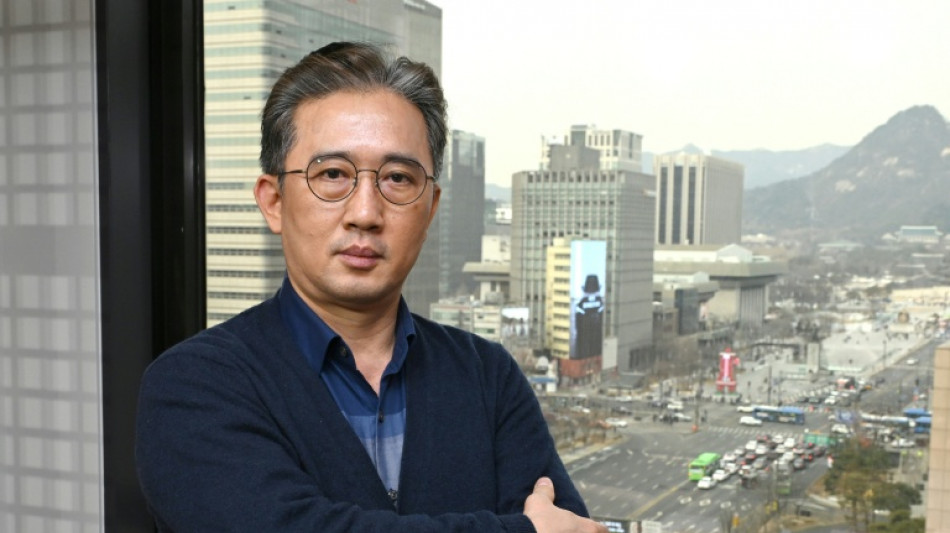
US ouster of Maduro nightmare scenario for Kim: N. Korean ex-diplomat / Photo: © AFP

 London
 25 °C
25 °C

 Manchester
 20 °C
20 °C
 Glasgow
 20 °C
20 °C
 Dublin
19 °C
Dublin
19 °C
 Belfast
17 °C
Belfast
17 °C
 Washington
22 °C
Washington
22 °C
 Denver
 18 °C
18 °C
 Atlanta
23 °C
Atlanta
23 °C
 Dallas
30 °C
Dallas
30 °C
 Houston Texas
27 °C
Houston Texas
27 °C
 New Orleans
26 °C
New Orleans
26 °C
 El Paso
26 °C
El Paso
26 °C
 Phoenix
34 °C
Phoenix
34 °C
 Los Angeles
 20 °C
San Diego
20 °C
San Francisco
14 °C
Chicago
20 °C
San Diego
20 °C
San Francisco
14 °C
Chicago
 20 °C
Minneapolis
18 °C
Seattle
20 °C
Minneapolis
18 °C
Seattle
 17 °C
Portland
17 °C
Salt Lake City
24 °C
Las Vegas
32 °C
Miami
27 °C
Jacksonville
26 °C
San Antonio
25 °C
Bermuda
27 °C
Nassau
23 °C
Iqaluit
5 °C
Yellowknife
15 °C
Anchorage
12 °C
Fairbanks
11 °C
Barrow
17 °C
Portland
17 °C
Salt Lake City
24 °C
Las Vegas
32 °C
Miami
27 °C
Jacksonville
26 °C
San Antonio
25 °C
Bermuda
27 °C
Nassau
23 °C
Iqaluit
5 °C
Yellowknife
15 °C
Anchorage
12 °C
Fairbanks
11 °C
Barrow
 8 °C
Calgary
13 °C
Edmonton
21 °C
Winnipeg
13 °C
Goose Bay
19 °C
Halifax
20 °C
Boston
8 °C
Calgary
13 °C
Edmonton
21 °C
Winnipeg
13 °C
Goose Bay
19 °C
Halifax
20 °C
Boston
 21 °C
Ottawa
21 °C
Toronto
23 °C
Detroit
24 °C
Cleveland
22 °C
New York
24 °C
Baltimore
21 °C
Philadelphia
23 °C
Nuuk (Godthåb)
10 °C
Hong Kong
24 °C
Singapore
31 °C
Melbourne
26 °C
Canberra
5 °C
Adelaide
8 °C
Darwin
23 °C
Perth
12 °C
Fort Worth
30 °C
Honolulu
25 °C
Sydney
10 °C
Johannesburg
18 °C
Dubai
36 °C
Mumbai
28 °C
Zürich
28 °C
Tokyo
31 °C
Seoul
29 °C
Delhi
35 °C
Beijing
34 °C
Riyadh
44 °C
Prague
28 °C
Pennsylvania
20 °C
Valletta
30 °C
Manama
36 °C
Warsaw
33 °C
Stockholm
21 °C
21 °C
Ottawa
21 °C
Toronto
23 °C
Detroit
24 °C
Cleveland
22 °C
New York
24 °C
Baltimore
21 °C
Philadelphia
23 °C
Nuuk (Godthåb)
10 °C
Hong Kong
24 °C
Singapore
31 °C
Melbourne
26 °C
Canberra
5 °C
Adelaide
8 °C
Darwin
23 °C
Perth
12 °C
Fort Worth
30 °C
Honolulu
25 °C
Sydney
10 °C
Johannesburg
18 °C
Dubai
36 °C
Mumbai
28 °C
Zürich
28 °C
Tokyo
31 °C
Seoul
29 °C
Delhi
35 °C
Beijing
34 °C
Riyadh
44 °C
Prague
28 °C
Pennsylvania
20 °C
Valletta
30 °C
Manama
36 °C
Warsaw
33 °C
Stockholm
21 °C
The dramatic US operation that overthrew Venezuela's Nicolas Maduro this month may have left North Korean leader Kim Jong Un feeling he was also vulnerable to "decapitation", a former Pyongyang envoy to Havana told AFP.
In a wide-ranging interview, Lee Il-kyu -- who served as Pyongyang's political counsellor in Cuba from 2019 until 2023 -- said Washington's lightning extraction in Caracas was a worst-case scenario for his former boss.
"Kim must have felt that a so-called 'decapitation' operation is actually possible," Lee -- who now works for a state-backed think tank in Seoul -- said.
North Korea's leadership has long accused Washington of seeking to remove it from power and said its nuclear and missile programmes are needed as a deterrent against alleged regime change efforts by Washington.
But the ex-diplomat, who defected to the South in November 2023, told AFP that Maduro's ouster will now spark panic among North Korea's security-obsessed leadership.
Kim will "overhaul the entire system regarding his security and countermeasures in case of an attack against him", he said.
From his perch in Havana, a key backer of Maduro's socialist regime in Caracas, Lee was charged with promoting the interests of the nuclear-armed state in Latin America.
He played a key role in high-profile negotiations, including securing the release of a North Korean vessel detained in Panama in 2013 -- work for which he received a commendation from Kim Jong Un himself.
One of his last missions was an ultimately doomed effort to prevent Cuba from forging diplomatic ties with its rival Seoul.
But his deep frustration with the system led him to become one of the highest-level diplomats to defect in years.
"I was fed up," he said.
Being denied opportunities after refusing to bribe a superior was the final straw, he told AFP.
- Life-or-death struggle -
He almost didn't make it.
In a life-or-death moment for his family, he and his wife and daughter found themselves stuck at an airport in a Central American nation he asked AFP not to name.
Despite his stated intention to defect, officials at the airport insisted he needed to board a plane bound for Venezuela, which would almost certainly have sent him back to Cuba.
Cuban authorities would have been obliged to hand him over to North Korea -- a death sentence.
"I physically struggled in desperation, trying to save my family. But it was not working," he told AFP.
His plea was accepted at last when a South Korean diplomat showed up, telling officials that Lee and his family were now under the protection of Seoul.
"At that moment, all the officials disappeared," he said.
"Looking back, it was a moment that showed South Korea's national strength."
Lee is now imploring South Korea to do the same for two North Korean prisoners of war captured by Ukraine -- part of a cohort of thousands of troops sent by Pyongyang to assist Russia.
The two men recently wrote a letter expressing their desire to go to the South -- a decision Lee said would be perceived by Pyongyang as an "utter act of betrayal".
It's not immediately clear why they have not been sent to South Korea, with Seoul saying it is in consultations with Kyiv over the fate of men it considers its citizens.
"Under no circumstances should they be sent back to the North," Lee said.
"If they were to be repatriated it would be better to be dead than alive. Living would become an ordeal in itself for them."
Seoul must take the lead in bringing them in, he said, an effort that also "requires the joint efforts of the international community and human rights groups".
- Dictatorship to democracy -
Since settling in South Korea, 53-year-old Lee has become an outspoken commentator on his homeland, writing regular columns for the country's largest newspaper.
He has published a memoir in Japanese titled "The Kim Jong Un I witnessed" with an English version also in the pipeline.
His time has coincided with some of the most tumultuous periods in South Korean politics in years, from President Yoon Suk Yeol's stunning martial law declaration in late 2024 to his impeachment and subsequent removal from office.
South Koreans then elected as president the progressive Lee Jae Myung, who favours better relations with the North.
Ex-diplomat Lee said the recent turmoil helped deepen his appreciation of liberal democracy.
"South Korea went on without a president following the impeachment for months. Even without a president, the system worked very well," he noted.
Such an outcome would be unthinkable in North Korea.
"The North has completely deified its leadership," he said.
"It cannot give its people the notion that its so-called supreme leader could actually be brought down by the people's will."
S. Aparecido--JDB