'Nothing's changed' in Gaza as US peace deal enters second phase / Photo: © AFP/File

 London
 18 °C
18 °C

 Manchester
10 °C
Manchester
10 °C
 Glasgow
 12 °C
12 °C
 Dublin
14 °C
Dublin
14 °C
 Belfast
12 °C
Belfast
12 °C
 Washington
28 °C
Washington
28 °C
 Denver
 34 °C
34 °C
 Atlanta
28 °C
Atlanta
28 °C
 Dallas
 35 °C
35 °C
 Houston Texas
34 °C
Houston Texas
34 °C
 New Orleans
32 °C
New Orleans
32 °C
 El Paso
34 °C
El Paso
34 °C
 Phoenix
 46 °C
46 °C
 Los Angeles
31 °C
San Diego
28 °C
San Francisco
20 °C
Chicago
22 °C
Minneapolis
28 °C
Seattle
22 °C
Portland
23 °C
Salt Lake City
39 °C
Las Vegas
46 °C
Miami
Los Angeles
31 °C
San Diego
28 °C
San Francisco
20 °C
Chicago
22 °C
Minneapolis
28 °C
Seattle
22 °C
Portland
23 °C
Salt Lake City
39 °C
Las Vegas
46 °C
Miami
 24 °C
Jacksonville
27 °C
San Antonio
32 °C
Bermuda
27 °C
Nassau
25 °C
Iqaluit
13 °C
Yellowknife
21 °C
Anchorage
21 °C
Fairbanks
25 °C
Barrow
10 °C
Calgary
33 °C
Edmonton
26 °C
Winnipeg
29 °C
Goose Bay
25 °C
Halifax
25 °C
Boston
26 °C
Ottawa
25 °C
Toronto
25 °C
Detroit
25 °C
Cleveland
24 °C
New York
26 °C
Baltimore
27 °C
Philadelphia
27 °C
Nuuk (Godthåb)
8 °C
Hong Kong
24 °C
Jacksonville
27 °C
San Antonio
32 °C
Bermuda
27 °C
Nassau
25 °C
Iqaluit
13 °C
Yellowknife
21 °C
Anchorage
21 °C
Fairbanks
25 °C
Barrow
10 °C
Calgary
33 °C
Edmonton
26 °C
Winnipeg
29 °C
Goose Bay
25 °C
Halifax
25 °C
Boston
26 °C
Ottawa
25 °C
Toronto
25 °C
Detroit
25 °C
Cleveland
24 °C
New York
26 °C
Baltimore
27 °C
Philadelphia
27 °C
Nuuk (Godthåb)
8 °C
Hong Kong
 25 °C
Singapore
29 °C
Melbourne
27 °C
Canberra
8 °C
Adelaide
12 °C
Darwin
25 °C
Perth
9 °C
Fort Worth
36 °C
Honolulu
27 °C
Sydney
14 °C
Johannesburg
6 °C
Dubai
33 °C
Mumbai
28 °C
Zürich
20 °C
Tokyo
33 °C
Seoul
30 °C
Delhi
32 °C
Beijing
31 °C
Riyadh
25 °C
Singapore
29 °C
Melbourne
27 °C
Canberra
8 °C
Adelaide
12 °C
Darwin
25 °C
Perth
9 °C
Fort Worth
36 °C
Honolulu
27 °C
Sydney
14 °C
Johannesburg
6 °C
Dubai
33 °C
Mumbai
28 °C
Zürich
20 °C
Tokyo
33 °C
Seoul
30 °C
Delhi
32 °C
Beijing
31 °C
Riyadh
 34 °C
Prague
17 °C
Pennsylvania
27 °C
Valletta
29 °C
Manama
33 °C
Warsaw
19 °C
Stockholm
14 °C
34 °C
Prague
17 °C
Pennsylvania
27 °C
Valletta
29 °C
Manama
33 °C
Warsaw
19 °C
Stockholm
14 °C
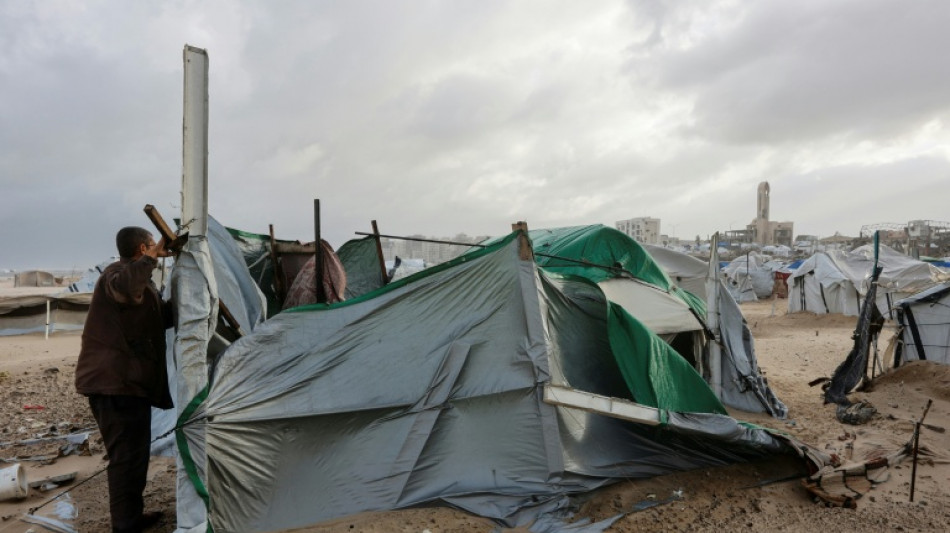
From his tent in Gaza City, Mahmoud Abdel Aal said residents were frustrated and worried because nothing had changed in the Palestinian territory since the start of the US-brokered ceasefire's second phase.
In a post-apocalyptic landscape of bombed-out buildings and makeshift camps devastated by recent winter rains, Palestinians who spoke to AFP mostly expressed bitterness.
Though Israeli strikes have been less intense since the ceasefire between Hamas and Israel began in October 2025, bombs still fall every day.
After US Middle East envoy Steve Witkoff announced the start of the second phase of US President Donald Trump's peace plan for Gaza on Wednesday, more than 14 people were killed in the tiny coastal territory, according to the Gaza civil defence agency.
Israel and Hamas have repeatedly accused each other of violating the ceasefire's terms.
"There is no difference between the war and the ceasefire, nor between the first and second phase of the deal: strikes continue every day," Abdel Aal said.
"Everyone is worried and frustrated because nothing's changed."
On Friday, an AFP photographer saw members of the Houli family walk through rubble after five of their relatives were killed in an air strike on their house in central Gaza's Deir al-Balah.
- 'All over the media' -
Hamas announced the death of Mahmud al-Houli, described as a military officer of the movement, while Israel's military said it carried out strikes on Thursday against members of Hamas and Islamic Jihad's armed wings in response to what it considers violations of the ceasefire.
Houli family neighbour Ahmad Suleiman said the announcement of the ceasefire's second phase was "all over the media, but the reality is different".
"There is no ceasefire, otherwise look at what the ceasefire has brought," he told AFP, pointing to the destroyed building.
Most residents interviewed by AFP said they were skeptical about recent announcements regarding the formation of the so-called "Board of Peace", an entity chaired by Trump and supposed to oversee reconstruction, and a Palestinian technocratic committee with which it is to work.
"No one is concerned for us," said Hossam Majed, who is living in the ruins of his home in Gaza City.
"The whole world meets in Cairo to talk about Gaza, but they can't even enter it," he told AFP.
"Israel will use the pretext of handing over the last body (of a hostage), then the weapons (of Hamas), and the second phase will stretch over additional years," he said.
Hamas returned 47 of 48 hostages it was supposed to hand over under the terms of the first phase, and has yet to commit to disarming as is planned under the second phase.
- 'Hope and patience' -
Day-to-day living conditions for the vast majority of Gaza residents remain extremely precarious, with more than 80 percent of infrastructure destroyed, according to the United Nations.
Several humanitarian and UN workers told AFP that while the situation has improved in some areas since the ceasefire, the humanitarian response remains insufficient due to access restrictions imposed by Israeli authorities -- who deny these claims.
Water and electricity networks, as well as waste management, no longer function.
Hospitals operate at minimal capacity when still open, and schools exist only as sporadic or marginal initiatives. All children in the Gaza Strip need psychological support after more than two years of war, according to UNICEF.
Nivine Ahmad, a 47-year-old woman living in a camp for the displaced in south Gaza's Al-Mawasi area, said: "We miss real life."
She said the announcement of the formation of the technocratic committee led her to imagine returning to Gaza City.
"I pictured living with my family in a prefabricated unit, with electricity and water instead of our bombed home," she said.
"Only then will I feel that the war is over," she added.
In the meantime, she urged the world to put itself in Gazans' shoes.
"We only have hope and patience," she said.
A. Nunes--JDB