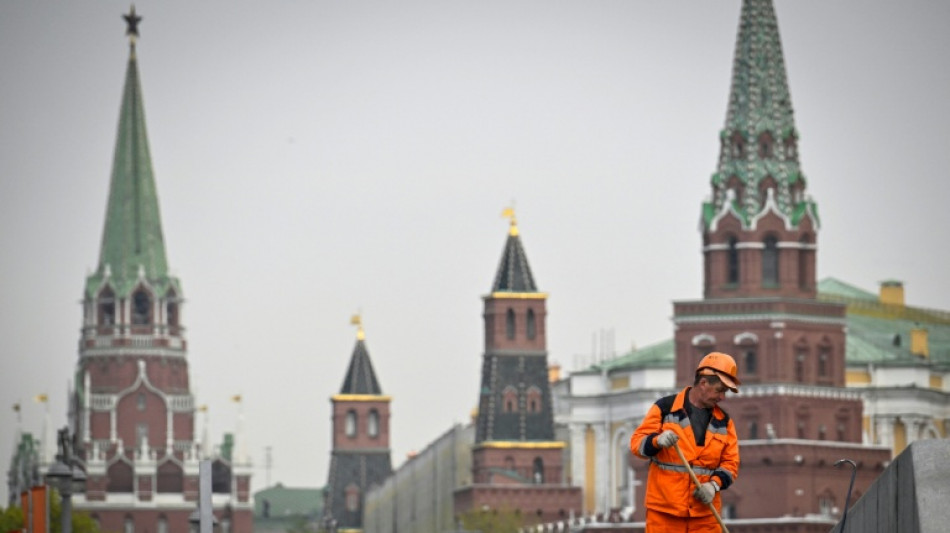
Surveillance, harassment and bribes: everyday life for migrants in Russia / Photo: © AFP/File

 London
 16 °C
16 °C

 Manchester
10 °C
Manchester
10 °C
 Glasgow
 11 °C
11 °C
 Dublin
14 °C
Dublin
14 °C
 Belfast
11 °C
Belfast
11 °C
 Washington
27 °C
Washington
27 °C
 Denver
 30 °C
30 °C
 Atlanta
27 °C
Atlanta
27 °C
 Dallas
32 °C
Dallas
32 °C
 Houston Texas
33 °C
Houston Texas
33 °C
 New Orleans
 30 °C
30 °C
 El Paso
33 °C
El Paso
33 °C
 Phoenix
 44 °C
44 °C
 Los Angeles
28 °C
San Diego
25 °C
San Francisco
19 °C
Chicago
21 °C
Minneapolis
25 °C
Seattle
19 °C
Portland
Los Angeles
28 °C
San Diego
25 °C
San Francisco
19 °C
Chicago
21 °C
Minneapolis
25 °C
Seattle
19 °C
Portland
 22 °C
Salt Lake City
35 °C
Las Vegas
44 °C
Miami
26 °C
Jacksonville
26 °C
San Antonio
30 °C
Bermuda
26 °C
Nassau
24 °C
Iqaluit
12 °C
Yellowknife
21 °C
Anchorage
21 °C
Fairbanks
26 °C
Barrow
9 °C
Calgary
29 °C
Edmonton
22 °C
Winnipeg
23 °C
Goose Bay
22 °C
Halifax
23 °C
Boston
25 °C
Ottawa
22 °C
Toronto
24 °C
Detroit
22 °C
Salt Lake City
35 °C
Las Vegas
44 °C
Miami
26 °C
Jacksonville
26 °C
San Antonio
30 °C
Bermuda
26 °C
Nassau
24 °C
Iqaluit
12 °C
Yellowknife
21 °C
Anchorage
21 °C
Fairbanks
26 °C
Barrow
9 °C
Calgary
29 °C
Edmonton
22 °C
Winnipeg
23 °C
Goose Bay
22 °C
Halifax
23 °C
Boston
25 °C
Ottawa
22 °C
Toronto
24 °C
Detroit
 23 °C
Cleveland
23 °C
New York
25 °C
Baltimore
27 °C
Philadelphia
26 °C
Nuuk (Godthåb)
8 °C
Hong Kong
23 °C
Cleveland
23 °C
New York
25 °C
Baltimore
27 °C
Philadelphia
26 °C
Nuuk (Godthåb)
8 °C
Hong Kong
 25 °C
Singapore
30 °C
Melbourne
26 °C
Canberra
13 °C
Adelaide
14 °C
Darwin
29 °C
Perth
13 °C
Fort Worth
32 °C
Honolulu
27 °C
Sydney
17 °C
Johannesburg
6 °C
Dubai
33 °C
Mumbai
28 °C
Zürich
19 °C
Tokyo
35 °C
Seoul
32 °C
Delhi
31 °C
Beijing
34 °C
Riyadh
33 °C
Prague
17 °C
Pennsylvania
26 °C
Valletta
28 °C
Manama
34 °C
Warsaw
18 °C
Stockholm
13 °C
25 °C
Singapore
30 °C
Melbourne
26 °C
Canberra
13 °C
Adelaide
14 °C
Darwin
29 °C
Perth
13 °C
Fort Worth
32 °C
Honolulu
27 °C
Sydney
17 °C
Johannesburg
6 °C
Dubai
33 °C
Mumbai
28 °C
Zürich
19 °C
Tokyo
35 °C
Seoul
32 °C
Delhi
31 °C
Beijing
34 °C
Riyadh
33 °C
Prague
17 °C
Pennsylvania
26 °C
Valletta
28 °C
Manama
34 °C
Warsaw
18 °C
Stockholm
13 °C
Facing digital surveillance, bribes, humiliation and street harassment, Kyrgyz taxi driver Alym never has an easy life in Russia.
"We have to pay, pay, pay for everything," the 38-year-old father of two told AFP near Moscow.
"The police are constantly demanding bribes for every document, every stamp: registration, a patent, a work permit," he said, adding some documents can cost as much as $300 off-the-books.
Pressure on the estimated 6.5 million foreign citizens in Russia -- mostly labour migrants from Central Asia who work in low-skilled jobs and send wages to family back home -- is ramping up from all sides.
Officials try to block their access to work and schools with tighter immigration rules, while xenophobia in the country -- always high -- is rising further still.
Every day Alym must send his location to authorities via the state-run Amina surveillance app, which he has to keep installed on his phone.
"If you don't do it for three days in a row, you're put on a blacklist that's hard to get off," he explained.
Being added to what is officially called the "register of monitored persons" means having bank accounts frozen and raises the risk of losing a job, being expelled from university or even deportation.
- 'Nuts' -
The toughening of rules was codified last year when Russian President Vladimir Putin signed a new policy designed to "limit the presence of migrants' family members in Russia."
According to the document, the new measures should "reduce the burden on the social and healthcare services."
Among some of the requirements rolled out are ultra-tough language tests for the children of migrants looking to enter Russian schools.
Anna Orlova, a Russian language teacher at the Migratory Children project, has criticised both the tests and the overall policy.
"We should, on the contrary, be glad that migrants come to us. It means the Russian economy is growing," she said.
The complicated tests, combined with other bureaucratic hurdles, led to 87 percent of migrant children being blocked from entering school in 2025, according to a federal regulator.
"The education ministry has set the goal of no longer accepting non-Russian pupils in schools. It's nuts," said Orlova.
Alym's daughter, now in kindergarten, will soon have to take the test.
There are signs that high levels of societal xenophobia are seeping into the classroom.
Alym's son, already in school, was recently beaten up by his Russian classmates.
In December, a teenager with neo-Nazi views stabbed a 10-year-old Tajik boy to death at a school near Moscow.
"A migrant's life in Russia is difficult. The migrant becomes an enemy on whom the discontent in society is funnelled," said Svetlana Gannushkina from Civic Assistance, a migrant rights group, which has been labelled a "foreign agent" by the authorities.
"We're being told that they steal our jobs and undercut wages," she added.
Those kinds of anti-immigration narratives -- prevalent in many countries -- have taken on an extra edge in Russia, where inflation is high and the Kremlin has hiked taxes to fund its military as the war in Ukraine enters its fifth year.
- Draft fears -
Gannushkina said the policy response has been "full of fear," ushered in following a March 2024 massacre at a concert hall near Moscow, which killed 149 people.
The four alleged assailants, currently on trial, are from Tajikistan.
The anti-migrant sentiment has also boosted the popularity of some political groups, like the LDPR, an ultra-nationalist party allied with the Kremlin.
"I'm constantly travelling around the regions, and illegal immigration is often the top issue raised by our fellow citizens. We're fed up with this situation," party leader Leonid Slutsky said in a YouTube broadcast.
Slutsky accused migrants of "undermining the principles and traditions" of Russian society.
He declined to comment when contacted by AFP.
Alym wants to leave Russia by 2030, when he expects to have paid off his mortgage in Kyrgyzstan.
"Many of my compatriots have already returned, because their children weren't admitted to school," he said.
After four years in Russia, Alym no longer wants a Russian passport, as he once did, because of Moscow's offensive in Ukraine.
"I don't want to be drafted," he said.
L. Araujo--JDB