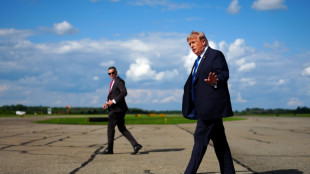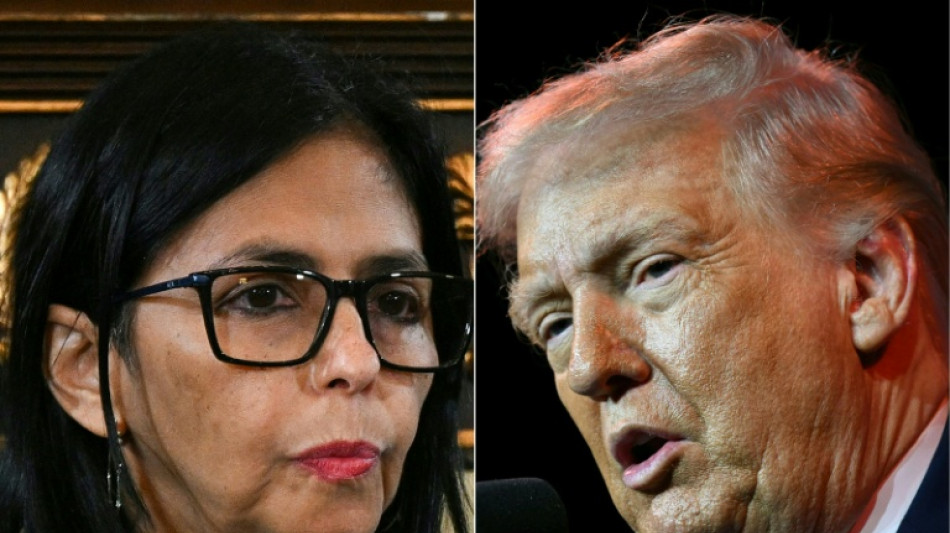
Venezuela announces release of 'large number' of prisoners / Photo: © AFP/File

 London
 20 °C
20 °C
 Manchester
17 °C
Manchester
17 °C
 Glasgow
20 °C
Glasgow
20 °C
 Dublin
 18 °C
18 °C
 Belfast
16 °C
Belfast
16 °C
 Washington
25 °C
Washington
25 °C
 Denver
 24 °C
24 °C
 Atlanta
25 °C
Atlanta
25 °C
 Dallas
26 °C
Dallas
26 °C
 Houston Texas
29 °C
Houston Texas
29 °C
 New Orleans
28 °C
New Orleans
28 °C
 El Paso
24 °C
El Paso
24 °C
 Phoenix
37 °C
Phoenix
37 °C
 Los Angeles
20 °C
San Diego
Los Angeles
20 °C
San Diego
 21 °C
San Francisco
15 °C
Chicago
21 °C
Minneapolis
19 °C
Seattle
15 °C
Portland
15 °C
Salt Lake City
27 °C
Las Vegas
35 °C
Miami
21 °C
San Francisco
15 °C
Chicago
21 °C
Minneapolis
19 °C
Seattle
15 °C
Portland
15 °C
Salt Lake City
27 °C
Las Vegas
35 °C
Miami
 26 °C
Jacksonville
25 °C
San Antonio
28 °C
Bermuda
26 °C
Nassau
24 °C
Iqaluit
26 °C
Jacksonville
25 °C
San Antonio
28 °C
Bermuda
26 °C
Nassau
24 °C
Iqaluit
 7 °C
Yellowknife
12 °C
Anchorage
13 °C
Fairbanks
15 °C
Barrow
5 °C
Calgary
19 °C
Edmonton
7 °C
Yellowknife
12 °C
Anchorage
13 °C
Fairbanks
15 °C
Barrow
5 °C
Calgary
19 °C
Edmonton
 20 °C
Winnipeg
19 °C
Goose Bay
21 °C
Halifax
21 °C
Boston
22 °C
Ottawa
21 °C
Toronto
21 °C
Detroit
19 °C
Cleveland
21 °C
New York
25 °C
Baltimore
25 °C
Philadelphia
24 °C
Nuuk (Godthåb)
7 °C
Hong Kong
25 °C
Singapore
30 °C
Melbourne
26 °C
Canberra
10 °C
Adelaide
13 °C
Darwin
20 °C
Winnipeg
19 °C
Goose Bay
21 °C
Halifax
21 °C
Boston
22 °C
Ottawa
21 °C
Toronto
21 °C
Detroit
19 °C
Cleveland
21 °C
New York
25 °C
Baltimore
25 °C
Philadelphia
24 °C
Nuuk (Godthåb)
7 °C
Hong Kong
25 °C
Singapore
30 °C
Melbourne
26 °C
Canberra
10 °C
Adelaide
13 °C
Darwin
 26 °C
Perth
17 °C
Fort Worth
25 °C
Honolulu
24 °C
Sydney
15 °C
Johannesburg
13 °C
Dubai
38 °C
Mumbai
29 °C
Zürich
23 °C
Tokyo
29 °C
Seoul
32 °C
Delhi
36 °C
Beijing
37 °C
Riyadh
42 °C
Prague
20 °C
Pennsylvania
24 °C
Valletta
30 °C
Manama
37 °C
Warsaw
21 °C
Stockholm
18 °C
26 °C
Perth
17 °C
Fort Worth
25 °C
Honolulu
24 °C
Sydney
15 °C
Johannesburg
13 °C
Dubai
38 °C
Mumbai
29 °C
Zürich
23 °C
Tokyo
29 °C
Seoul
32 °C
Delhi
36 °C
Beijing
37 °C
Riyadh
42 °C
Prague
20 °C
Pennsylvania
24 °C
Valletta
30 °C
Manama
37 °C
Warsaw
21 °C
Stockholm
18 °C
Venezuela on Thursday announced the release of a "large number" of prisoners, some of them foreigners, in an apparent concession to the United States after its ouster of ruler Nicolas Maduro.
The releases are the first since Maduro's former deputy Delcy Rodriguez became interim leader, with the backing of President Donald Trump, who said he was content to let her govern as long as Caracas gives Washington access to its plentiful oil.
The prisoner releases were announced by Rodriguez's brother, parliament speaker Jorge Rodriguez, a key figure in "chavismo," the anti-US socialist movement founded by Maduro's predecessor Hugo Chavez.
Rodriguez said "a significant number of Venezuelan and foreign nationals" were being immediately freed for the sake of "peaceful coexistence."
He did not say which prisoners would be released, nor how many.
Venezuelan rights NGO Foro Penal says there are 806 political prisoners behind bars.
The group hailed Rodriguez's announcement as "good news" but said it was still verifying the releases.
US State Department officials did not comment on whether the releases were a demand of the Trump administration.
On Tuesday, the US president told Republican lawmakers that Rodriguez's administration was closing a torture chamber "in the middle of Caracas" but gave no further details.
- Trump rebuked by Senate -
Thursday's gesture by Caracas came as Trump suggested the United States could run Venezuela and tap into its oil reserves for years.
Shortly after Maduro's seizure in US airstrikes and a special forces raid that left 100 people dead, according to Caracas, Trump announced that the US would "run" the Caribbean country for a transitional period.
"Only time will tell" how long Washington will demand direct oversight of the country, he told The New York Times in an interview published Thursday.
When asked whether that meant three months, six months or a year, he replied: "I would say much longer."
Meanwhile, the US Senate on Thursday took a major step toward passing a resolution to rein in military actions against Venezuela.
The Democratic-led legislation, expected to pass a vote next week, reflects widespread disquiet among lawmakers over Saturday's secretive capture of Maduro, conducted without their express approval.
It is expected to face resistance in the Republican-dominated House, however.
- 'Tangled mess' -
Oil has emerged as the key to US control over Venezuela, which has the world's largest proven reserves.
Trump announced a plan earlier this week for the United States to sell between 30 million and 50 million barrels of Venezuelan crude, with Caracas then using the money to buy US-made products.
Delcy Rodriguez on Wednesday called the US attack to depose Maduro, who was taken to New York with his wife to face trial on drugs charges, a "stain" on relations with the United States.
But she also defended the planned oil sales to Washington.
On the streets of Caracas, opinions remain mixed about the plan.
"I feel we'll have more opportunities if the oil is in the hands of the United States than in the hands of the government," said Jose Antonio Blanco, 26.
Teresa Gonzalez, 52, said she didn't know if the oil sales plan was good or bad.
"It's a tangled mess. What we do is try to survive, if we don't work, we don't eat," she added.
The Wall Street Journal reported that Trump, who will meet oil executives on Friday, is also considering a plan for the US to exert control over Venezuela's state oil company PDVSA, which has access to the world's largest proven oil reserves.
Trump has warned Rodriguez she will pay "a very big price, probably bigger than Maduro" if she does not comply with his agenda.
"Her power comes from Washington, not from the internal structure. If Trump decides she's no longer useful, she'll go like Maduro," Venezuela's former information minister Andres Izarra told AFP in an email.
The US operation in Venezuela -- and Trump's hints that other countries could be next -- sent shockwaves through the Americas, but he has since dialed down tensions with Colombia.
burs-cb/rlp/iv
M. Silva--JDB