Myanmar junta stages election after five years of civil war / Photo: © AFP

 London
 18 °C
18 °C

 Manchester
17 °C
Manchester
17 °C
 Glasgow
14 °C
Glasgow
14 °C
 Dublin
15 °C
Dublin
15 °C
 Belfast
15 °C
Belfast
15 °C
 Washington
24 °C
Washington
24 °C
 Denver
33 °C
Denver
33 °C
 Atlanta
25 °C
Atlanta
25 °C
 Dallas
 31 °C
31 °C
 Houston Texas
 32 °C
32 °C
 New Orleans
26 °C
New Orleans
26 °C
 El Paso
34 °C
El Paso
34 °C
 Phoenix
 43 °C
43 °C
 Los Angeles
28 °C
San Diego
Los Angeles
28 °C
San Diego
 24 °C
San Francisco
18 °C
Chicago
21 °C
Minneapolis
25 °C
Seattle
19 °C
Portland
23 °C
Salt Lake City
33 °C
Las Vegas
43 °C
Miami
27 °C
Jacksonville
24 °C
San Francisco
18 °C
Chicago
21 °C
Minneapolis
25 °C
Seattle
19 °C
Portland
23 °C
Salt Lake City
33 °C
Las Vegas
43 °C
Miami
27 °C
Jacksonville
 24 °C
San Antonio
32 °C
Bermuda
27 °C
Nassau
25 °C
Iqaluit
10 °C
Yellowknife
16 °C
Anchorage
16 °C
Fairbanks
22 °C
Barrow
2 °C
Calgary
15 °C
Edmonton
21 °C
Winnipeg
27 °C
Goose Bay
20 °C
Halifax
22 °C
Boston
24 °C
Ottawa
20 °C
Toronto
17 °C
Detroit
21 °C
Cleveland
21 °C
New York
25 °C
Baltimore
24 °C
Philadelphia
25 °C
Nuuk (Godthåb)
7 °C
Hong Kong
24 °C
San Antonio
32 °C
Bermuda
27 °C
Nassau
25 °C
Iqaluit
10 °C
Yellowknife
16 °C
Anchorage
16 °C
Fairbanks
22 °C
Barrow
2 °C
Calgary
15 °C
Edmonton
21 °C
Winnipeg
27 °C
Goose Bay
20 °C
Halifax
22 °C
Boston
24 °C
Ottawa
20 °C
Toronto
17 °C
Detroit
21 °C
Cleveland
21 °C
New York
25 °C
Baltimore
24 °C
Philadelphia
25 °C
Nuuk (Godthåb)
7 °C
Hong Kong
 26 °C
Singapore
31 °C
Melbourne
25 °C
Canberra
12 °C
Adelaide
14 °C
Darwin
28 °C
Perth
19 °C
Fort Worth
31 °C
Honolulu
26 °C
Sydney
26 °C
Singapore
31 °C
Melbourne
25 °C
Canberra
12 °C
Adelaide
14 °C
Darwin
28 °C
Perth
19 °C
Fort Worth
31 °C
Honolulu
26 °C
Sydney
 19 °C
Johannesburg
6 °C
Dubai
33 °C
Mumbai
28 °C
Zürich
20 °C
Tokyo
26 °C
Seoul
33 °C
Delhi
31 °C
Beijing
31 °C
Riyadh
32 °C
Prague
18 °C
Pennsylvania
24 °C
Valletta
27 °C
Manama
34 °C
Warsaw
19 °C
Stockholm
13 °C
19 °C
Johannesburg
6 °C
Dubai
33 °C
Mumbai
28 °C
Zürich
20 °C
Tokyo
26 °C
Seoul
33 °C
Delhi
31 °C
Beijing
31 °C
Riyadh
32 °C
Prague
18 °C
Pennsylvania
24 °C
Valletta
27 °C
Manama
34 °C
Warsaw
19 °C
Stockholm
13 °C
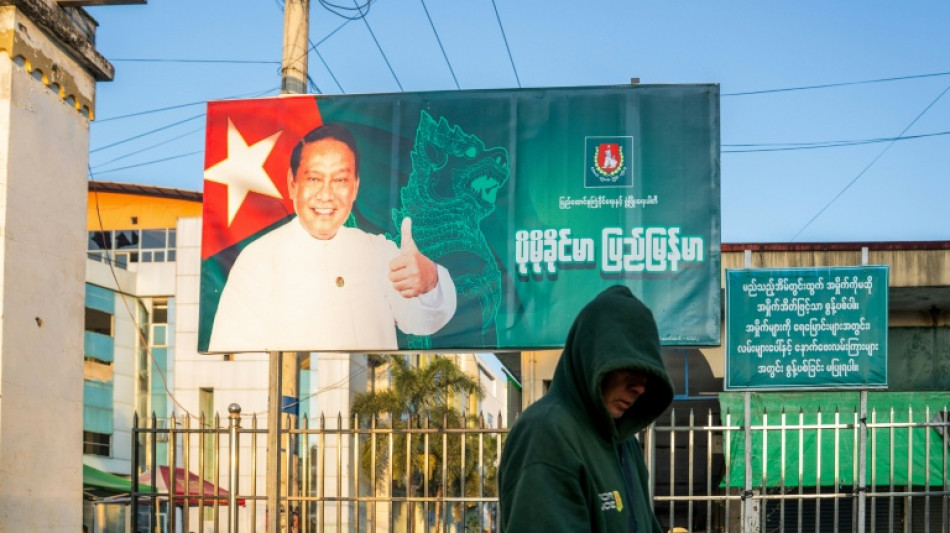
Myanmar's junta is set to preside over voting starting Sunday, touting heavily restricted polls as a return to democracy five years after it ousted the last elected government, triggering civil war.
Former civilian leader Aung San Suu Kyi remains jailed and her hugely popular party dissolved after soldiers ended the nation's decade-long democratic experiment in February 2021.
International monitors have dismissed the phased month-long vote as a rebranding of martial rule, citing a ballot stacked with military allies and a stark crackdown on dissent.
The country of around 50 million is riven by civil war, and the vote will not take place in rebel-held areas.
In junta-controlled territory, the first of three rounds of voting is due from 6:00 am Sunday (2330 GMT Saturday), including in constituencies in the cities of Yangon, Mandalay and the capital Naypyidaw.
"The military are just trying to legalise the power they took by force," one resident of the northern city of Myitkyina told AFP, pledging to boycott the poll.
The run-up has seen none of the feverish public rallies that Suu Kyi could command, with just a smattering of low-key events.
"Almost no one is interested in this election. But some are worried they may face trouble if they abstain," said the Myitkyina resident, 33, speaking anonymously for security reasons.
Junta chief Min Aung Hlaing has not responded to AFP requests for interview.
But his remarks paraphrased in state media promote polls as a chance for reconciliation, while admitting the military "will continue to play a role in the country's political leadership" after results are in.
Under Myanmar's current constitution, 25 percent of parliamentary seats are reserved for the armed forces.
- Suu Kyi sidelined -
The military ruled Myanmar for most of its post-independence history before a 10-year interlude saw a civilian government take the reins in a burst of optimism and reform.
But after Suu Kyi's National League for Democracy (NLD) party trounced pro-military opponents in 2020 elections, Min Aung Hlaing snatched power in a coup, alleging widespread voter fraud.
Suu Kyi is serving a 27-year sentence for offences ranging from corruption to breaching Covid-19 restrictions, charges rights monitors dismiss as politically motivated.
"I don't think she would consider these elections to be meaningful in any way," her son Kim Aris said from his home in Britain.
The NLD has been dissolved along with most parties that took part in the 2020 vote, when 90 percent of the seats went to organisations that will not appear on Sunday's ballots, according to the Asian Network for Free Elections.
The pro-military Union Solidarity and Development Party (USDP) is by far the biggest participant, providing more than a fifth of all candidates, it added.
New electronic voting machines will not allow write-in candidates or spoiled ballots.
Meanwhile, the junta is pursuing prosecutions against more than 200 people for violating draconian legislation forbidding "disruption" of the poll, including protest or criticism.
Around 22,000 political prisoners languish in junta jails, according to the Assistance Association for Political Prisoners.
But some present the poll as the only recourse for a country deadlocked in conflict.
"I'd like to urge people to come and vote," People's Party leader Ko Ko Gyi told AFP. "There will be some kind of changes after the election."
- Contested vote -
When the military seized power, it swiftly put down pro-democracy protests, and many activists quit the cities to fight as guerrillas alongside ethnic minority armies that have long held sway in Myanmar's fringes.
The junta has waged a pre-vote offensive, clawing back territory and hammering areas beyond its reach with air strikes, but concedes elections cannot happen in around one in seven constituencies.
This month, an air strike on a hospital in the western state of Rakhine killed more than 30 people, according to local aid workers. The junta said the hospital was housing rebels.
"There are many ways to make peace in the country, but they haven't chosen those -- they've chosen to have an election instead," said Zaw Tun, an officer in the pro-democracy People's Defence Force in the northern region of Sagaing.
"We will continue to fight."
There is no official death toll for Myanmar's civil war.
According to non-profit organisation Armed Conflict Location & Event Data (ACLED), which tallies media reports of violence, 90,000 people have been killed on all sides.
Some 3.6 million people are displaced and half the nation is living in poverty, according to the UN.
"I don't think anybody believes those elections will contribute to the solution of the problems of Myanmar," UN Secretary-General Antonio Guterres said in October.
The second round of polling will take place on January 11, while a date for the third and final round has yet to be announced.
C. Marques--JDB