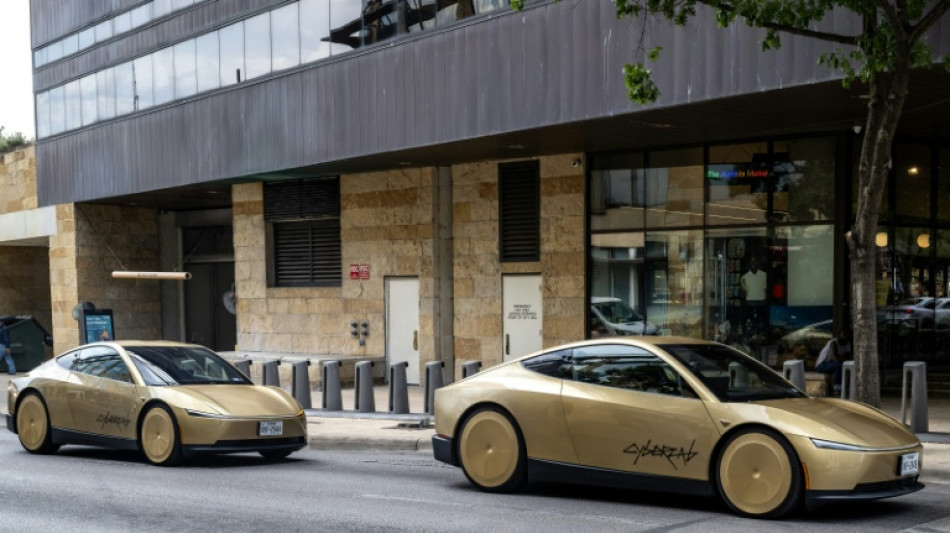
US safety regulator probes Tesla's Cybercab / Photo: © AFP

 London
 21 °C
21 °C
 Manchester
18 °C
Manchester
18 °C
 Glasgow
 18 °C
18 °C
 Dublin
18 °C
Dublin
18 °C
 Belfast
 18 °C
18 °C
 Washington
25 °C
Washington
25 °C
 Denver
17 °C
Denver
17 °C
 Atlanta
26 °C
Atlanta
26 °C
 Dallas
26 °C
Dallas
26 °C
 Houston Texas
 27 °C
27 °C
 New Orleans
25 °C
New Orleans
25 °C
 El Paso
22 °C
El Paso
22 °C
 Phoenix
29 °C
Phoenix
29 °C
 Los Angeles
 18 °C
San Diego
18 °C
San Diego
 19 °C
San Francisco
14 °C
Chicago
26 °C
Minneapolis
23 °C
Seattle
12 °C
Portland
19 °C
San Francisco
14 °C
Chicago
26 °C
Minneapolis
23 °C
Seattle
12 °C
Portland
 12 °C
Salt Lake City
20 °C
Las Vegas
24 °C
Miami
29 °C
Jacksonville
27 °C
San Antonio
27 °C
Bermuda
29 °C
Nassau
25 °C
Iqaluit
10 °C
Yellowknife
9 °C
Anchorage
11 °C
Fairbanks
8 °C
Barrow
1 °C
Calgary
9 °C
Edmonton
26 °C
Winnipeg
15 °C
Goose Bay
20 °C
Halifax
20 °C
Boston
21 °C
Ottawa
19 °C
Toronto
21 °C
Detroit
21 °C
Cleveland
21 °C
New York
26 °C
Baltimore
25 °C
Philadelphia
26 °C
Nuuk (Godthåb)
6 °C
Hong Kong
28 °C
Singapore
30 °C
Melbourne
29 °C
Canberra
10 °C
Adelaide
17 °C
Darwin
12 °C
Salt Lake City
20 °C
Las Vegas
24 °C
Miami
29 °C
Jacksonville
27 °C
San Antonio
27 °C
Bermuda
29 °C
Nassau
25 °C
Iqaluit
10 °C
Yellowknife
9 °C
Anchorage
11 °C
Fairbanks
8 °C
Barrow
1 °C
Calgary
9 °C
Edmonton
26 °C
Winnipeg
15 °C
Goose Bay
20 °C
Halifax
20 °C
Boston
21 °C
Ottawa
19 °C
Toronto
21 °C
Detroit
21 °C
Cleveland
21 °C
New York
26 °C
Baltimore
25 °C
Philadelphia
26 °C
Nuuk (Godthåb)
6 °C
Hong Kong
28 °C
Singapore
30 °C
Melbourne
29 °C
Canberra
10 °C
Adelaide
17 °C
Darwin
 26 °C
Perth
16 °C
Fort Worth
26 °C
Honolulu
24 °C
Sydney
14 °C
Johannesburg
14 °C
Dubai
37 °C
Mumbai
27 °C
Zürich
30 °C
Tokyo
22 °C
Seoul
24 °C
Delhi
26 °C
Beijing
23 °C
Riyadh
41 °C
Prague
28 °C
Pennsylvania
25 °C
Valletta
33 °C
Manama
37 °C
Warsaw
22 °C
Stockholm
18 °C
26 °C
Perth
16 °C
Fort Worth
26 °C
Honolulu
24 °C
Sydney
14 °C
Johannesburg
14 °C
Dubai
37 °C
Mumbai
27 °C
Zürich
30 °C
Tokyo
22 °C
Seoul
24 °C
Delhi
26 °C
Beijing
23 °C
Riyadh
41 °C
Prague
28 °C
Pennsylvania
25 °C
Valletta
33 °C
Manama
37 °C
Warsaw
22 °C
Stockholm
18 °C
US auto safety regulators have opened an inquiry into Tesla's driverless Cybercab, questioning how the company concluded that a vehicle with no steering wheel, pedals or mirrors meets federal safety rules.
In a filing late Thursday, the National Highway Traffic Safety Administration said it would examine the process and technical data Tesla relied on when certifying the two-seater vehicle.
The announcement came hours after the company began deploying the Cybercab commercially in Austin, Texas after a launch event.
Tesla has touted what it called the vehicle's safety and ease of use for disabled people, and said the Cybercab was "democratizing clean transportation for all."
In the United States, automakers certify their own vehicles as compliant with the federal standards.
Tesla notified the agency it had certified the Cybercab as meeting all applicable standards, and that it planned to widen deployment to more vehicles and more locations.
NHTSA said it would weigh how much that certification rested on Tesla's own determinations that certain standards simply do not apply to a car lacking permanently attached manual controls.
Tesla began driverless service in Austin last year using Model Y SUVs, expanding to cities in Texas, Florida and California.
State rules require many of those vehicles to carry a human supervisor who is able to take over.
Tesla had registered 314 robotaxis in Texas as of Wednesday, including 45 Cybercabs, according to FSD Database, based on data from the Texas Department of Motor Vehicles.
Waymo, the self-driving vehicle subsidiary of Google parent company Alphabet, offers its services in 11 US cities.
D. Carvalho--JDB