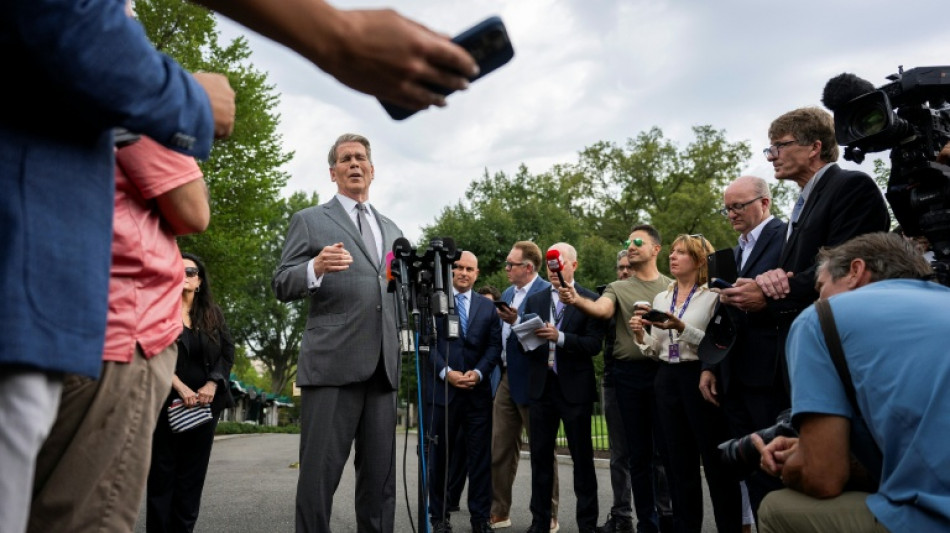
Trump claims Iran 'collapsing' as US threatens 'economic D-Day' / Photo: © AFP

 London
 22 °C
22 °C

 Manchester
 20 °C
20 °C
 Glasgow
 19 °C
19 °C
 Dublin
 21 °C
21 °C
 Belfast
19 °C
Belfast
19 °C
 Washington
21 °C
Washington
21 °C
 Denver
19 °C
Denver
19 °C
 Atlanta
 24 °C
24 °C
 Dallas
30 °C
Dallas
30 °C
 Houston Texas
27 °C
Houston Texas
27 °C
 New Orleans
28 °C
New Orleans
28 °C
 El Paso
24 °C
El Paso
24 °C
 Phoenix
31 °C
Phoenix
31 °C
 Los Angeles
 21 °C
San Diego
22 °C
San Francisco
15 °C
Chicago
16 °C
Minneapolis
16 °C
Seattle
14 °C
Portland
15 °C
Salt Lake City
21 °C
San Diego
22 °C
San Francisco
15 °C
Chicago
16 °C
Minneapolis
16 °C
Seattle
14 °C
Portland
15 °C
Salt Lake City
 21 °C
Las Vegas
30 °C
Miami
28 °C
Jacksonville
27 °C
San Antonio
23 °C
Bermuda
29 °C
Nassau
22 °C
Iqaluit
9 °C
Yellowknife
14 °C
Anchorage
10 °C
Fairbanks
7 °C
Barrow
7 °C
Calgary
14 °C
Edmonton
17 °C
Winnipeg
15 °C
Goose Bay
15 °C
Halifax
20 °C
Boston
20 °C
Ottawa
17 °C
Toronto
15 °C
Detroit
14 °C
Cleveland
15 °C
New York
22 °C
Baltimore
21 °C
Philadelphia
21 °C
Nuuk (Godthåb)
5 °C
Hong Kong
30 °C
Singapore
30 °C
Melbourne
26 °C
Canberra
8 °C
Adelaide
21 °C
Las Vegas
30 °C
Miami
28 °C
Jacksonville
27 °C
San Antonio
23 °C
Bermuda
29 °C
Nassau
22 °C
Iqaluit
9 °C
Yellowknife
14 °C
Anchorage
10 °C
Fairbanks
7 °C
Barrow
7 °C
Calgary
14 °C
Edmonton
17 °C
Winnipeg
15 °C
Goose Bay
15 °C
Halifax
20 °C
Boston
20 °C
Ottawa
17 °C
Toronto
15 °C
Detroit
14 °C
Cleveland
15 °C
New York
22 °C
Baltimore
21 °C
Philadelphia
21 °C
Nuuk (Godthåb)
5 °C
Hong Kong
30 °C
Singapore
30 °C
Melbourne
26 °C
Canberra
8 °C
Adelaide
 14 °C
Darwin
26 °C
Perth
14 °C
Fort Worth
28 °C
Honolulu
26 °C
Sydney
17 °C
Johannesburg
24 °C
Dubai
40 °C
Mumbai
29 °C
Zürich
25 °C
Tokyo
14 °C
Darwin
26 °C
Perth
14 °C
Fort Worth
28 °C
Honolulu
26 °C
Sydney
17 °C
Johannesburg
24 °C
Dubai
40 °C
Mumbai
29 °C
Zürich
25 °C
Tokyo
 29 °C
Seoul
28 °C
Delhi
28 °C
Beijing
28 °C
Riyadh
43 °C
Prague
20 °C
Pennsylvania
18 °C
Valletta
33 °C
Manama
40 °C
Warsaw
18 °C
Stockholm
20 °C
29 °C
Seoul
28 °C
Delhi
28 °C
Beijing
28 °C
Riyadh
43 °C
Prague
20 °C
Pennsylvania
18 °C
Valletta
33 °C
Manama
40 °C
Warsaw
18 °C
Stockholm
20 °C
US President Donald Trump said Monday that Iran was "collapsing" as Washington prepared to announce the details of a new economic pressure campaign that Tehran has derided as an admission of defeat.
Almost six months into their war, the two sides are locked in a stalemate, with peace talks stalled, Iran keeping the key Strait of Hormuz shut and Washington persisting with a naval counter-blockade of Iran.
Under political pressure at home over the economic impacts of the conflict, Trump has pivoted away from military action to economic levers.
"IRAN IS COMPLETELY COLLAPSING!!!" the president posted Monday in his trademark all-caps style on his social media platform Truth Social.
His remarks came hours after US Treasury Secretary Scott Bessent, in a column for the Financial Times, declared that an "economic D-Day" had begun against Tehran and warned that any country that continued to enable the Islamic republic would become a "global pariah".
Bessent also claimed on X that the US had "dismantled Iran's military capabilities, destroyed nearly 100 percent of its military factories, and buried its nuclear programme".
Iran responded with defiance, saying the latest US measures were an admission of military defeat, and it warned countries against aiding Washington.
Deputy Foreign Minister Kazem Gharibabadi posted on X that the US turn to financial warfare proved Bessent's claims false.
"Your narrative doesn't add up," Gharibabadi said, asking why, if Washington had achieved its goals, "there is a need for 'the largest financial invasion in history' and the mobilisation of 'all institutions and powers' of the United States!
"Is this a victory or an admission of America's defeat?"
The US and Israel linked the launch of their war in February to Iran's nuclear programme, but the focus since the early days of fighting has been on the Strait of Hormuz, a vital route for global oil and gas supplies.
Tehran continues to blockade the strait, which it did not restrict before the war, driving up global inflation and heaping domestic pressure on Trump ahead of mid-term elections in November.
- Oil exports plunge -
Bessent was due to set out details of the US plan on Monday, but it is unclear how much more economic pressure Washington can put on Tehran.
The US naval blockade of Iran has seen its oil exports via the Strait of Hormuz fall from two million barrels a day pre-war to just 0.4 million by mid-August, according to maritime tracker Kpler.
Meanwhile, the country has been under crushing international sanctions for decades, with a brief period of easing under a 2015 nuclear deal that Trump later ripped up as part of a "maximum pressure" campaign.
The Islamic republic has weathered those efforts and, before the war, continued to export millions of barrels of oil, mostly to China, and evade sanctions through complex international financial networks.
Bessent and Trump have both warned countries against helping Iran, signalling a shift in their focus, with the Treasury secretary's FT column dwelling on nations who "appease" and "enable" Iran.
Tehran responded on Monday by warning countries not to cooperate with the US efforts. Foreign ministry spokesman Esmaeil Baqaei said taking part would "definitely have its own consequences".
For ordinary Iranians, the standoff is likely to bring only more economic pain after years of rampant inflation, which in December and January fuelled massive anti-government protests.
Sarah Hassanbeigi, a 32-year-old pharmacist in Tehran, put it simply: "It's really very difficult. I don't think people can really take this much longer."
On Sunday, Iranian President Masoud Pezeshkian admitted that Iran faced "many problems in society".
"We are striving with all our hearts to overcome inflation, livelihood problems, unemployment, and to secure the future of the people, so that they can live with dignity and pride," Pezeshkian said.
- Delegation from Pakistan -
Last week, the Iranian president, considered a relative moderate, said Tehran should "bring the war to an end now as we are in a position of power and dignity".
That followed supreme leader Mojtaba Khamenei appointing hardliners to key security positions.
Hassanbeigi said she wanted peace. "Naturally, negotiations mean that both sides have to compromise. My personal opinion is that Iran should compromise now," she told AFP.
Throughout the war, diplomatic efforts, pushed on by mediators, have sought a negotiated end to the conflict.
On Monday, Pakistan's army chief was expected in Iran. Islamabad was a leading mediator in talks that helped secure an April ceasefire that later fell apart.
Omani Foreign Minister Badr al-Busaidi was also due in Iran on Tuesday, as Muscat and Tehran seek a deal on regulating passage through Hormuz.
A. de Almeida--JDB