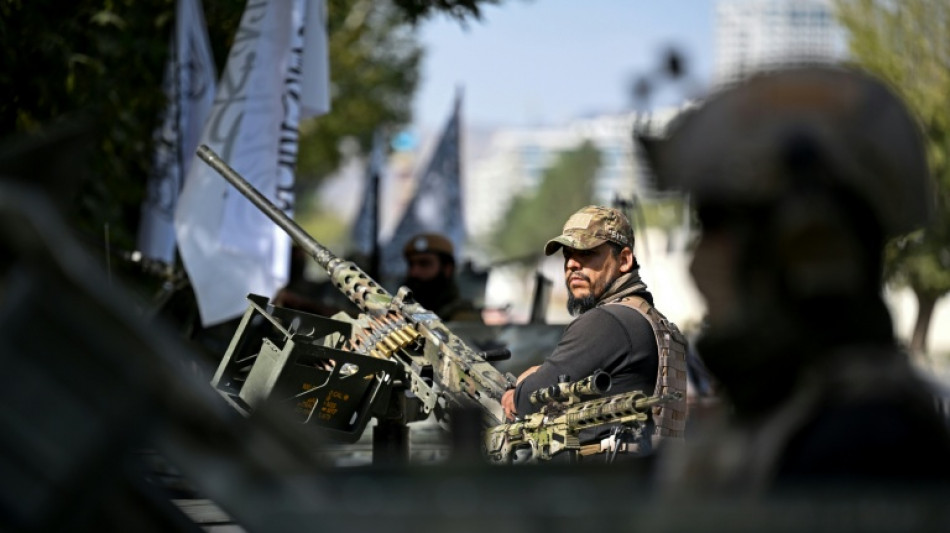
Taliban govt to mark five years ruling Afghanistan / Photo: © AFP

 London
 11 °C
11 °C

 Manchester
 12 °C
12 °C
 Glasgow
9 °C
Glasgow
9 °C
 Dublin
17 °C
Dublin
17 °C
 Belfast
15 °C
Belfast
15 °C
 Washington
 18 °C
18 °C
 Denver
26 °C
Denver
26 °C
 Atlanta
22 °C
Atlanta
22 °C
 Dallas
 30 °C
30 °C
 Houston Texas
31 °C
Houston Texas
31 °C
 New Orleans
27 °C
New Orleans
27 °C
 El Paso
 27 °C
27 °C
 Phoenix
39 °C
Phoenix
39 °C
 Los Angeles
31 °C
San Diego
30 °C
San Francisco
20 °C
Chicago
Los Angeles
31 °C
San Diego
30 °C
San Francisco
20 °C
Chicago
 18 °C
Minneapolis
15 °C
Seattle
21 °C
Portland
25 °C
Salt Lake City
28 °C
Las Vegas
36 °C
Miami
29 °C
Jacksonville
24 °C
San Antonio
31 °C
Bermuda
26 °C
Nassau
19 °C
Iqaluit
18 °C
Minneapolis
15 °C
Seattle
21 °C
Portland
25 °C
Salt Lake City
28 °C
Las Vegas
36 °C
Miami
29 °C
Jacksonville
24 °C
San Antonio
31 °C
Bermuda
26 °C
Nassau
19 °C
Iqaluit
 0 °C
Yellowknife
6 °C
Anchorage
0 °C
Yellowknife
6 °C
Anchorage
 8 °C
Fairbanks
3 °C
Barrow
-7 °C
Calgary
13 °C
Edmonton
21 °C
Winnipeg
14 °C
Goose Bay
12 °C
Halifax
13 °C
Boston
16 °C
Ottawa
12 °C
Toronto
14 °C
Detroit
17 °C
Cleveland
14 °C
New York
20 °C
Baltimore
18 °C
Philadelphia
17 °C
Nuuk (Godthåb)
2 °C
Hong Kong
27 °C
Singapore
27 °C
Melbourne
24 °C
Canberra
8 °C
Fairbanks
3 °C
Barrow
-7 °C
Calgary
13 °C
Edmonton
21 °C
Winnipeg
14 °C
Goose Bay
12 °C
Halifax
13 °C
Boston
16 °C
Ottawa
12 °C
Toronto
14 °C
Detroit
17 °C
Cleveland
14 °C
New York
20 °C
Baltimore
18 °C
Philadelphia
17 °C
Nuuk (Godthåb)
2 °C
Hong Kong
27 °C
Singapore
27 °C
Melbourne
24 °C
Canberra
 17 °C
Adelaide
18 °C
Darwin
30 °C
Perth
16 °C
Fort Worth
29 °C
Honolulu
27 °C
Sydney
20 °C
Johannesburg
14 °C
Dubai
33 °C
Mumbai
30 °C
Zürich
10 °C
Tokyo
21 °C
Seoul
15 °C
Delhi
26 °C
Beijing
12 °C
Riyadh
29 °C
Prague
9 °C
Pennsylvania
15 °C
Valletta
25 °C
Manama
32 °C
Warsaw
13 °C
Stockholm
13 °C
17 °C
Adelaide
18 °C
Darwin
30 °C
Perth
16 °C
Fort Worth
29 °C
Honolulu
27 °C
Sydney
20 °C
Johannesburg
14 °C
Dubai
33 °C
Mumbai
30 °C
Zürich
10 °C
Tokyo
21 °C
Seoul
15 °C
Delhi
26 °C
Beijing
12 °C
Riyadh
29 °C
Prague
9 °C
Pennsylvania
15 °C
Valletta
25 °C
Manama
32 °C
Warsaw
13 °C
Stockholm
13 °C
The Taliban government celebrates five years of ruling Afghanistan on Saturday, with the authorities hailing their country's "freedom" and security, while critics decry tightening restrictions in all areas of daily life.
Bright white flags of the Islamic Emirate of Afghanistan have been installed this week across the capital Kabul, where new murals declare: "Independence is a sign of dignity, pride and identity".
The authorities will host a cricket match and other sports events -- which girls and women are banned from attending -- while their supporters are expected to gather five years to the day since Taliban insurgents entered the city.
They took the capital unopposed after a lightning offensive that swept across Afghanistan, toppling government forces in the wake of the chaotic withdrawal of US-led troops.
Some of the vehicles abandoned by foreign forces went on display this week, including a Humvee covered in dusty footprints and wrapped in fairy lights.
Beside vendors selling flags, university student Pirooz Mirzaie said the government has brought security, infrastructure projects and "plenty of opportunities for entrepreneurs".
"The biggest challenge for young people is that there aren't many jobs," the 20-year-old told AFP.
Zabihullah Mujahid, the government's chief spokesman, said this month that the authorities were laying the "foundations of the economy" and that patience was needed.
GDP per capita is in decline, due to more than six million Afghans arriving from neighbouring Iran and Pakistan in three years, while the World Bank estimated real growth reaching 4.8 percent.
- 'Suffocating restrictions' -
Although Taliban officials have forged ties with multiple countries, including in Europe, their government is still only recognised by Russia.
Relations with neighbouring Pakistan have plummeted and the two countries went to war this year, exacerbating the humanitarian crisis in Afghanistan when people were already hit hard by international aid cuts.
Some countries have opted to limit their relations with the Taliban authorities until there are changes in Afghanistan, where people are suffering "very real harm" according to the United Nations.
Fiona Frazer, the human rights director for the UN mission in Afghanistan (UNAMA), told AFP that people have endured the "consolidation of suffocating restrictions that intrude on almost every aspect of their daily lives, and their human rights".
Women have been particularly affected, being banned from public places including parks and from most jobs, while education for girls beyond age 12 is outlawed.
A 23-year-old woman said she felt a "profound sense of suffocation", speaking to AFP on condition of anonymity for security reasons.
"The five years have been so gruelling that I feel like a 500-year-old woman, one who cannot die."
A.S. Leite--JDB