 London
 10 °C
10 °C

 Manchester
 11 °C
11 °C
 Glasgow
 Dublin
 Belfast
 10 °C
10 °C
 Washington
 Denver
 Atlanta
 17 °C
17 °C
 Dallas
 Houston Texas
 New Orleans
 El Paso
 Phoenix
 35 °C
35 °C
 Los Angeles
 28 °C
28 °C
 30 °C
30 °C
 19 °C
19 °C
 32 °C
32 °C
SpaceX IPO set for liftoff in record market debut
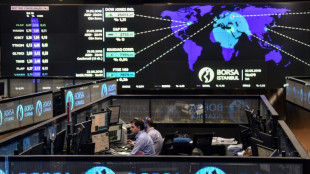
Elon Musk's SpaceX was set to begin trading on the Nasdaq exchange Friday with the biggest initial public offering in history expected to make the polarizing entrepreneur the world's first trillionaire.
In a filing with the US markets regulator Thursday, the company priced more than 555 million shares at $135 each, placing SpaceX in the top 10 of Wall Street's biggest companies with a valuation of just under $1.8 trillion -- ahead of Tesla, Facebook-owner Meta and Walmart.
The offering will raise over $75 billion, easily outranking Saudi Aramco's $29.4 billion debut in 2019, the previous record-holder.
Options for nearly 83 million additional shares could push the total above $86 billion.
Co-founded by Musk in 2002, the rocket startup has since expanded into a major satellite operator and has also folded in Musk's AI company -- xAI -- which includes the social media platform X (formerly Twitter).
The conglomerate will trade under the ticker symbol "SPCX," and all eyes will be on how Wall Street absorbs the offering.
SpaceX is the first out of the gates among leading AI giants eyeing public markets, with OpenAI and Anthropic both recently filing initial documents with regulators.
As is traditional for high-profile debuts, executives were due to ring the opening bell to mark the start of the session -- in this case at New York's Times Square, home of the Nasdaq.
The IPO comes just over a year after Musk left President Donald Trump's administration, following a months-long stint leading the highly contentious "DOGE" effort to slash government spending -- while simultaneously juggling his CEO roles at Tesla and SpaceX.
Musk's backing of Trump and right-wing populists in Europe -- and a long list of incendiary comments on X -- has seen the entrepreneur go from a broadly admired prodigy to a deeply polarizing figure.
The record IPO is nonetheless a testament to Musk's continued support among investors, with Bloomberg reporting that the offering was more than four times oversubscribed.
Demand among retail investors -- for which 20 percent of shares were reserved -- was also reported to be high.
- Data centers in space -
The IPO is expected to mint thousands of new millionaires and several billionaires, with former and current employees -- and a long list of investors -- from the company's near quarter-century history looking to cash in.
The financials of the company are giving some on Wall Street pause, as the valuation largely depends on Musk delivering on promises worthy of science fiction, including putting data centers in space and humans on Mars using as yet unproven technology.
A lot also hangs on a huge expansion of SpaceX's Starlink satellite internet service as well as the success of xAI, the maker of the Grok chatbot and Musk's rival to OpenAI and Anthropic that has yet to gain traction.
While SpaceX is growing fast -- revenue hit $18.7 billion in 2025 -- it is also losing money, producing a net loss of $4.9 billion -- mainly on spending to build AI capacity.
In an extraordinary prediction, SpaceX's filing claims it can pull in over $28.5 trillion in revenue from its various markets.
A successful debut could make him history's first trillionaire, dwarfing other billionaires in the sheer size of his fortune.
Going into Friday's listing, Musk's wealth stood at $782 billion, according to the Forbes list of the world's richest people, nearing three times that of number two, Google co-founder Larry Page.
"A trillion dollars in the hands of one man is incompatible not only with an affordable economy, but also with a healthy democracy," said Nabil Ahmed, senior director of economic justice at Oxfam America.
On the eve of the listing, activists displayed a giant inflatable Musk outside Nasdaq's offices to protest the ability to create fake sexualized images using xAI's Grok chatbot.
M. Andrade--JDB