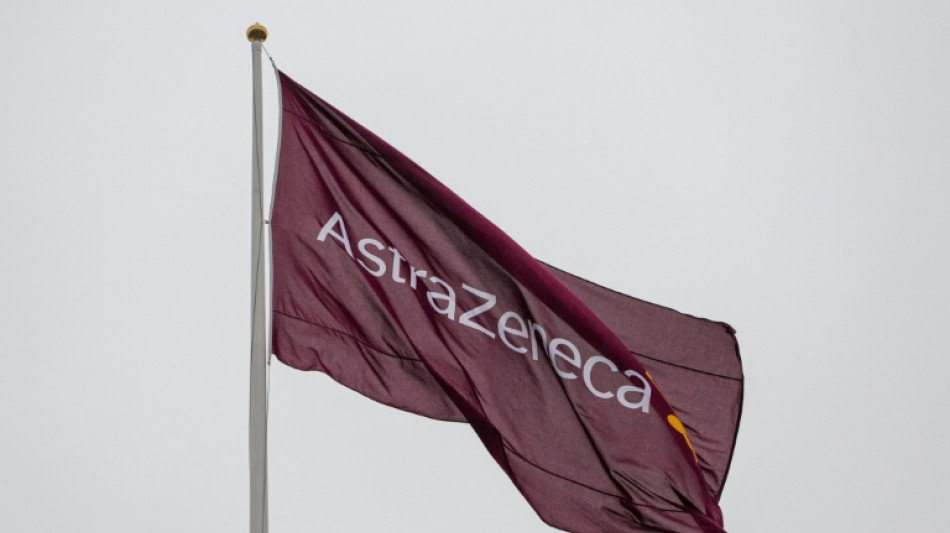
Encouraging trial results for AstraZeneca's new weight-loss pill / Photo: © AFP/File

 London
 9 °C
9 °C

 Manchester
 10 °C
10 °C
 Glasgow
12 °C
Glasgow
12 °C
 Dublin
 10 °C
10 °C
 Belfast
10 °C
Belfast
10 °C
 Washington
 15 °C
15 °C
 Denver
21 °C
Denver
21 °C
 Atlanta
16 °C
Atlanta
16 °C
 Dallas
22 °C
Dallas
22 °C
 Houston Texas
25 °C
Houston Texas
25 °C
 New Orleans
23 °C
New Orleans
23 °C
 El Paso
22 °C
El Paso
22 °C
 Phoenix
33 °C
Phoenix
33 °C
 Los Angeles
23 °C
San Diego
22 °C
San Francisco
15 °C
Chicago
19 °C
Minneapolis
16 °C
Seattle
11 °C
Portland
12 °C
Salt Lake City
22 °C
Las Vegas
29 °C
Miami
Los Angeles
23 °C
San Diego
22 °C
San Francisco
15 °C
Chicago
19 °C
Minneapolis
16 °C
Seattle
11 °C
Portland
12 °C
Salt Lake City
22 °C
Las Vegas
29 °C
Miami
 28 °C
Jacksonville
24 °C
San Antonio
23 °C
Bermuda
25 °C
Nassau
16 °C
Iqaluit
-2 °C
Yellowknife
1 °C
Anchorage
8 °C
Fairbanks
-1 °C
Barrow
-1 °C
Calgary
8 °C
Edmonton
18 °C
Winnipeg
14 °C
Goose Bay
8 °C
Halifax
9 °C
Boston
12 °C
Ottawa
6 °C
Toronto
10 °C
Detroit
15 °C
Cleveland
14 °C
New York
16 °C
Baltimore
15 °C
Philadelphia
15 °C
Nuuk (Godthåb)
0 °C
Hong Kong
28 °C
Jacksonville
24 °C
San Antonio
23 °C
Bermuda
25 °C
Nassau
16 °C
Iqaluit
-2 °C
Yellowknife
1 °C
Anchorage
8 °C
Fairbanks
-1 °C
Barrow
-1 °C
Calgary
8 °C
Edmonton
18 °C
Winnipeg
14 °C
Goose Bay
8 °C
Halifax
9 °C
Boston
12 °C
Ottawa
6 °C
Toronto
10 °C
Detroit
15 °C
Cleveland
14 °C
New York
16 °C
Baltimore
15 °C
Philadelphia
15 °C
Nuuk (Godthåb)
0 °C
Hong Kong
 30 °C
Singapore
30 °C
Singapore
 32 °C
Melbourne
29 °C
Canberra
32 °C
Melbourne
29 °C
Canberra
 21 °C
Adelaide
20 °C
Darwin
21 °C
Adelaide
20 °C
Darwin
 33 °C
Perth
21 °C
Fort Worth
23 °C
Honolulu
28 °C
Sydney
29 °C
Johannesburg
17 °C
Dubai
32 °C
Mumbai
32 °C
Zürich
12 °C
Tokyo
25 °C
Seoul
25 °C
Delhi
26 °C
Beijing
24 °C
Riyadh
26 °C
Prague
11 °C
Pennsylvania
11 °C
Valletta
25 °C
Manama
30 °C
Warsaw
10 °C
Stockholm
3 °C
33 °C
Perth
21 °C
Fort Worth
23 °C
Honolulu
28 °C
Sydney
29 °C
Johannesburg
17 °C
Dubai
32 °C
Mumbai
32 °C
Zürich
12 °C
Tokyo
25 °C
Seoul
25 °C
Delhi
26 °C
Beijing
24 °C
Riyadh
26 °C
Prague
11 °C
Pennsylvania
11 °C
Valletta
25 °C
Manama
30 °C
Warsaw
10 °C
Stockholm
3 °C
A new pill developed by the British pharma firm AstraZeneca appears to help people lose a similar amount of weight to other GLP-1 oral drugs, trial results showed Monday.
If confirmed by further research, the pill could mark AstraZeneca's entrance into the massively lucrative weight-loss drug market currently dominated by Denmark's Novo Nordisk and American giant Eli Lilly.
The astronomical popularity of the appetite suppressing injectable drugs called GLP-1 agonists has kicked off a race to produce tablet versions that easier to take.
AstraZeneca's new pill, called elecoglipron, resulted in weight loss "comparable to that reported for other oral" GLP-1 drugs, according to phase 2 trial results published in the Lancet medical journal.
Side effects recorded during the randomised trial, which had 310 participants, were also similar to those seen for other GLP-1 pills, with nausea being the most common.
For overweight or obese adults without diabetes, the pill resulted in "average weight reductions of up to 10.5 percent at 26 weeks and 11.8 percent at 36 weeks in the highest-dose group," said Marie Spreckley of the University of Cambridge.
But the weight management researcher -- who was not involved in the study -- emphasised the phase 2 trial was not mainly designed to compare the pill to other anti-obesity drugs.
"Larger and longer phase 3 trials will therefore be needed to confirm the durability of these effects, establish longer-term safety and tolerability, and determine its place within the growing range of obesity and diabetes treatments," she explained.
AstraZeneca will face stiff competition -- Novo Nordisk and Eli Lilly have already developed pill versions of their hugely successful drugs.
The oral form of Eli Lilly's popular Mounjaro GLP-1 drug was approved in April in the United States, where it is sold under the brand name Foundayo.
The pill version of Novo Nordisk's blockbuster drug Wegovy is already available in the US -- and was given the green light by European Union health authorities last month.
D. Carvalho--JDB