Hanoi curbs kerb culture as city clamps down on pavement vendors / Photo: © AFP

 London
 9 °C
9 °C

 Manchester
 10 °C
10 °C
 Glasgow
 11 °C
11 °C
 Dublin
 9 °C
9 °C
 Belfast
9 °C
Belfast
9 °C
 Washington
 14 °C
14 °C
 Denver
19 °C
Denver
19 °C
 Atlanta
 16 °C
16 °C
 Dallas
23 °C
Dallas
23 °C
 Houston Texas
24 °C
Houston Texas
24 °C
 New Orleans
22 °C
New Orleans
22 °C
 El Paso
20 °C
El Paso
20 °C
 Phoenix
32 °C
Phoenix
32 °C
 Los Angeles
22 °C
San Diego
21 °C
San Francisco
15 °C
Chicago
19 °C
Minneapolis
16 °C
Seattle
10 °C
Portland
11 °C
Salt Lake City
22 °C
Las Vegas
27 °C
Miami
28 °C
Jacksonville
24 °C
San Antonio
21 °C
Bermuda
25 °C
Nassau
15 °C
Iqaluit
-2 °C
Yellowknife
-2 °C
Anchorage
8 °C
Fairbanks
-1 °C
Barrow
1 °C
Calgary
6 °C
Edmonton
17 °C
Winnipeg
15 °C
Goose Bay
7 °C
Halifax
9 °C
Boston
11 °C
Ottawa
3 °C
Toronto
9 °C
Detroit
14 °C
Cleveland
14 °C
New York
16 °C
Baltimore
14 °C
Philadelphia
15 °C
Nuuk (Godthåb)
0 °C
Hong Kong
Los Angeles
22 °C
San Diego
21 °C
San Francisco
15 °C
Chicago
19 °C
Minneapolis
16 °C
Seattle
10 °C
Portland
11 °C
Salt Lake City
22 °C
Las Vegas
27 °C
Miami
28 °C
Jacksonville
24 °C
San Antonio
21 °C
Bermuda
25 °C
Nassau
15 °C
Iqaluit
-2 °C
Yellowknife
-2 °C
Anchorage
8 °C
Fairbanks
-1 °C
Barrow
1 °C
Calgary
6 °C
Edmonton
17 °C
Winnipeg
15 °C
Goose Bay
7 °C
Halifax
9 °C
Boston
11 °C
Ottawa
3 °C
Toronto
9 °C
Detroit
14 °C
Cleveland
14 °C
New York
16 °C
Baltimore
14 °C
Philadelphia
15 °C
Nuuk (Godthåb)
0 °C
Hong Kong
 29 °C
Singapore
29 °C
Singapore
 33 °C
Melbourne
27 °C
Canberra
22 °C
Adelaide
20 °C
Darwin
34 °C
Perth
19 °C
Fort Worth
22 °C
Honolulu
27 °C
Sydney
29 °C
Johannesburg
20 °C
Dubai
34 °C
Mumbai
35 °C
Zürich
33 °C
Melbourne
27 °C
Canberra
22 °C
Adelaide
20 °C
Darwin
34 °C
Perth
19 °C
Fort Worth
22 °C
Honolulu
27 °C
Sydney
29 °C
Johannesburg
20 °C
Dubai
34 °C
Mumbai
35 °C
Zürich
 12 °C
Tokyo
26 °C
Seoul
26 °C
Delhi
30 °C
Beijing
26 °C
Riyadh
32 °C
Prague
11 °C
Pennsylvania
11 °C
Valletta
24 °C
Manama
33 °C
Warsaw
11 °C
Stockholm
5 °C
12 °C
Tokyo
26 °C
Seoul
26 °C
Delhi
30 °C
Beijing
26 °C
Riyadh
32 °C
Prague
11 °C
Pennsylvania
11 °C
Valletta
24 °C
Manama
33 °C
Warsaw
11 °C
Stockholm
5 °C
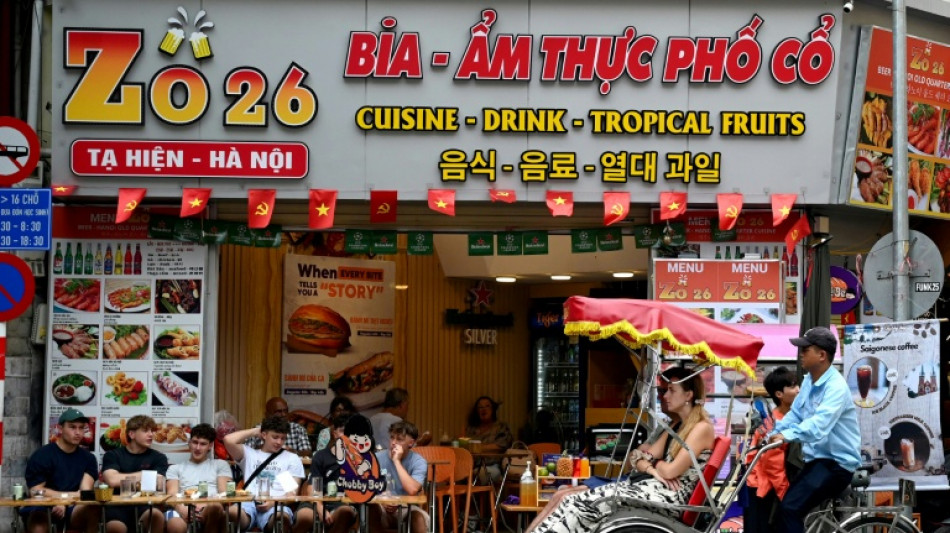
The pavements of Hanoi's wide boulevards and narrow lanes have long been clogged with bustling food stalls, weaving scooters, and crowds of coffee and beer drinkers sitting on low plastic stools.
But the spontaneity that charmed tourists and supported street vendors in Vietnam's capital has subsided in recent months as authorities clamp down on illegal use of footpaths.
Unauthorised peddling, parking and blocking foot traffic were long tolerated informally, but fines are now being enforced -- and city authorities are considering doubling them.
"Without vendors, I don't think Hanoi is Hanoi anymore," said Nguyen Thi Hoan, 58, who used to sell flowers on the pavement outside a large downtown apartment complex.
"Of course, I support the efforts to make the pavements clearer," she added.
Hoan worked from the same slab of concrete for a decade, eking out a modest living hawking colourful bouquets.
Now she has been banished along with fruit and vegetable sellers to a vacant lot with lower foot traffic, her turnover roughly halving as a result.
"I don't know what to do instead to make ends meet," she said.
Street vending is "the tradition of people in Hanoi".
- Kerb culture -
Whether you need a meal or a mechanic, balloons or even a barber, Hanoi's busy pavements could always oblige.
The capital has attracted record numbers of tourists in recent years, many eager to sit outside drinking beer and eating street food as the city surges past.
"Low plastic stool, cheap but delicious noodles, cold Hanoi beer," former US president Barack Obama reminisced about a meal he shared there with late chef Anthony Bourdain in 2016.
They ate their $6 bun cha inside, but the Hanoi episode of Bourdain's CNN travelogue is a love letter to the city's pavements, chronicling everything from pavement Zumba classes to outdoor noodle vendors to local draft beer speciality bia hoi.
Hanoi's vibrant kerb culture has always had downsides -- traffic jams and noise complaints, safety and sanitary concerns.
Now the capital is changing fast, as is Vietnam, whose communist leaders have spurred rapid development but brook little dissent.
Authorities say their crackdown will bring cleanliness and order to the city of eight million people.
- Iced tea -
Hanoi has launched previous campaigns to clear footpaths, but they were often short-lived.
This time authorities have intensified their efforts over several months, installing nearly 2,000 surveillance cameras to catch offenders.
Businesses that obstruct foot traffic face fines of up to 6 million Vietnamese dong ($230), while illegal vendors can be penalised 250,000 dong.
Police have issued more than 3,000 fines since December, according to state media.
Some welcome the new order. Le Trung Chien, who works at a marketing firm in a busy downtown area, used to fume at the street vendors and scooters parked in his path, forcing him to walk in traffic to get to his bus stop.
"I completely support the city's efforts to make the sidewalks clear and tidy," he said.
"I don't like my city to be a mess as it has always been."
Under a new plan floated this month, the fines would double as the city mulls allowing vendors to rent back authorised kerb space.
For Tran Trung Van, who manages a three-storey coffee shop, that means packing more patrons around inside tables and turning away those who want to smoke.
"About one third of my clients want to sit on the pavements, especially during cooler days, mornings and evenings," he said.
He has lost some business, he said, noting that "culture and habits" mean people want to be outside.
Office worker Dinh Tung is among them, and says he misses lingering with colleagues at tables that spilled into the street.
"I hope things will return to normal soon," he said. "Hanoi is only Hanoi if we can have sidewalk iced tea".
M. Oliveira--JDB