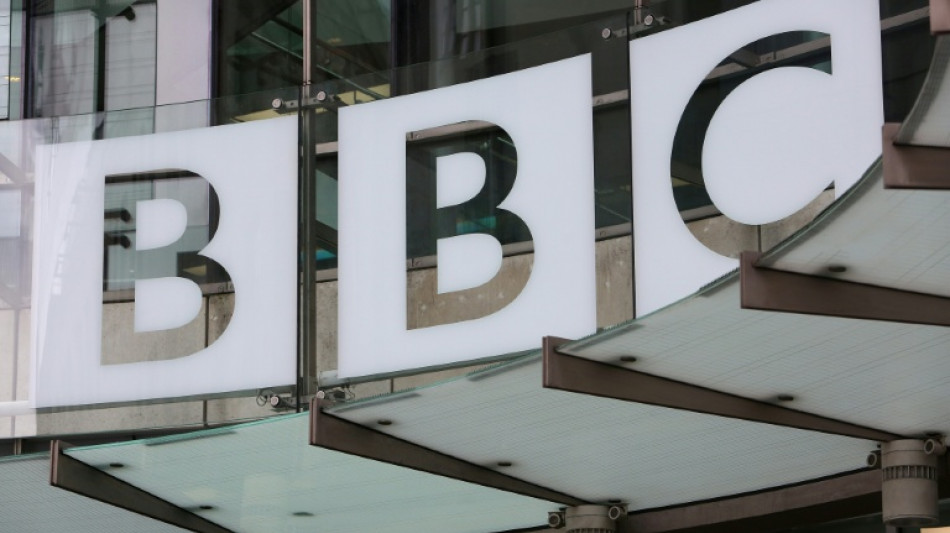
BBC to cut up to 2,000 jobs under 'financial pressures' / Photo: © AFP/File

 London
 9 °C
9 °C

 Manchester
 9 °C
9 °C
 Glasgow
8 °C
Glasgow
8 °C
 Dublin
9 °C
Dublin
9 °C
 Belfast
 8 °C
8 °C
 Washington
18 °C
Washington
18 °C
 Denver
19 °C
Denver
19 °C
 Atlanta
18 °C
Atlanta
18 °C
 Dallas
 25 °C
25 °C
 Houston Texas
24 °C
Houston Texas
24 °C
 New Orleans
19 °C
New Orleans
19 °C
 El Paso
25 °C
El Paso
25 °C
 Phoenix
25 °C
Phoenix
25 °C
 Los Angeles
23 °C
San Diego
Los Angeles
23 °C
San Diego
 22 °C
San Francisco
14 °C
Chicago
19 °C
Minneapolis
25 °C
Seattle
10 °C
Portland
10 °C
Salt Lake City
22 °C
Las Vegas
26 °C
Miami
28 °C
Jacksonville
25 °C
San Antonio
26 °C
Bermuda
25 °C
Nassau
15 °C
Iqaluit
-4 °C
Yellowknife
5 °C
Anchorage
9 °C
Fairbanks
4 °C
Barrow
0 °C
Calgary
22 °C
San Francisco
14 °C
Chicago
19 °C
Minneapolis
25 °C
Seattle
10 °C
Portland
10 °C
Salt Lake City
22 °C
Las Vegas
26 °C
Miami
28 °C
Jacksonville
25 °C
San Antonio
26 °C
Bermuda
25 °C
Nassau
15 °C
Iqaluit
-4 °C
Yellowknife
5 °C
Anchorage
9 °C
Fairbanks
4 °C
Barrow
0 °C
Calgary
 0 °C
Edmonton
15 °C
Winnipeg
13 °C
Goose Bay
11 °C
Halifax
7 °C
Boston
9 °C
Ottawa
8 °C
Toronto
12 °C
Detroit
17 °C
Cleveland
16 °C
New York
16 °C
Baltimore
18 °C
Philadelphia
16 °C
Nuuk (Godthåb)
0 °C
Hong Kong
0 °C
Edmonton
15 °C
Winnipeg
13 °C
Goose Bay
11 °C
Halifax
7 °C
Boston
9 °C
Ottawa
8 °C
Toronto
12 °C
Detroit
17 °C
Cleveland
16 °C
New York
16 °C
Baltimore
18 °C
Philadelphia
16 °C
Nuuk (Godthåb)
0 °C
Hong Kong
 30 °C
Singapore
30 °C
Singapore
 31 °C
Melbourne
26 °C
Canberra
31 °C
Melbourne
26 °C
Canberra
 23 °C
Adelaide
27 °C
Darwin
34 °C
Perth
18 °C
Fort Worth
24 °C
Honolulu
23 °C
Adelaide
27 °C
Darwin
34 °C
Perth
18 °C
Fort Worth
24 °C
Honolulu
 27 °C
Sydney
25 °C
Johannesburg
13 °C
Dubai
30 °C
Mumbai
33 °C
Zürich
10 °C
Tokyo
26 °C
Seoul
27 °C
Delhi
28 °C
Beijing
22 °C
Riyadh
27 °C
Prague
8 °C
Pennsylvania
16 °C
Valletta
21 °C
Manama
31 °C
Warsaw
11 °C
Stockholm
8 °C
27 °C
Sydney
25 °C
Johannesburg
13 °C
Dubai
30 °C
Mumbai
33 °C
Zürich
10 °C
Tokyo
26 °C
Seoul
27 °C
Delhi
28 °C
Beijing
22 °C
Riyadh
27 °C
Prague
8 °C
Pennsylvania
16 °C
Valletta
21 °C
Manama
31 °C
Warsaw
11 °C
Stockholm
8 °C
The BBC said on Wednesday that the British broadcasting corporation is set to cut up to 2,000 jobs amid a challenging media landscape.
The BBC's interim director-general Rhodri Talfan Davies said in a statement to staff that "while we still have to work through the detail, we anticipate the overall number of jobs will fall by 1,800-2,000".
The BBC reported the cuts on Wednesday afternoon, saying they amount to "almost one in 10" jobs, since it has about 21,500 employees.
The acting director-general said in a message to staff, sent to AFP, that this was because the BBC faces "significant financial pressures, which we need to respond to at pace".
"Put simply, the gap between our costs and our income is growing," said Talfan Davies, who has taken on the role temporarily.
"Inevitably, these plans will also mean reducing the number of jobs in the BBC," he added in a message that he said followed an all-staff call.
The BBC has to cut £500 million from its operating costs of £5 billion "over the next two years", the director-general said.
The BBC had previously said it has to find ways to shave 10 percent off its costs over the next three years.
- 'Devastating' for staff -
The job cuts will be the biggest round of redundancies at the broadcasting corporation in almost 15 years, ITV News and The Press Association (PA) news agency reported.
In 2011, the BBC announced it would cut 2,000 jobs over the next five years and relocate some staff away from London.
Talfan Davies told BBC radio "there are going to be some big and some difficult choices".
The head of the Bectu union for media workers, Philippa Childs, said "cuts of this magnitude will be devastating for the workforce and to the BBC as a whole".
The general secretary of the National Union of Journalists, Laura Davison, condemned the cuts, which she said were "wrong, damaging and will cause uncertainty and distress for workers at the BBC".
The job losses come as the BBC faces a turbulent media landscape, affected by AI and changing consumer habits.
The BBC is funded by the public paying for a licence to view live content. It says 94 percent of UK adults use its services every month.
In a report in March the BBC said its income from the licence fee had fallen 24 percent in real terms since 2017.
"We must reduce our total cost base by a further 10% by March 2029 due to licence fee headwinds and other pressures," the report said, warning "tough choices may require cuts to content and services".
US President Donald Trump has filed a $10 billion defamation lawsuit against the broadcaster over a documentary that edited his 2021 speech ahead of the US Capitol riot, making it appear he explicitly urged supporters to attack the seat of Congress.
The BBC's former director-general, Tim Davie, resigned over the case and left at the start of April.
A new director-general, former Google executive Matt Brittin, is due to take over at the BBC next month, with his appointment announced as leading the corporation "through transformation".
L. Rodrigues--JDB