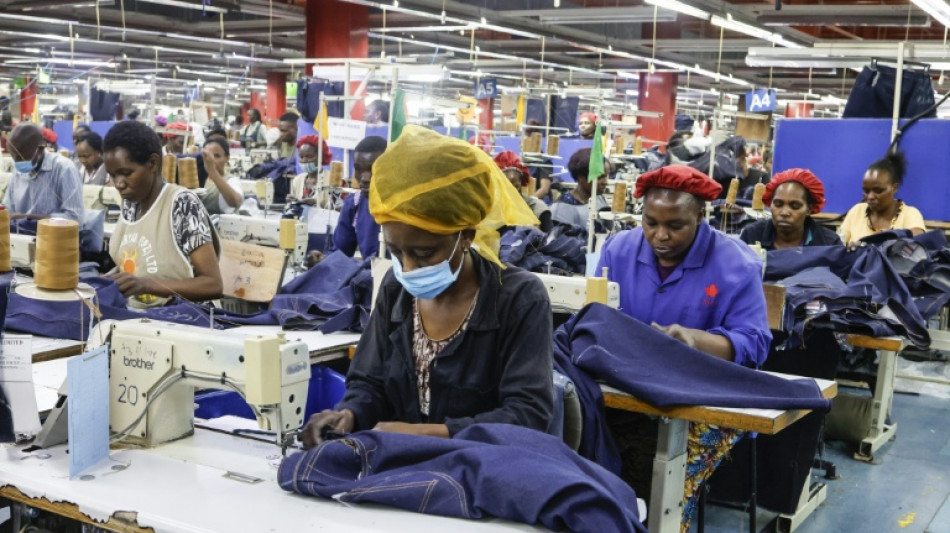
African manufacturers welcome US trade deal, call to finalise it / Photo: © AFP

 London
 17 °C
17 °C

 Manchester
17 °C
Manchester
17 °C
 Glasgow
 5 °C
5 °C
 Dublin
14 °C
Dublin
14 °C
 Belfast
13 °C
Belfast
13 °C
 Washington
 16 °C
16 °C
 Denver
 18 °C
18 °C
 Atlanta
20 °C
Atlanta
20 °C
 Dallas
28 °C
Dallas
28 °C
 Houston Texas
28 °C
Houston Texas
28 °C
 New Orleans
23 °C
New Orleans
23 °C
 El Paso
26 °C
El Paso
26 °C
 Phoenix
21 °C
Phoenix
21 °C
 Los Angeles
16 °C
San Diego
17 °C
San Francisco
14 °C
Chicago
27 °C
Minneapolis
13 °C
Seattle
9 °C
Portland
10 °C
Salt Lake City
Los Angeles
16 °C
San Diego
17 °C
San Francisco
14 °C
Chicago
27 °C
Minneapolis
13 °C
Seattle
9 °C
Portland
10 °C
Salt Lake City
 10 °C
Las Vegas
18 °C
Miami
27 °C
Jacksonville
21 °C
San Antonio
28 °C
Bermuda
27 °C
Nassau
16 °C
Iqaluit
0 °C
Yellowknife
5 °C
Anchorage
6 °C
Fairbanks
2 °C
Barrow
-6 °C
Calgary
2 °C
Edmonton
19 °C
Winnipeg
5 °C
Goose Bay
14 °C
Halifax
13 °C
Boston
15 °C
Ottawa
9 °C
Toronto
16 °C
Detroit
22 °C
Cleveland
20 °C
New York
17 °C
Baltimore
16 °C
Philadelphia
16 °C
Nuuk (Godthåb)
1 °C
Hong Kong
10 °C
Las Vegas
18 °C
Miami
27 °C
Jacksonville
21 °C
San Antonio
28 °C
Bermuda
27 °C
Nassau
16 °C
Iqaluit
0 °C
Yellowknife
5 °C
Anchorage
6 °C
Fairbanks
2 °C
Barrow
-6 °C
Calgary
2 °C
Edmonton
19 °C
Winnipeg
5 °C
Goose Bay
14 °C
Halifax
13 °C
Boston
15 °C
Ottawa
9 °C
Toronto
16 °C
Detroit
22 °C
Cleveland
20 °C
New York
17 °C
Baltimore
16 °C
Philadelphia
16 °C
Nuuk (Godthåb)
1 °C
Hong Kong
 30 °C
Singapore
32 °C
Melbourne
23 °C
Canberra
20 °C
Adelaide
18 °C
Darwin
33 °C
Perth
24 °C
Fort Worth
27 °C
Honolulu
26 °C
Sydney
30 °C
Singapore
32 °C
Melbourne
23 °C
Canberra
20 °C
Adelaide
18 °C
Darwin
33 °C
Perth
24 °C
Fort Worth
27 °C
Honolulu
26 °C
Sydney
 18 °C
Johannesburg
11 °C
Dubai
30 °C
Mumbai
32 °C
Zürich
6 °C
Tokyo
24 °C
Seoul
19 °C
Delhi
26 °C
Beijing
21 °C
Riyadh
26 °C
Prague
4 °C
Pennsylvania
15 °C
Valletta
22 °C
Manama
31 °C
Warsaw
8 °C
Stockholm
6 °C
18 °C
Johannesburg
11 °C
Dubai
30 °C
Mumbai
32 °C
Zürich
6 °C
Tokyo
24 °C
Seoul
19 °C
Delhi
26 °C
Beijing
21 °C
Riyadh
26 °C
Prague
4 °C
Pennsylvania
15 °C
Valletta
22 °C
Manama
31 °C
Warsaw
8 °C
Stockholm
6 °C
African manufacturers on Wednesday welcomed US lawmakers' approval for renewing their duty-free access but called for urgency in finalising the deal.
The African Growth and Opportunity Act (AGOA) has been a cornerstone of trade relations for 25 years, allowing the United States to buy billions of dollars of duty-free cars, clothes and other items from select African countries each year.
But the deal, which operates in 32 African nations, expired last September, putting thousands of jobs at risk and forcing exporters to absorb high tariff duties.
On Tuesday, the US Congress passed a bill to revive AGOA for at least three years, but it must still be approved by the Senate.
The Congress vote was "a very positive sign", said Pankaj Bedi, CEO of United Aryan factory, which exports Wrangler and Levi's jeans under the deal and employs around 10,000 Kenyans.
"But we need to keep the pressure up," he told AFP. "It is our desperate need as the sector continues to slow down and suffer due to cash flows and many other external challenges."
Bedi said his company has been absorbing the increased import duties -- which went up by 33 percent for Kenya after AGOA expired -- so as not to lose customers, but said this is not "sustainable".
Kenya's trade minister Lee Kinyanjui welcomed the approval by the US House of Representatives, calling it a "critical milestone" in US-Africa trade relations.
"The uncertainty that had previously engulfed the sector will now give way to renewed confidence and expansion," Kinyanjui said in a statement.
South Africa, which has been at loggerheads with the US in recent months, also hailed the approval.
Its trade minister Parks Tau said the country "values its longstanding trade and investment relationship with the US".
US President Donald Trump has criticised free-trade deals, and slapped swingeing tariffs on many countries.
South Africa was the primary beneficiary of the preferential agreement before it expired. The automotive sector accounted for 64 percent of trade under AGOA, totalling $1.6 billion in 2024, and is the sector most affected by Trump's measures.
R. do Carmo--JDB