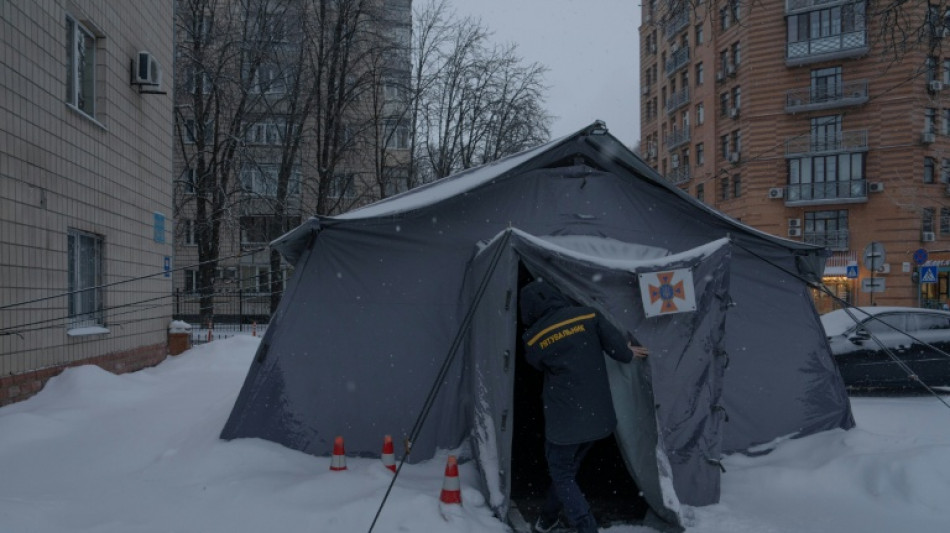
Kyiv shivers without heat, but battles on / Photo: © AFP

 London
 17 °C
17 °C

 Manchester
 17 °C
17 °C
 Glasgow
6 °C
Glasgow
6 °C
 Dublin
 13 °C
13 °C
 Belfast
 14 °C
14 °C
 Washington
 15 °C
15 °C
 Denver
14 °C
Denver
14 °C
 Atlanta
18 °C
Atlanta
18 °C
 Dallas
27 °C
Dallas
27 °C
 Houston Texas
27 °C
Houston Texas
27 °C
 New Orleans
22 °C
New Orleans
22 °C
 El Paso
23 °C
El Paso
23 °C
 Phoenix
20 °C
Phoenix
20 °C
 Los Angeles
15 °C
San Diego
17 °C
San Francisco
13 °C
Chicago
26 °C
Minneapolis
13 °C
Seattle
9 °C
Portland
9 °C
Salt Lake City
10 °C
Las Vegas
17 °C
Miami
26 °C
Jacksonville
20 °C
San Antonio
27 °C
Bermuda
25 °C
Nassau
15 °C
Iqaluit
0 °C
Yellowknife
4 °C
Anchorage
5 °C
Fairbanks
0 °C
Barrow
-6 °C
Calgary
0 °C
Edmonton
20 °C
Winnipeg
5 °C
Goose Bay
13 °C
Halifax
14 °C
Boston
15 °C
Ottawa
8 °C
Toronto
16 °C
Detroit
21 °C
Cleveland
19 °C
New York
16 °C
Baltimore
15 °C
Philadelphia
15 °C
Nuuk (Godthåb)
1 °C
Hong Kong
Los Angeles
15 °C
San Diego
17 °C
San Francisco
13 °C
Chicago
26 °C
Minneapolis
13 °C
Seattle
9 °C
Portland
9 °C
Salt Lake City
10 °C
Las Vegas
17 °C
Miami
26 °C
Jacksonville
20 °C
San Antonio
27 °C
Bermuda
25 °C
Nassau
15 °C
Iqaluit
0 °C
Yellowknife
4 °C
Anchorage
5 °C
Fairbanks
0 °C
Barrow
-6 °C
Calgary
0 °C
Edmonton
20 °C
Winnipeg
5 °C
Goose Bay
13 °C
Halifax
14 °C
Boston
15 °C
Ottawa
8 °C
Toronto
16 °C
Detroit
21 °C
Cleveland
19 °C
New York
16 °C
Baltimore
15 °C
Philadelphia
15 °C
Nuuk (Godthåb)
1 °C
Hong Kong
 30 °C
Singapore
32 °C
Melbourne
22 °C
Canberra
20 °C
Adelaide
30 °C
Singapore
32 °C
Melbourne
22 °C
Canberra
20 °C
Adelaide
 18 °C
Darwin
33 °C
Perth
27 °C
Fort Worth
26 °C
Honolulu
25 °C
Sydney
18 °C
Darwin
33 °C
Perth
27 °C
Fort Worth
26 °C
Honolulu
25 °C
Sydney
 18 °C
Johannesburg
20 °C
Dubai
33 °C
Mumbai
36 °C
Zürich
5 °C
Tokyo
24 °C
Seoul
22 °C
Delhi
30 °C
Beijing
22 °C
Riyadh
32 °C
Prague
4 °C
Pennsylvania
14 °C
Valletta
18 °C
Johannesburg
20 °C
Dubai
33 °C
Mumbai
36 °C
Zürich
5 °C
Tokyo
24 °C
Seoul
22 °C
Delhi
30 °C
Beijing
22 °C
Riyadh
32 °C
Prague
4 °C
Pennsylvania
14 °C
Valletta
 23 °C
Manama
33 °C
Warsaw
8 °C
Stockholm
6 °C
23 °C
Manama
33 °C
Warsaw
8 °C
Stockholm
6 °C
Braving sub-zero temperatures, her heat cut off by Russian strikes on Kyiv, Natalia has to go to special tents set up in the Ukrainian capital to get warm -- but has no plans of leaving.
Nearly four years into Russia's full-scale invasion, Ukrainians are enduring another gruelling winter of heat and electricity cuts.
Massive Russian strikes on the capital Friday killed at least four people and left half the city's residential buildings without heat, at a time when temperatures are around -10C and expected to drop further.
Kyiv Mayor Vitaliy Klitschko, the former world heavyweight boxing champion, warned that the situation was "very difficult" and urged residents to temporarily evacuate.
But Natalia, who responded to Russia's February 2022 invasion by making Molotov cocktails to defend her city from Moscow's approaching army, said she was staying put, despite the hardships.
"I haven't left Kyiv a single second since the full-scale invasion," she told AFP.
"What did we do then? We made Molotov cocktails. I won't leave... I have my house here, I have my job and I love my city," said the 45-year-old manager, who declined to give her last name.
"We've had no electricity, heat or water for the past 42 hours," she said Saturday.
But "we're surviving, as you can see."
Her one concession to the upheaval of war: early in the invasion, she moved to a flat on a lower floor.
"It's less scary when the missiles fly overhead," she said.
Klitschko said Sunday morning that 1,000 buildings in Kyiv were still without heat -- down from an initial figure of 6,000 after the strikes.
Many residents' main heat source is electric, and Ukraine's power grid has been battered by Russian strikes since the start of the war.
- Surpassing World War II -
In the capital's Desnyansky district, AFP visited one of the tents set up by emergency services for residents to get warm, eat, connect to the internet and charge their devices.
Olena, a 50-year-old English teacher, said she was forcing herself to be optimistic in order to hang on.
Emergency tents and neighbourly solidarity help "a lot", she said.
"We support each other, dress warm, smile and wait."
One piece of clothing in particular sustains her, she said: a scarf that belonged to her grandmother, a World War II survivor.
"You put it on and you remember all that our people have endured. We will endure, too. We can't give up," she said.
Sunday marked the 1,418th day of Russia’s war on Ukraine, matching the length of what is known here as the "Great Patriotic War", when the Soviet Union fought off Nazi Germany's World War II onslaught, from 1941 to 1945.
video-rco/cn/jhb/rh
V. Duarte--JDB